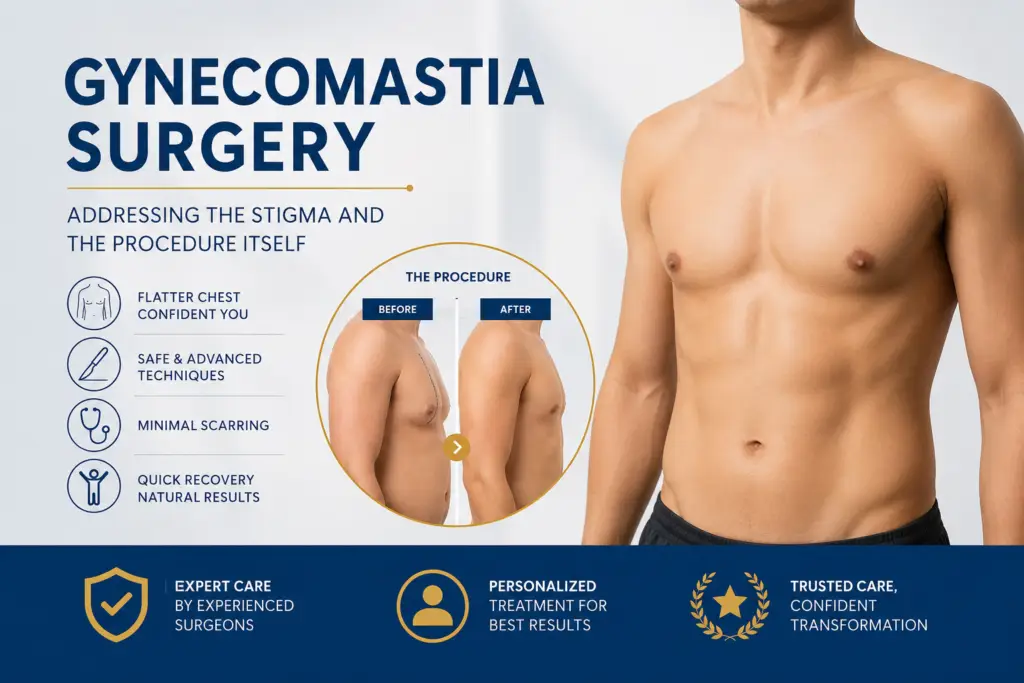
Of all the procedures I perform, gynecomastia surgery carries a weight that’s disproportionate to the surgery itself. Medically, it’s a well-understood, technically straightforward procedure. Emotionally, for many of the men who come to see me, it’s something they’ve carried — quietly, sometimes for decades — before ever bringing it up with a doctor.
This post is meant to do two things: talk honestly about why the silence exists, and walk through exactly what the surgery involves, so that anyone considering it can approach the decision with clear information instead of guesswork.
What Gynecomastia Actually Is
Gynecomastia is the enlargement of glandular breast tissue in men. It’s important to distinguish it from simple fat accumulation in the chest (sometimes called “pseudogynecomastia”), because the two can look similar but require different approaches to treat effectively.
Common causes include:
- Hormonal changes during puberty, which resolve on their own in many teenagers but persist in some
- Natural hormonal shifts with age, particularly as testosterone levels decline
- Certain medications, including some used for prostate conditions, ulcers, heart conditions, and anabolic steroids
- Anabolic steroid or testosterone use, which can trigger tissue growth as the body converts excess hormone
- Chronic conditions affecting the liver, kidneys, or thyroid
- Genetics, with no identifiable external cause at all
In many cases, especially in younger patients, there’s no single “reason” — it’s simply how their body developed. That distinction matters because a lot of the shame patients carry is built on the false assumption that it’s something they did or failed to do (like not exercising or eating “correctly”), when in fact the tissue involved often doesn’t respond to diet or exercise at all.
Why the Stigma Persists
In my consultations, I hear some version of the same story often: patients who’ve avoided swimming pools, changing rooms, tight shirts, and intimacy for years. Many say they’ve never told a single person — not a parent, not a partner — that this bothers them, let alone that they were considering surgery.
A few reasons this particular condition carries more silence than most:
- It doesn’t fit the usual narrative of male body concerns. Society has slowly made room for men to talk about hair loss or weight, but a condition that visibly resembles female breast tissue collides directly with ideas about masculinity, which makes it harder to bring up.
- It’s often assumed to be “just fat.” Because pseudogynecomastia (fat-based) is more visible in public conversation, many men assume their case would resolve with enough exercise, and blame themselves when it doesn’t.
- It’s frequently associated with adolescence, so adult patients sometimes feel they should have “outgrown” a concern from their teenage years, adding embarrassment on top of the physical concern.
None of these are good reasons to avoid a conversation with a doctor. Gynecomastia is one of the most common conditions I see in male patients, and there’s nothing unusual or shameful about wanting to address it.
When Surgery Is (and Isn’t) the Right Option
Not every case needs surgery. If the enlargement is due to a temporary hormonal cause, medication, or recent weight gain, addressing the underlying cause — or simply waiting it out during adolescence — may resolve it. A proper consultation should always start with ruling out reversible causes before surgery is even discussed.
Surgery is generally considered when:
- The condition has persisted for more than 12 months without change
- It’s causing physical discomfort, such as tenderness
- It’s affecting confidence, social behavior, or mental wellbeing
- The tissue is primarily glandular rather than fat, meaning diet and exercise won’t meaningfully change it
What the Procedure Actually Involves
Gynecomastia surgery is tailored to the type and amount of tissue present, and typically falls into one of three approaches:
1. Liposuction alone Used when the enlargement is mostly fatty tissue. A cannula is used to remove excess fat through very small incisions, with minimal scarring.
2. Surgical excision Used when there’s a firm, glandular component that liposuction can’t remove. This involves a small incision, often around the edge of the areola, to directly excise the excess glandular tissue.
3. Combination approach Most cases — particularly in adult men — involve a mix of both fat and glandular tissue, so a combined liposuction-plus-excision approach is common to achieve a flatter, more natural-looking chest contour.
The procedure is usually done under general anesthesia and takes roughly one to two hours, depending on complexity. Most patients go home the same day or after one night of observation.
Recovery: What to Realistically Expect
- First few days: Mild to moderate swelling and bruising is normal. A compression garment is worn to support the chest and reduce swelling.
- First week: Most patients can return to desk-based work within 5–7 days, though some soreness and tightness will remain.
- 2–4 weeks: Light activity can usually resume, but strenuous exercise and heavy lifting should wait until cleared by your surgeon, typically around 4–6 weeks.
- Final results: Swelling gradually subsides over 2–3 months, with the final chest contour visible by around 3–6 months.
Scarring, when excision is involved, is generally well-hidden around the areola border and fades significantly over the following year.
A Note for International Patients
If you’re travelling for this procedure, gynecomastia surgery is one of the more travel-friendly options — recovery is relatively quick, and most patients are fit to fly within 7–10 days, provided there are no complications. That said, plan for:
- At least one in-person follow-up before travelling home, to check healing and remove any drains or sutures if used
- A loose-fitting, comfortable wardrobe for travel while wearing your compression garment
- A remote follow-up plan with your surgeon for the weeks after you return
Final Thoughts
If you’ve been quietly living with this for years, the most important thing to know is that you’re not alone, and it’s not something you caused or could have “fixed” with more willpower. A good consultation should feel like a private, judgment-free conversation about your body and your goals — nothing more dramatic than that.
If you’d like to discuss your specific case, I offer confidential consultations both in person in Kolkata and via video call for patients travelling from abroad.