Asian blepharoplasty in Kolkata, also known as double eyelid surgery, is a specialised eyelid procedure designed to create or refine an upper-eyelid crease in patients who naturally have a single eyelid or a less-defined crease. The procedure is not about making the eyes “Western”; rather, the goal is to create a natural-looking eyelid crease that complements the patient’s existing facial features and ethnic characteristics.
Advanced Double Eyelid Surgery in Kolkata
Double eyelid surgery in Kolkata can improve the definition of the upper eyelid while preserving appropriate eyelid anatomy and natural facial expression. Depending on eyelid structure, skin thickness, fat distribution and the desired outcome, different techniques may be considered, including suture-based or incision-based Asian blepharoplasty. The appropriate technique is selected after a detailed assessment rather than using the same approach for every patient.
Natural-Looking Asian Eyelid Surgery
The success of Asian blepharoplasty depends on creating a crease that is proportionate to the individual’s eye shape and facial anatomy. The height, shape and continuity of the eyelid crease are carefully planned. Excessive tissue removal or an overly high crease can produce an unnatural appearance, so conservative and personalised surgical planning is particularly important.
Who May Benefit from Double Eyelid Surgery?
Patients who desire a more defined upper-eyelid crease, have asymmetrical eyelid folds or experience excess upper-eyelid skin may consider double eyelid surgery in Kolkata. Some patients seek purely cosmetic enhancement, while others may have concerns related to eyelid heaviness or visual obstruction. A detailed examination is necessary to determine whether Asian blepharoplasty is appropriate and which technique is most suitable.
Asian Blepharoplasty and Facial Harmony
Asian eyelid surgery should be considered as part of the overall facial appearance rather than focusing only on the eyelid. The shape of the eyebrows, eyes, nose and surrounding facial structures can influence the ideal crease design. The objective is to create a refined eyelid appearance while maintaining the patient’s individual identity and natural facial proportions.
Asian Blepharoplasty by Prof. (Dr.) Souvik Adhikari
Prof. (Dr.) Souvik Adhikari brings 17+ years of surgical experience in cosmetic, plastic and reconstructive surgery, with additional AOCMF Fellowship training at Johns Hopkins University, USA. His approach to Asian blepharoplasty in Kolkata focuses on detailed eyelid assessment, personalised crease design, precise surgical technique and natural-looking facial enhancement.
Recovery After Double Eyelid Surgery
Recovery following double eyelid surgery in Kolkata varies according to the technique used. Temporary swelling, bruising and tightness around the eyelids are common during the early healing period. Patients receive personalised instructions regarding eyelid care, activity restrictions and follow-up. The eyelid crease continues to settle as swelling decreases and the tissues heal, and the final appearance may take time to stabilise.
If you are considering Asian blepharoplasty or double eyelid surgery in Kolkata, a personalised consultation can help determine the appropriate crease design and surgical technique for your eyelid anatomy. The goal is to achieve natural-looking eyelid definition while preserving ethnic characteristics, facial harmony and normal eyelid function.
Individualised Planning for Asian Blepharoplasty
Asian blepharoplasty requires careful assessment of the upper eyelid anatomy rather than using a standard crease height or a single surgical technique for every patient. The position of the existing eyelid fold, skin thickness, fat distribution, eyelid opening, brow position, asymmetry and the patient’s desired appearance are considered during planning.
The objective is to create or refine an upper-eyelid crease that is proportionate to the individual face while preserving appropriate eyelid function and a natural appearance.
Who May Be Suitable for Asian Blepharoplasty?
Asian blepharoplasty may be considered by patients who have a naturally absent, subtle or asymmetric upper-eyelid crease and would like greater eyelid definition.
A consultation is particularly important when there is significant eyelid asymmetry, excess skin, eyelid heaviness, previous eyelid surgery or concerns about visual obstruction. These factors may influence whether double eyelid surgery alone is appropriate or whether another eyelid procedure should be considered.
Incisional and Non-Incisional Asian Blepharoplasty
Asian double eyelid surgery can broadly be performed using incision-based or suture-based techniques.
A non-incisional or suture-based approach may be considered in selected patients with appropriate eyelid anatomy and limited skin or fat excess. An incisional technique may provide greater control when more extensive modification of the eyelid crease or management of excess tissue is required.
The choice of technique is individualised according to eyelid anatomy, skin and soft-tissue characteristics and the desired crease.
Planning the Height and Shape of the Eyelid Crease
Crease height, shape and continuity are important components of Asian blepharoplasty. A crease that is excessively high or poorly matched to the patient’s facial proportions may produce an artificial appearance.
The planned crease therefore needs to complement the eye shape, brow position and surrounding facial structures. Where appropriate, preoperative discussion can include the patient’s preferred crease characteristics and realistic limitations of surgery.
Asian Blepharoplasty for Asymmetrical Eyelids
Mild differences between the two eyes are common in the general population. When asymmetry is related to differences in eyelid crease formation, double eyelid surgery may improve the apparent balance between the eyes.
However, complete symmetry cannot always be achieved because the underlying eyelid and facial anatomy may differ between the two sides. The aim is improvement in overall balance rather than mathematical symmetry.
Asian Blepharoplasty and Excess Upper-Eyelid Fat
The amount and position of upper-eyelid fat vary between individuals. Some patients seeking double eyelid surgery have relatively little excess tissue, while others may have fuller upper eyelids.
Tissue management should therefore be conservative and anatomy-driven. Removing excessive fat or soft tissue can sometimes produce an undesirable hollowed appearance, so the treatment plan should be tailored to the individual eyelid.
Asian Blepharoplasty and Eyelid Function
Cosmetic improvement should not be considered separately from eyelid function. Assessment includes eyelid opening, closure, ocular surface considerations and other factors that may affect postoperative function.
Patients with pre-existing dry-eye symptoms, eyelid problems, previous surgery or visual concerns should discuss these issues during consultation before proceeding with double eyelid surgery.
Asian Blepharoplasty vs Conventional Blepharoplasty
Asian blepharoplasty and conventional upper blepharoplasty can have different primary objectives.
Asian blepharoplasty commonly focuses on creating or refining an upper-eyelid crease in an eyelid that naturally has a less prominent or absent fold. Conventional upper blepharoplasty is more commonly performed to address excess skin, fat or age-related changes of the upper eyelid.
There can be overlap between the procedures, and some patients may require a combination of approaches depending on their anatomy and concerns.
Asian Blepharoplasty for Natural Facial Proportions
The ideal eyelid crease should be considered in relation to the entire upper face. Brow position, eye shape, nasal structure and facial proportions can influence the appearance of the eyelid.
The goal is therefore not simply to create a visible crease, but to achieve eyelid definition that remains harmonious with the patient’s existing facial features.
Anaesthesia for Asian Blepharoplasty
The choice of anaesthesia depends on the surgical technique, the extent of correction and the patient’s individual circumstances. Appropriate anaesthesia and perioperative monitoring are discussed during preoperative assessment.
How Long Does Asian Blepharoplasty Take?
The duration of double eyelid surgery varies according to the technique used and whether additional eyelid procedures are performed at the same time. An estimated operating time is discussed after assessment and surgical planning rather than assuming a fixed duration for every patient.
Recovery After Asian Blepharoplasty
Swelling, bruising, tightness and temporary changes around the eyelids are common during the early healing period. Recovery varies according to the surgical technique and individual healing characteristics.
Patients receive specific instructions regarding eyelid care, activity, medications and follow-up. The eyelid crease gradually settles as swelling decreases and the tissues heal, and the final appearance may continue to refine over the following weeks and months.
Scars After Asian Blepharoplasty
Incisional Asian blepharoplasty creates a scar within or around the planned eyelid crease. When healing progresses favourably, the scar can become less conspicuous as it matures.
Scar appearance varies between individuals and depends on the surgical technique, healing characteristics and postoperative care. No surgical scar should be described as guaranteed to be invisible.
Possible Risks and Complications
Potential complications of Asian blepharoplasty include bleeding, infection, asymmetry, altered eyelid sensation, dry-eye symptoms, difficulty with eyelid closure, unfavourable scarring, crease irregularity and the possibility of revision surgery.
Careful patient selection, detailed preoperative assessment and appropriate postoperative follow-up are important in reducing avoidable risks.
Expected Results After Asian Blepharoplasty
The initial appearance of the eyelid crease can be seen relatively early, but swelling and tissue stiffness may temporarily affect the result. The crease gradually settles and becomes more natural as healing progresses.
The long-term appearance depends on the surgical technique, individual healing characteristics and natural changes associated with ageing. A personalised consultation is necessary to discuss what degree of change is realistically achievable.
Consultation for Asian Blepharoplasty in Kolkata
A detailed consultation is the most appropriate way to determine whether Asian blepharoplasty is suitable and which technique is appropriate.
The assessment includes eyelid anatomy, crease characteristics, skin and soft-tissue features, asymmetry, eyelid function and the patient’s aesthetic goals. The expected result, limitations, scar, recovery and potential risks can then be discussed before treatment is planned.
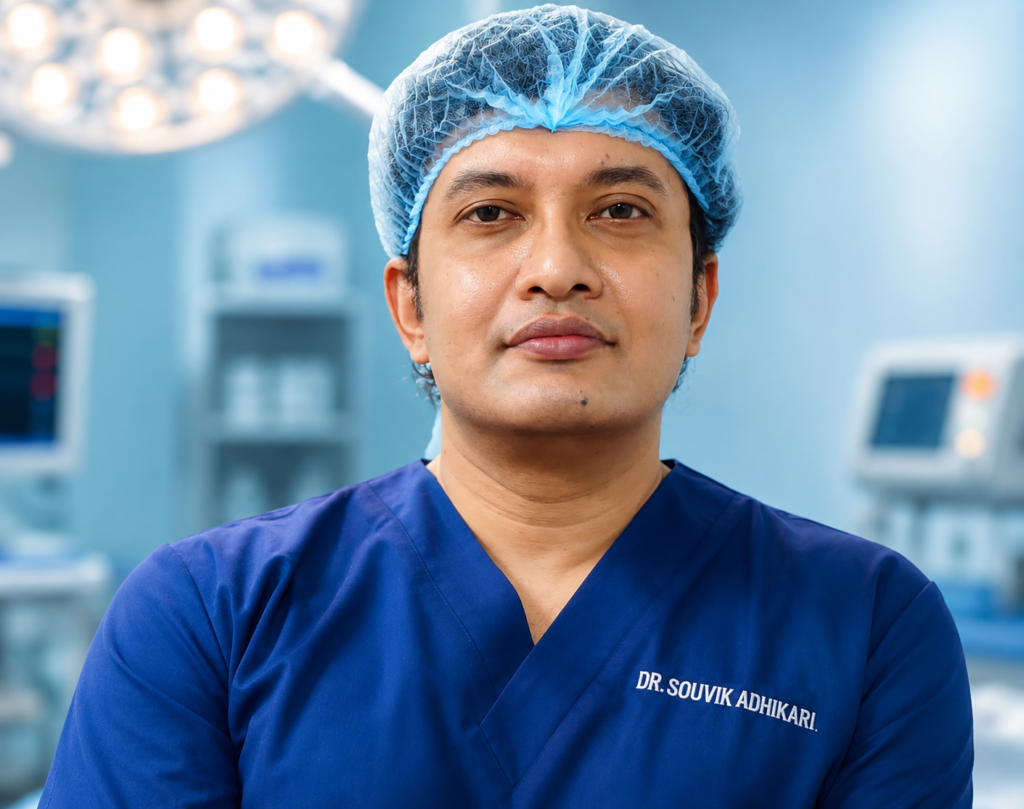
Prof. (Dr.) Souvik Adhikari
MS, MCh (Plastic Surgery)
17+ years experience
Gallery
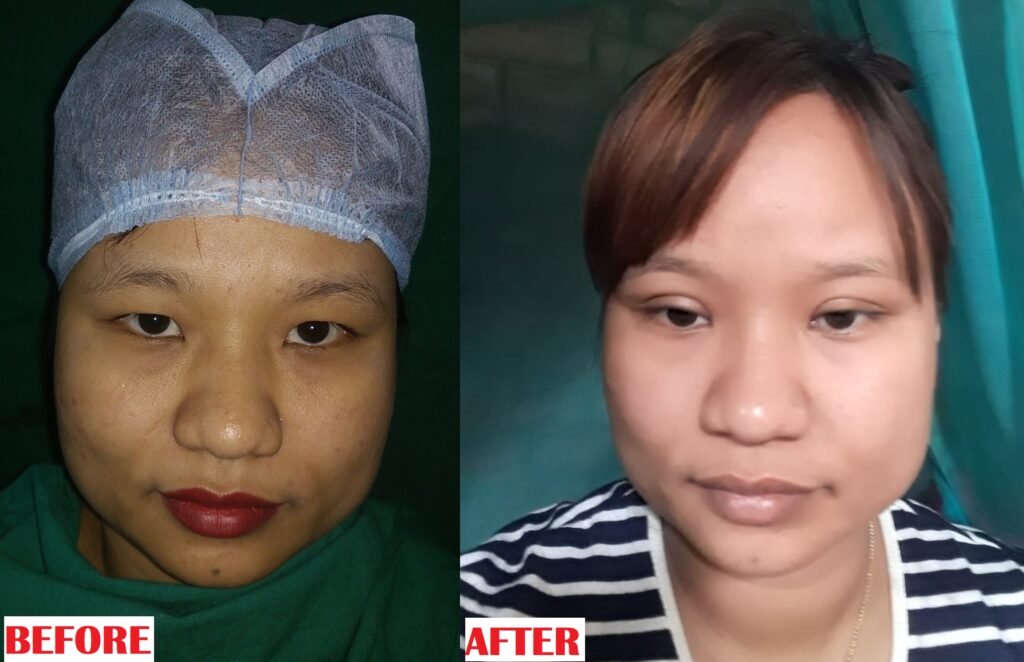
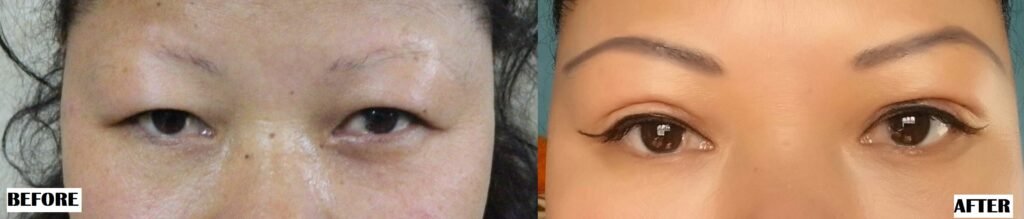
Consented before-and-after photographs for Asian Blepharoplasty are reviewed privately during consultation, in line with medical advertising guidelines.
Frequently Asked Questions
Is Asian Blepharoplasty painful?
Discomfort is well controlled with a multimodal pain protocol. Most patients describe a tightness or soreness rather than sharp pain, easing significantly within the first week.
How much does Asian Blepharoplasty cost in Kolkata?
The cost of Asian blepharoplasty in Kolkata depends on the surgical technique, extent of eyelid correction, anaesthesia, facility charges and whether additional eyelid procedures are required. An individualised written estimate is provided after consultation and assessment of the eyelid anatomy and treatment plan.
When can I return to work after Asian Blepharoplasty?
Return to work depends on the surgical technique, the amount of swelling or bruising and the nature of your work. Some patients with desk-based work can resume routine activities relatively early, while others may prefer additional time for the visible swelling and bruising to settle. Your surgeon will advise you about returning to work, exercise and other activities based on your recovery.
Will there be a visible scar after Asian Blepharoplasty?
Incisional Asian blepharoplasty creates a scar along the planned upper-eyelid crease. As the incision heals, the scar generally becomes less conspicuous and may blend with the natural eyelid fold. Scar appearance varies between individuals and depends on the surgical technique and healing process.
Do you treat patients traveling from outside Kolkata?
Yes. Patients from across West Bengal, India and abroad are treated, with video consultations and coordinated travel and stay planning.
What is Asian Blepharoplasty?
Asian blepharoplasty is a specialised eyelid surgery performed to create or enhance an upper-eyelid crease while preserving the patient's individual facial characteristics. It is commonly known as double eyelid surgery and is planned according to eyelid anatomy, skin thickness, crease position and the patient's aesthetic goals.
What is double eyelid surgery?
Double eyelid surgery is a procedure designed to create or define an upper-eyelid crease in patients who naturally have a less prominent or absent crease. The technique is customised to the individual's anatomy rather than creating a standard crease in every patient.
Is Asian Blepharoplasty the same as double eyelid surgery?
Yes. Asian blepharoplasty is commonly referred to as double eyelid surgery because the procedure is designed to create or define an upper-eyelid crease. However, the exact technique and crease design are individualised according to the patient's eyelid anatomy and desired appearance.
Is Asian Blepharoplasty only for Asian patients?
Although the procedure is particularly associated with Asian eyelid anatomy, the term Asian blepharoplasty describes a surgical approach and anatomical considerations rather than a strict requirement based on ethnicity. Patients are assessed individually to determine whether double eyelid surgery is appropriate for their eyelid structure and aesthetic goals.
What is the difference between Asian Blepharoplasty and conventional Blepharoplasty?
Conventional blepharoplasty often focuses on removing or repositioning excess eyelid skin and fat associated with ageing. Asian blepharoplasty, on the other hand, commonly focuses on creating or defining an upper-eyelid crease while carefully considering the distinctive anatomy of the Asian eyelid.
Who is a good candidate for Asian double eyelid surgery?
A suitable candidate for Asian double eyelid surgery is generally someone who is in good overall health, has realistic expectations and wants to create or improve an upper-eyelid crease. A detailed examination is necessary to assess eyelid anatomy, skin quality, asymmetry and the desired crease height and shape.
Can Asian Blepharoplasty create natural-looking double eyelids?
Yes. A major goal of Asian blepharoplasty in Kolkata is to create a natural-looking eyelid crease that complements the patient's facial proportions. Careful planning of crease height, shape and symmetry is important to avoid an overly high or artificial appearance.
Can double eyelid surgery correct uneven eyelids?
Asian blepharoplasty can sometimes improve eyelid asymmetry, particularly when the difference is related to the position or formation of the eyelid crease. However, perfect symmetry cannot always be guaranteed because natural facial asymmetry is common.
Is Asian Blepharoplasty permanent?
The longevity of double eyelid surgery depends on the surgical technique, individual healing characteristics and changes that occur with ageing. Surgical techniques designed to create a more durable eyelid crease can provide long-lasting results, although the natural ageing process will continue.
Can Asian Blepharoplasty make the eyes look bigger?
Asian blepharoplasty primarily creates or defines an upper-eyelid crease. This can change the perceived openness and definition of the eyes, but it does not literally enlarge the eyeball. The visible effect depends on eyelid anatomy, crease position, skin and soft-tissue characteristics and other structures around the eye.
What is the recovery time after Asian Blepharoplasty?
Recovery varies between individuals and according to the surgical technique. Swelling and bruising are common during the early recovery period and gradually improve. Patients can usually return progressively to routine activities according to their surgeon's instructions, while the eyelid crease continues to settle during healing.
When will I see the final results of double eyelid surgery?
The initial change in eyelid crease formation may be visible soon after surgery, but final Asian blepharoplasty results take time to develop. Swelling gradually decreases and the eyelid tissues continue to soften and settle over the following weeks and months.
Can Asian Blepharoplasty be combined with other eyelid procedures?
In selected patients, Asian blepharoplasty can be combined with other eyelid procedures, depending on the individual's anatomy and concerns. A comprehensive assessment can determine whether additional treatment is necessary or whether double eyelid surgery alone is sufficient.
Is Asian Blepharoplasty safe?
Like any surgical procedure, Asian blepharoplasty carries potential risks, including bleeding, infection, asymmetry, changes in eyelid sensation, dry-eye symptoms, visible scarring and the possibility of requiring revision surgery. Appropriate patient selection, detailed planning and postoperative follow-up are important.
Where can I get Asian Blepharoplasty in Kolkata?
Patients looking for Asian blepharoplasty in Kolkata should consult a qualified plastic surgeon experienced in eyelid and facial surgery. A personalised consultation allows the surgeon to assess the eyelid anatomy and discuss the most appropriate technique for achieving a balanced and natural-looking double eyelid crease.
Honest assessment, written estimate, no pressure to book.