Breast Reconstruction in Kolkata
Breast reconstruction in Kolkata is a specialised form of plastic and reconstructive surgery designed to restore the shape, volume and contour of the breast following breast cancer surgery, mastectomy, lumpectomy, trauma or congenital breast abnormalities. Reconstruction can help restore breast symmetry and body confidence while creating a breast contour that is proportionate to the patient’s individual body shape. Depending on the patient’s circumstances, reconstruction may be performed immediately during breast cancer surgery or as a delayed procedure after completion of cancer treatment.
Breast Reconstruction Surgery in Kolkata
Breast reconstruction surgery in Kolkata is individually planned according to the patient’s medical history, type of breast surgery, available tissue, body shape and personal preferences. Reconstruction may involve implant-based breast reconstruction, tissue-based reconstruction using the patient’s own tissue, fat grafting or a combination of techniques. In selected patients, additional procedures may be performed to improve breast symmetry, nipple position or overall contour.
Types of Breast Reconstruction
Breast reconstruction can be performed using breast implants, the patient’s own tissue, or a combination of reconstructive techniques. The appropriate method depends on the type of breast cancer surgery, available skin and soft tissue, previous radiotherapy, body shape, overall health and the patient’s preferences.
Implant-Based Breast Reconstruction
Implant-based reconstruction uses a breast implant to recreate breast volume. In selected patients, tissue expansion may be used to gradually create sufficient soft-tissue coverage before placement of the definitive implant. Implant-based reconstruction may be appropriate for some patients who prefer to avoid a tissue donor site.
Autologous or Flap Breast Reconstruction
Autologous reconstruction uses the patient’s own skin and fat, and in some techniques muscle, to reconstruct the breast. Depending on the patient’s anatomy and reconstructive requirements, tissue may be obtained from areas such as the abdomen, back, thigh or buttock.
Microsurgical flap techniques can involve transferring tissue together with its blood supply and reconnecting the vessels at the chest. These procedures require specialised reconstructive planning and microsurgical expertise.
Breast Reconstruction with Fat Grafting
Fat grafting may be used in selected patients to improve contour, soft-tissue coverage, symmetry or localised volume deficiencies. It may be performed as part of staged reconstruction rather than as a substitute for every form of breast reconstruction.
Combination and Staged Breast Reconstruction
Some patients benefit from a combination of techniques. Implant reconstruction, flap surgery, fat grafting, breast lift or reduction of the opposite breast, and nipple-areola reconstruction may be performed at different stages depending on the reconstructive plan.
The aim is not simply to create breast volume but to achieve a breast shape and position that are proportionate to the patient’s body and, where appropriate, reasonably symmetrical with the opposite breast.
Breast Reconstruction After Mastectomy
For women who have undergone a mastectomy, breast reconstruction can help restore breast volume and shape. Some patients may be suitable for reconstruction at the time of mastectomy, while others may benefit from reconstruction at a later stage. The timing and method depend on factors such as cancer treatment, radiotherapy, tissue quality and the patient’s overall health. A multidisciplinary approach may be appropriate when reconstruction is planned following cancer treatment.
Natural-Looking Breast Reconstruction
The goal of breast reconstruction in Kolkata is not simply to replace lost breast tissue but to create a natural and proportionate breast contour. Factors such as breast size, shape, position, skin quality and symmetry with the opposite breast are carefully considered. Depending on the individual case, procedures such as breast lift, reduction, implant reconstruction or fat grafting may be incorporated to improve symmetry and achieve a more harmonious result.
Nipple and Areola Reconstruction
For patients who have lost the nipple and areola during breast surgery, nipple-areola reconstruction may be considered as a later stage of breast reconstruction. Depending on the patient’s anatomy and preferences, reconstructive techniques or medical tattooing may be used to recreate the appearance of the nipple and areola. The timing is individualised according to the overall reconstruction and healing process.
Breast Reconstruction After Breast Cancer
Breast reconstruction after breast cancer can be an important part of the recovery journey for selected women. Reconstruction does not treat or prevent breast cancer; rather, it focuses on restoring breast appearance after cancer surgery. The appropriate approach depends on the type of cancer treatment received, including whether radiotherapy or chemotherapy is required. Patients can discuss reconstructive options with their breast and plastic surgery teams to determine the most suitable pathway.
Breast Reconstruction by Prof. (Dr.) Souvik Adhikari
Prof. (Dr.) Souvik Adhikari brings 17+ years of surgical experience in cosmetic, plastic and reconstructive surgery, with additional AOCMF Fellowship training at Johns Hopkins University, USA. His approach to breast reconstruction in Kolkata focuses on detailed assessment, individualised reconstructive planning, meticulous surgical technique and restoration of breast form with attention to symmetry and natural-looking contours. Prof. (Dr.) Souvik Adhikari’s academic and surgical experience includes plastic and reconstructive surgery, microsurgery and complex tissue reconstruction. His academic work and publications reflect involvement in reconstructive surgery, including soft-tissue reconstruction and microsurgical techniques.
Personalised Breast Reconstruction in Kolkata
Every patient’s breast reconstruction journey is different. The choice between implants, autologous tissue reconstruction, fat grafting or a combination of techniques depends on individual anatomy, previous treatment, tissue quality and personal goals. During consultation, the reconstructive options, expected outcomes, scars, recovery, potential complications and limitations are discussed so that patients can make an informed decision.
If you are looking for breast reconstruction in Kolkata following mastectomy, breast cancer surgery, trauma or another cause of breast deformity, a personalised consultation can help you understand the available reconstructive options. The goal is to achieve restored breast contour, improved symmetry and a natural-looking result while taking into account your overall treatment and individual needs.
Individualised Planning for Breast Reconstruction
Breast reconstruction is not a single standard operation. The reconstructive plan is determined by the patient’s previous breast surgery, cancer treatment, tissue quality, body shape, available donor tissue, medical condition and personal preferences.
The first consultation focuses on understanding the breast defect and previous treatment, assessing the chest wall and remaining breast tissue, and discussing whether implant-based reconstruction, autologous tissue reconstruction, fat grafting or a combination of techniques may be appropriate.
Who May Be Suitable for Breast Reconstruction?
Breast reconstruction may be considered for patients who have experienced breast loss or significant breast deformity following:
Mastectomy for breast cancer
Lumpectomy or breast-conserving surgery
Previous breast surgery
Breast trauma
Congenital breast abnormalities
Significant breast asymmetry or deformity
Reconstruction may be performed immediately during the original breast surgery or at a later stage. The timing depends on cancer treatment, radiotherapy, chemotherapy, tissue condition and the overall reconstructive plan.
Breast reconstruction is planned in coordination with the patient’s cancer treatment and should not be considered a treatment for breast cancer itself.
Immediate vs Delayed Breast Reconstruction
Immediate Breast Reconstruction
Immediate reconstruction is performed during the same operation as the mastectomy or other breast-removing procedure. In appropriately selected patients, it can preserve or utilise available breast skin and begin breast restoration without requiring a separate reconstructive operation later.
Delayed Breast Reconstruction
Delayed reconstruction is performed after the initial breast cancer treatment or after the patient has recovered from previous surgery. It may be considered when additional cancer treatment, radiotherapy or other medical factors influence the timing of reconstruction.
The decision between immediate and delayed reconstruction is individualised and is often made as part of a multidisciplinary treatment plan.
Breast Reconstruction After Mastectomy
Mastectomy can result in loss of breast volume, skin and the natural breast contour. Reconstruction after mastectomy aims to restore breast shape and volume while taking into account the condition of the chest wall and the opposite breast.
Depending on the patient’s circumstances, reconstruction may involve an implant, tissue expansion, an autologous flap, fat grafting or a combination of techniques.
Breast Reconstruction After Radiotherapy
Previous radiotherapy can affect the quality, elasticity and healing characteristics of chest-wall tissues. This can influence the choice and timing of reconstruction.
Patients who have received radiotherapy require careful assessment because the reconstructive approach may differ from that used in patients without previous radiation treatment. In selected cases, autologous tissue may be considered when additional healthy tissue is required for reconstruction.
Breast Reconstruction After Lumpectomy
Breast-conserving surgery can sometimes produce contour deformity or asymmetry even when most of the breast remains intact.
Depending on the size and location of the defect, correction may involve local tissue rearrangement, fat grafting, breast reshaping or other reconstructive techniques. The opposite breast may also be considered when symmetry requires adjustment.
Reconstruction of the Opposite Breast for Symmetry
When only one breast has been affected, achieving symmetry may require treatment of both sides rather than reconstruction of the affected breast alone.
Depending on the individual anatomy, procedures such as breast lift, breast reduction, breast augmentation or other contouring procedures may be considered for the opposite breast.
The goal is to improve overall breast symmetry rather than simply reproduce the volume of the reconstructed side.
Nipple and Areola Reconstruction
Nipple-areola reconstruction is generally considered after the main breast mound has healed and its position and shape have stabilised.
Depending on the patient’s anatomy and preferences, reconstructive techniques or medical tattooing may be used to create the appearance of a nipple and areola. This is often a staged part of breast reconstruction rather than the initial operation.
Breast Reconstruction with Fat Grafting
Fat grafting may be useful for improving contour irregularities, adding selected areas of volume and improving soft-tissue coverage.
It can be particularly useful during staged reconstruction, although the amount of fat that can be transferred safely and the degree of volume retention vary between patients. More than one session may sometimes be required.
Breast Reconstruction Using Flap Surgery
Flap reconstruction uses tissue from another part of the patient’s body to create or support the reconstructed breast. Depending on the patient’s anatomy and reconstructive requirements, donor tissue may be obtained from areas such as the abdomen, back, thigh or buttock.
Some flap procedures use microsurgery to reconnect the blood vessels supplying the transferred tissue. The choice of flap depends on available donor tissue, previous operations, body shape, cancer treatment and the reconstructive goals.
Breast Reconstruction with Implants
Implant-based reconstruction uses a breast implant to recreate breast volume. Some patients may require tissue expansion before placement of a definitive implant, while selected patients may be candidates for direct implant reconstruction.
Implant reconstruction may offer a shorter and less extensive operation than some autologous flap procedures, but implants have their own long-term considerations and may require future monitoring or additional surgery.
Breast Reconstruction After Breast Cancer Treatment
Breast reconstruction should be planned in the context of the patient’s overall cancer treatment. The type and timing of reconstruction may be influenced by chemotherapy, radiotherapy, mastectomy type and the condition of the remaining tissues.
Reconstruction restores breast form but does not treat or prevent breast cancer recurrence. Continued follow-up with the patient’s oncology and breast-care team remains important.
Breast Reconstruction for Congenital Breast Deformity
Some patients seek reconstructive breast surgery because of congenital differences in breast development, chest-wall abnormalities or significant breast asymmetry.
Treatment is tailored to the underlying deformity and may involve tissue rearrangement, implants, fat grafting, breast lift, breast reduction or a combination of techniques.
Anaesthesia for Breast Reconstruction
Breast reconstruction is commonly performed under general anaesthesia, although the exact anaesthetic plan depends on the type and extent of surgery and the patient’s medical condition.
Patients undergoing more extensive flap reconstruction require a different perioperative pathway from those undergoing a less extensive reconstructive procedure.
Duration of Breast Reconstruction Surgery
There is no single standard operating time for breast reconstruction.
The duration depends on the reconstructive method. Implant-based procedures, fat grafting, breast reshaping and microsurgical flap reconstruction can have substantially different operating times.
A more accurate estimate can be provided after the reconstructive plan has been established.
Recovery After Breast Reconstruction
Recovery varies considerably according to the type of reconstruction.
Patients undergoing implant-based reconstruction may have a different recovery pathway from those undergoing autologous flap or microsurgical reconstruction. The extent of surgery, donor-site treatment and any additional procedures also influence recovery.
Swelling, bruising, tightness and temporary changes in sensation may occur during healing. Activity is increased gradually according to the operation performed and the progress of recovery.
Scars After Breast Reconstruction
Scarring depends on the reconstructive technique.
Implant-based reconstruction may involve scars on the breast or previous mastectomy site, while flap reconstruction also creates a donor-site scar. The location and extent of scars are discussed during surgical planning.
Scars mature gradually over time, although they remain permanent to some degree.
Risks and Possible Complications
Breast reconstruction is a major surgical procedure and carries risks that vary according to the technique used.
Potential complications include bleeding, infection, fluid collection, wound-healing problems, altered sensation, asymmetry, unfavourable scarring, anaesthetic complications and the possibility of further surgery.
Implant-based reconstruction may have implant-related complications, while flap reconstruction has additional risks related to the transferred tissue and its blood supply. Microsurgical reconstruction also carries a specific risk of vascular compromise or flap loss.
The relevant risks are discussed individually before surgery so that patients can make an informed decision.
Expected Results After Breast Reconstruction
The aim of breast reconstruction is to restore breast form, volume and contour while achieving the best possible balance with the opposite breast.
Reconstruction can produce a significant improvement in breast shape and body contour, but it cannot always reproduce the exact appearance or sensation of a natural breast.
The final result develops progressively as swelling settles, scars mature and reconstructed tissues stabilise. Some patients may benefit from staged procedures to refine symmetry, contour or nipple-areola appearance.
Consultation for Breast Reconstruction in Kolkata
Breast reconstruction requires careful planning, particularly after breast cancer treatment or previous breast surgery.
During consultation, the previous operation, cancer treatment, radiotherapy history, breast and chest-wall anatomy, available donor tissue and personal goals are assessed. The reconstructive options, expected benefits, limitations, scars, recovery and potential complications are discussed before deciding on a surgical pathway.
Patients travelling to Kolkata from elsewhere in West Bengal, other parts of India or abroad can discuss their case through an initial consultation before travelling, where appropriate.
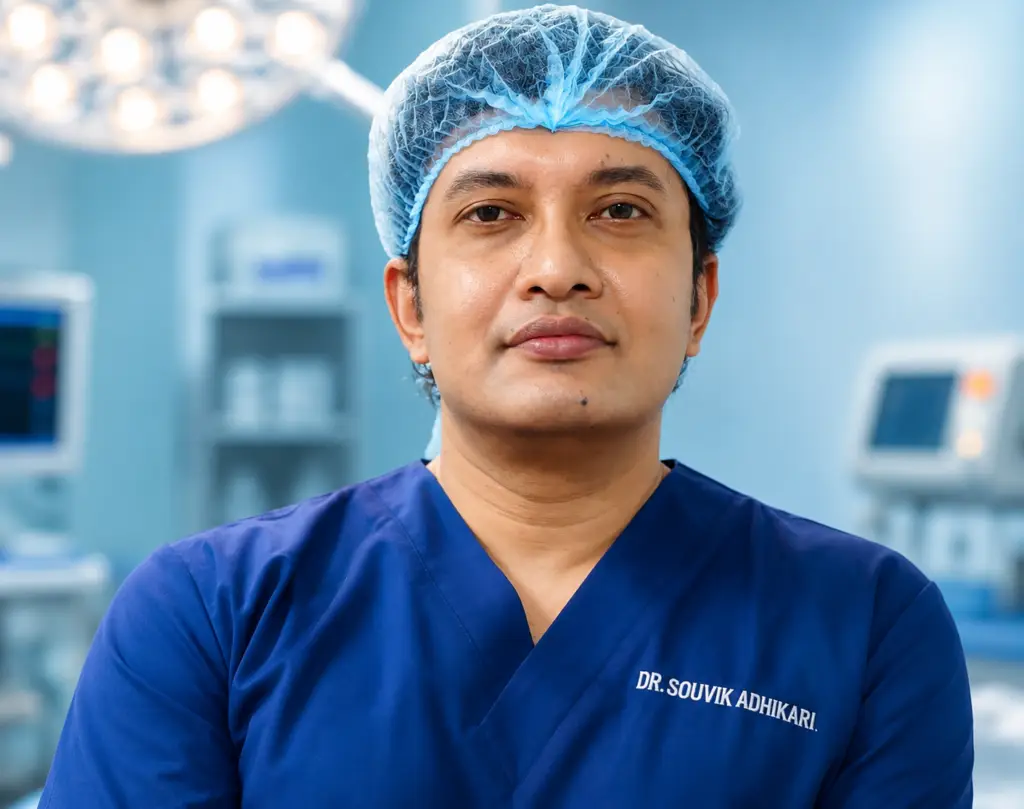
Prof. (Dr.) Souvik Adhikari
MS, MCh (Plastic Surgery)
17+ years experience
Breast Reconstruction Options at a Glance
| Reconstruction method | Main principle | Potential advantages | Important considerations |
|---|---|---|---|
| Implant-based reconstruction | Breast implant restores volume | No tissue donor site; generally less extensive than flap surgery | Implant-related complications and future procedures may occur |
| Tissue-expander reconstruction | Gradual expansion creates tissue coverage | Allows staged reconstruction | Requires multiple expansion visits/procedures |
| Autologous/flap reconstruction | Patient’s own tissue creates breast mound | Uses living tissue; can provide natural soft-tissue volume | Donor-site surgery and longer recovery |
| Fat grafting | Patient’s own fat adds selected volume/contour | Useful for contour refinement and soft-tissue coverage | Some transferred fat may not survive; staged treatment may be needed |
| Combination reconstruction | Uses more than one technique | Allows treatment to be tailored to complex needs | Usually involves multiple components or stages |
Frequently Asked Questions About Breast Reconstruction
What is breast reconstruction surgery?
Breast reconstruction is a surgical procedure designed to restore the shape, volume and contour of a breast after mastectomy, breast-conserving surgery or significant breast deformity. Reconstruction may use a breast implant, the patient’s own tissue, fat grafting or a combination of techniques. The most appropriate approach depends on the patient’s anatomy, previous treatment, cancer therapy and reconstructive goals.
Can breast reconstruction be performed at the same time as mastectomy?
Yes. Breast reconstruction can sometimes be performed immediately during the same operation as a mastectomy. This is known as immediate breast reconstruction. In other patients, reconstruction is performed later after the mastectomy and other cancer treatments have been completed. The timing is individualised according to the cancer treatment plan, tissue condition and the patient’s medical and personal circumstances.
Can breast reconstruction be performed after breast cancer treatment?
Yes. Breast reconstruction can be performed after completion of breast cancer treatment and may be considered months or even years after mastectomy. Delayed reconstruction can be appropriate when additional treatment, including radiotherapy, needs to be completed first or when the patient prefers to postpone reconstruction.
What is the difference between implant-based and flap breast reconstruction?
Implant-based reconstruction uses a breast implant, sometimes following tissue expansion, to create the reconstructed breast mound. Flap or autologous reconstruction uses the patient’s own tissue, such as skin and fat from the abdomen, back, thigh or buttock, to reconstruct the breast.
The choice depends on factors such as previous surgery, radiotherapy, available donor tissue, body shape, overall health and personal preference.
What is autologous breast reconstruction?
Autologous breast reconstruction uses tissue taken from another part of the patient’s body to reconstruct the breast. Depending on the patient’s anatomy and the reconstructive requirements, tissue may be obtained from areas such as the abdomen, back, thigh or buttock.
Some autologous procedures use microsurgery to reconnect the blood vessels supplying the transferred tissue. The appropriate technique depends on the patient’s anatomy and previous treatment.
Can breast reconstruction be performed after radiotherapy?
Breast reconstruction can be performed in patients who have received radiotherapy, but previous radiation can affect the skin and soft tissues and may influence the choice and timing of reconstruction.
The reconstructive plan should therefore be coordinated with the patient’s breast and cancer-treatment team. In selected patients, autologous tissue reconstruction may be considered when additional healthy soft tissue is required.
Can breast reconstruction be performed after a lumpectomy?
Yes. Some patients develop contour deformity or breast asymmetry after breast-conserving surgery or lumpectomy. Depending on the location and extent of the defect, correction may involve local tissue rearrangement, fat grafting, breast reshaping or another reconstructive procedure.
The appropriate technique depends on the amount of tissue removed, the location of the defect and the condition of the remaining breast tissue.
Can breast reconstruction restore the nipple and areola?
Yes. Nipple and areola reconstruction can be performed as part of a later stage of breast reconstruction when the nipple and areola have not been preserved during the original surgery.
Depending on the patient’s anatomy and preferences, surgical nipple reconstruction, areolar reconstruction and medical tattooing, including three-dimensional tattooing, may be considered.
Can breast reconstruction make both breasts symmetrical?
Breast reconstruction can significantly improve breast symmetry, but perfect symmetry cannot always be achieved.
When only one breast has been affected, the opposite breast may sometimes require a breast lift, breast reduction or breast augmentation to improve the overall balance of size, shape and position.
Can fat grafting be used during breast reconstruction?
Yes. Fat grafting may be used during staged breast reconstruction to improve contour, add selected areas of volume, correct minor irregularities or improve soft-tissue coverage.
Because some of the transferred fat may not survive, more than one session may sometimes be required. Fat grafting is therefore often used as an adjunct to reconstruction rather than as a substitute for every type of breast reconstruction.
How many operations are required for breast reconstruction?
The number of procedures varies considerably between patients. Some reconstructions can be completed in a relatively small number of stages, while others may require additional procedures for implant exchange, contour refinement, fat grafting, symmetry correction or nipple-areola reconstruction.
The reconstructive plan and the likely number of stages should be discussed before surgery. Breast reconstruction commonly involves staged procedures rather than a single operation.
Is breast reconstruction painful?
Some discomfort, tightness, swelling and bruising are expected after breast reconstruction. The degree of discomfort depends on the type and extent of surgery.
Patients undergoing flap reconstruction may also experience discomfort at the donor site, while implant-based reconstruction has a different recovery pattern. Pain medication and postoperative care are used to help manage discomfort during recovery.
How long does recovery take after breast reconstruction?
Recovery varies substantially according to the reconstructive technique. Implant-based reconstruction, fat grafting and flap or microsurgical reconstruction have different recovery requirements.
Activity is increased gradually according to healing, and patients undergoing more extensive reconstruction may require a longer recovery period. The expected recovery timeline is discussed individually after the specific reconstructive procedure has been planned.
How visible are the scars after breast reconstruction?
Scarring depends on the reconstruction technique. Implant-based reconstruction may use existing mastectomy or breast-surgery scars, while flap reconstruction also creates a scar at the tissue donor site.
Scars are permanent to some degree but generally become flatter and less noticeable as they mature. Their final appearance varies between individuals.
Does breast reconstruction increase the risk of breast cancer recurrence?
Breast reconstruction itself does not increase the risk of breast cancer recurrence. However, reconstruction does not treat breast cancer or eliminate the possibility of recurrence, so appropriate follow-up with the patient’s breast cancer and oncology team remains essential.
Will a reconstructed breast feel like a natural breast?
A reconstructed breast can provide a natural-looking breast shape, but it may not have exactly the same sensation, softness or movement as an untreated breast.
The final appearance and feel depend on the reconstruction technique, the amount and quality of available tissue, previous cancer treatment, radiotherapy and individual healing.
How much does breast reconstruction cost in Kolkata?
The cost of breast reconstruction in Kolkata varies according to the type and complexity of reconstruction. Factors may include whether an implant, tissue expander, autologous flap, fat grafting or a combination of procedures is required, as well as anaesthesia, hospitalisation and any additional procedures for symmetry or nipple-areola reconstruction.
An individualised estimate can be provided after consultation and assessment of the reconstructive plan.
Can patients from outside Kolkata undergo breast reconstruction?
Yes. Patients from other parts of West Bengal, other Indian states and overseas can undergo breast reconstruction in Kolkata. Because reconstruction may involve staged procedures and postoperative follow-up, the timing of travel, hospital stay and subsequent reviews should be discussed during the consultation.
When should I consult a plastic surgeon about breast reconstruction?
Ideally, reconstruction should be discussed early in the breast cancer treatment pathway so that immediate and delayed options can be considered before definitive breast surgery. However, patients who have already undergone mastectomy or other breast surgery can also seek consultation for delayed reconstruction, even years later.
The consultation should take into account the previous operation, cancer treatment, radiotherapy, current breast and chest-wall condition, overall health and the patient’s reconstructive goals.
Honest assessment, written estimate, no pressure to book.