Table of Contents
Gynecomastia Surgery in Kolkata
Gynecomastia surgery in Kolkata helps men with enlarged male breast tissue achieve a flatter, more proportionate chest through an individualised surgical approach. Prof. (Dr.) Souvik Adhikari, Professor & Consultant Plastic Surgeon, assesses each patient to determine whether liposuction, glandular tissue excision, or a combination of techniques is appropriate.
Gynecomastia Surgery at a Glance
Cost: Starting from ₹28,000 in a nursing-home setting
Duration: Approximately 2–3 hours, depending on the complexity of the procedure
Anaesthesia: Local or general anaesthesia, depending on the case and surgical plan
Return to desk work: Often within about a week, depending on recovery and the nature of the procedure
Consultation: Available in Bengali, English and Hindi
The starting cost may be higher in a hospital setting and varies according to the type of anaesthesia, surgical technique and individual requirements. The appropriate treatment plan, expected recovery and final cost are discussed after clinical assessment.
________________________________________________________________________________________
What is Gynecomastia?
Gynecomastia is a benign enlargement of male breast tissue caused by an imbalance between estrogen and testosterone. It may affect one or both breasts and can be symmetrical or noticeably uneven, with one side larger than the other. The enlargement is usually due to the growth of glandular breast tissue, rather than simply an increase in body fat.
Gynecomastia can occur during puberty, adulthood, or later in life and may be associated with hormonal changes, certain medications, obesity, medical conditions, or anabolic steroid use. In some men, no specific underlying cause is identified.
When persistent gynecomastia causes discomfort, embarrassment, or dissatisfaction with chest appearance, gynecomastia surgery may be considered. Depending on the individual case, treatment can involve liposuction, surgical removal of glandular tissue, or a combination of both. A clinical examination is important to determine the cause and the most appropriate treatment approach.
For men seeking gynecomastia surgery in Kolkata, treatment should be planned according to the degree of glandular enlargement, fat distribution, skin quality, chest shape, and whether the condition is unilateral or asymmetrical.
Prof. (Dr.) Souvik Adhikari is a gynecomastia surgeon in Kolkata and provides personalised gynecomastia treatment in Kolkata, with surgical planning based on the patient’s chest anatomy, tissue composition, skin quality and aesthetic goals. The aim is to create a flatter, proportionate and natural-looking male chest while maintaining realistic expectations about the outcome.
Causes of Gynecomastia
Gynecomastia is the enlargement of male breast tissue caused by an imbalance between the effects of oestrogen and testosterone. It may affect one or both breasts and can occur at different stages of life. In some men, the cause can be clearly identified, while in others it may be classified as idiopathic gynecomastia, meaning that no specific underlying cause is found.
Common Causes of Gynecomastia
Puberty: Gynecomastia commonly develops during adolescence because of temporary hormonal changes. In many cases, the breast enlargement gradually settles as hormone levels stabilise.
Hormonal imbalance: A reduction in testosterone or an increase in the relative effect of oestrogen can stimulate the growth of glandular breast tissue in men. Hormonal disorders involving the testes, adrenal glands, thyroid or pituitary gland may occasionally contribute.
Weight gain and obesity: Excess body fat can increase the conversion of androgens into oestrogen and may also cause fatty enlargement of the chest. This is sometimes referred to as pseudogynecomastia or chest fat, which is different from true glandular gynecomastia.
Medications: Certain prescription medicines can contribute to breast enlargement in men. These include some medications used for hormonal conditions, prostate problems, cardiovascular disease and other medical disorders. Apart from this, anabolic steroids can also cause gynecomastia.
Alcohol and recreational drugs: Excessive alcohol consumption and the use of certain recreational or performance-enhancing drugs may affect hormone balance and contribute to gynecomastia.
Medical conditions: Liver or kidney disease, thyroid disorders and certain conditions affecting hormone production can occasionally cause gynecomastia.
Age-related hormonal changes: Gynecomastia can occur in older men as testosterone levels gradually decline and the balance between testosterone and oestrogen changes.
In many patients, more than one factor may contribute to the development of enlarged male breasts. A clinical assessment is therefore important to determine whether the enlargement is predominantly glandular tissue, excess fat, loose skin or a combination of these factors before considering treatment.
Simon Grading of Gynecomastia
The Simon grading system is a commonly used clinical classification for describing the severity of gynecomastia. It considers the degree of breast enlargement and the presence or absence of excess skin.
| Simon Grade | Description |
|---|---|
| Grade I | Small breast enlargement without excess skin. The enlargement is usually confined to the area around the nipple-areola complex. |
| Grade IIa | Moderate breast enlargement without excess skin. |
| Grade IIb | Moderate breast enlargement with minor excess skin. |
| Grade III | Severe breast enlargement with significant excess skin, producing a more pendulous or feminine breast appearance. |
Why is Simon grading important?
The grade of gynecomastia helps the plastic surgeon assess the severity of the condition and plan treatment. However, Simon grade alone does not determine the surgical technique. The amount of glandular tissue, fat, skin excess, skin quality, chest shape, and the presence of asymmetry or unilateral gynecomastia also need to be considered.
For example, Grade I or II gynecomastia may often be treated with liposuction, glandular tissue excision, or a combination of both. More advanced Grade III gynecomastia may require additional skin-reduction procedures to achieve an appropriate chest contour.
A clinical examination is therefore essential before planning gynecomastia surgery in Kolkata.
Asymmetrical and Unilateral Gynecomastia
Gynecomastia does not always affect both sides of the chest equally. Asymmetrical gynecomastia refers to a difference in the size, shape or degree of breast-tissue enlargement between the two sides, while unilateral gynecomastia occurs predominantly or exclusively on one side.
Mild asymmetry is relatively common because the amount of glandular tissue, fat distribution and skin characteristics can naturally differ between the right and left sides. In some men, one breast may have a more prominent glandular component, while the other side may have more fatty tissue. Differences may also become more noticeable after weight changes or during the development of gynecomastia.
Unilateral breast enlargement deserves careful clinical assessment, particularly when it is new, rapidly developing, associated with a firm or unusual lump, pain, nipple discharge, skin changes or other concerning features. Most cases of unilateral enlargement are benign, but examination helps distinguish gynecomastia from other causes of male breast enlargement and determine whether further investigation is appropriate.
Treatment of Asymmetrical or Unilateral Gynecomastia
Treatment is individualized according to the underlying tissue composition and the degree of asymmetry. Depending on the findings, treatment may involve:
- Liposuction when excess fatty tissue is a significant component
- Glandular tissue excision when firm breast tissue persists beneath the nipple-areola complex
- A combination of liposuction and gland excision when both fat and glandular tissue contribute to the enlargement
- Skin reduction or reshaping in selected patients with significant excess skin, particularly after substantial weight loss
When the two sides differ significantly, the surgical approach may also need to be different on each side. The objective is not necessarily to perform identical procedures on both breasts, but to achieve the greatest reasonable improvement in symmetry while maintaining a natural chest contour.
Patients should also understand that perfect symmetry cannot always be achieved, because the underlying chest anatomy, muscle development, nipple position and skin characteristics may naturally differ between the two sides.
Watch Video
https://youtube.com/shorts/qIg6mNChpLo?feature=share
Treatment Options for Gynecomastia
The treatment of gynecomastia depends on the underlying cause, the amount and type of breast tissue present, the degree of skin laxity and the patient’s individual goals. Enlarged male breasts may contain glandular breast tissue, excess fat, loose skin, or a combination of these, so there is no single surgical technique that is appropriate for every patient.
Before deciding on treatment, a thorough clinical assessment is important to determine the cause and composition of the breast enlargement. In selected patients, particularly when gynecomastia is recent or associated with a medical condition or medication, addressing the underlying cause may be appropriate before considering surgery.
Observation and Treatment of the Underlying Cause
Not every case of gynecomastia requires surgery. Gynecomastia associated with puberty may resolve spontaneously as hormonal levels stabilise. Similarly, when a medication, hormonal disorder or other medical condition is contributing to breast enlargement, treating or modifying the underlying cause may help.
Persistent gynecomastia that does not improve, particularly when it causes significant physical or psychological concerns, may eventually require surgical treatment.
Liposuction for Gynecomastia
Liposuction may be appropriate when chest enlargement is predominantly caused by excess fatty tissue. Through small incisions, a cannula is used to remove unwanted fat and improve the contour of the male chest.
Liposuction is particularly useful when the skin has reasonable elasticity and there is little significant glandular tissue. However, liposuction alone does not remove the firm glandular tissue that commonly lies beneath the nipple and areola.
Glandular Tissue Excision
When firm or fibrous glandular breast tissue is responsible for a significant component of the enlargement, surgical excision may be necessary. The excess glandular tissue can typically be removed through a carefully placed incision, often around the margin of the areola, depending on the patient’s anatomy and the amount of tissue that needs to be removed.
Glandular excision is often combined with liposuction to contour the surrounding chest and create a smoother transition between the treated area and the rest of the chest.
Combined Liposuction and Gland Excision
Many patients have a combination of excess fat and glandular breast tissue. In these cases, the most effective approach may involve both liposuction and surgical gland excision.
Liposuction can reduce the fatty component and contour the chest, while excision removes the firm glandular tissue that cannot be adequately treated with liposuction alone. Combining the two techniques can help produce a flatter, more natural-looking male chest contour.
Skin Excision and Chest Contouring
Patients with severe gynecomastia, significant skin laxity or substantial weight loss may have excess skin in addition to fat and glandular tissue. In such cases, simply removing the underlying tissue may not provide an optimal contour.
Skin excision or additional chest-contouring procedures may therefore be required to remove redundant skin and, in selected cases, improve the position or size of the nipple-areola complex. The extent and location of the incisions depend on the amount of excess skin and the individual anatomy.
Which Gynecomastia Treatment Is Right for You?
The appropriate treatment is determined on an individual basis. During consultation, factors such as the amount of glandular tissue and fat, skin elasticity, degree of breast enlargement, nipple position, chest anatomy, previous weight loss and the patient’s aesthetic goals are assessed.
Some patients may require liposuction alone, while others benefit from glandular excision, combined liposuction and gland excision, or additional skin removal and chest contouring. The goal is not simply to remove breast tissue, but to create a flatter, balanced and naturally proportioned male chest while maintaining appropriate nipple-areola position and contour.
Gynecomastia After Weight Loss
Significant weight loss can improve overall health and body shape, but some men are left with persistent fullness or sagging of the chest. This may be due to a combination of residual fatty tissue, glandular breast tissue and loose or stretched skin. As a result, the chest may remain enlarged even after substantial weight reduction.
It is important to distinguish gynecomastia from excess chest fat following weight loss. Weight loss can reduce fatty tissue, but established glandular breast tissue may persist. Similarly, when the skin has been significantly stretched, losing additional weight may not completely restore a firm and flat male chest.
What Treatment May Be Required After Weight Loss?
The appropriate treatment depends on the underlying cause and the condition of the chest. Some patients may benefit primarily from liposuction when excess fatty tissue is the main concern. If firm glandular tissue remains beneath the nipple, surgical gland excision may also be necessary.
Patients with significant skin laxity may require additional skin excision or chest contouring to remove excess skin and improve the position and shape of the nipple-areola complex. In more advanced cases, a combination of liposuction, gland excision and skin removal may be required to achieve a flatter and more proportionate chest.
Is Gynecomastia Surgery After Weight Loss Different?
Post-weight-loss gynecomastia surgery requires careful assessment because the surgeon must consider not only the amount of breast tissue but also skin elasticity, nipple position, chest width and the distribution of residual fat. The surgical plan is therefore individualised according to the patient’s anatomy and the amount of weight lost.
Ideally, patients should be close to a stable and sustainable weight before undergoing body-contouring or gynecomastia surgery. A consultation with a qualified plastic surgeon can help determine whether the remaining chest fullness is primarily due to fat, glandular tissue, excess skin or a combination of these factors.
Not every enlarged male chest is caused by gynecomastia. Some men have predominantly fatty tissue in the chest, particularly in association with overall weight gain, while true gynecomastia involves enlargement of glandular breast tissue. Many patients have a combination of glandular tissue and excess fat.
During clinical assessment, the composition of the chest enlargement, skin quality, nipple-areola complex and overall chest contour are evaluated. This helps determine whether weight management, liposuction, glandular excision or a combination of techniques is most appropriate.
Puffy Nipples and Gynecomastia
A prominent or “puffy” nipple-areola complex can occur when glandular tissue is concentrated beneath the nipple. In appropriate patients, removal of the underlying glandular tissue can reduce nipple prominence and improve the transition between the areola and surrounding chest. The exact approach depends on the underlying anatomy and whether excess fat or skin is also present.
Who Is a Candidate for Male Breast Reduction in Kolkata?
Gynecomastia or Male Breast Reduction surgery may be considered for men with persistent enlargement of the male chest caused by excess glandular breast tissue, fatty tissue, loose skin, or a combination of these factors.
Patients may consider surgery when breast enlargement:
persists despite achieving a stable and healthy weight
causes embarrassment or self-consciousness
makes certain clothing or physical activities uncomfortable
produces a prominent or puffy nipple-areola complex
remains after significant weight loss
is unlikely to improve through treatment of an underlying cause alone
Good general health, realistic expectations and a willingness to follow postoperative instructions are important considerations. Smoking can increase the risk of wound-healing problems and other complications, and patients who smoke may be advised to stop before and after surgery.
A clinical assessment is important before cosmetic treatment, particularly when breast enlargement is recent, painful, one-sided, rapidly increasing, or associated with a lump or nipple discharge.
Potential Benefits of Gynecomastia Surgery
The goals of male breast reduction are both functional and aesthetic. Depending on the individual’s anatomy, surgery may help to:
reduce excess glandular and fatty tissue
create a flatter and more proportionate male chest
improve the contour around the nipple and areola
reduce the prominence of puffy nipples when glandular tissue is responsible
address loose or redundant chest skin in selected patients
improve chest symmetry and overall body proportion
make clothing fit more comfortably
improve confidence in situations where the chest is visible
The degree of improvement varies between patients and depends on the amount and type of tissue removed, skin quality, chest anatomy and the extent of any pre-existing asymmetry.
Gynecomastia Surgery Cost in Kolkata
The cost of gynecomastia surgery in Kolkata varies from patient to patient because the procedure is planned according to the type and severity of gynecomastia, the surgical technique required, the type of anaesthesia, and the facility where the surgery is performed. Published Kolkata estimates also show considerable variation for the same reasons.
At my practice, gynecomastia surgery typically starts from approximately ₹28,000 when performed in a nursing-home setting. The final cost may be higher when the procedure is performed in a hospital, depending on the hospital facilities and associated charges. The type of anaesthesia—for example, local anaesthesia, sedation, or general anaesthesia—also influences the overall cost.
What determines the cost?
The final surgical fee depends on several factors, including:
- Type and grade of gynecomastia
- Amount of glandular tissue and fat that needs to be removed
- Whether liposuction, glandular excision, or a combination is required
- Whether treatment is required on one or both sides
- Degree of chest asymmetry or skin excess
- Type of anaesthesia
- Nursing-home versus hospital setting
- Operating-room and facility charges
- Preoperative investigations and postoperative requirements
A straightforward case requiring limited glandular excision may therefore cost considerably less than a more extensive procedure involving liposuction, gland excision, skin reduction and general anaesthesia.
Why is an exact price not quoted for every patient?
It is difficult to give an accurate final price without examining the patient. Two men may both be diagnosed with gynecomastia but require very different operations. The surgical plan is determined after assessing the glandular tissue, fat distribution, skin quality, chest contour and degree of asymmetry.
Therefore, the ₹28,000 starting price is an indicative starting cost, not a fixed price for every case. The exact cost of your gynecomastia surgery will be discussed after clinical assessment and once the appropriate surgical approach and anaesthesia have been determined.
For patients considering gynecomastia surgery in Kolkata, the priority should be an appropriate surgical plan and safe treatment rather than choosing a procedure solely on the basis of the lowest quoted price.
Procedure, Anesthesia & Duration of Gynecomastia Surgery
There is no single operation that is suitable for every patient with gynecomastia. The surgical technique is selected according to the composition of the enlarged chest, skin elasticity, degree of enlargement, nipple position and the patient’s desired outcome.
Anaesthesia for Gynecomastia Surgery
The type of anaesthesia depends on the extent of gynecomastia, the surgical techniques required and the patient’s individual circumstances.
Selected limited procedures may be performed with local anaesthesia, with or without appropriate sedation. More extensive correction may require general anaesthesia.
The final anaesthetic plan is determined after clinical assessment and pre-anaesthetic evaluation.
How Long Does Gynecomastia Surgery Take?
The duration of gynecomastia surgery varies according to the amount of tissue present, the surgical techniques required, the degree of skin excess and whether liposuction, gland excision or skin removal is performed. Usually the duration of surgery ranges from 2 – 3 hours.
Timeline of Recovery After Gynecomastia Surgery
Recovery after gynecomastia surgery varies depending on the severity of breast enlargement and whether the procedure involves liposuction, glandular tissue excision, skin reduction, or a combination of techniques. Most patients can gradually return to their normal activities over several weeks, while the final chest contour continues to improve as swelling settles.
First 24–48 hours
Mild to moderate swelling, bruising, tightness, and discomfort are common. Small amounts of drainage may occur in some patients. Pain is generally manageable with prescribed medication. A compression garment is usually worn as advised.
First week
Most patients can walk and perform light daily activities. Depending on the nature of their work and the extent of surgery, many can return to desk-based work within several days to about a week.
The chest may remain swollen and feel firm or numb in places. Incisions should be kept clean and cared for according to the surgeon’s instructions.
2–3 weeks
Bruising generally decreases significantly and swelling gradually subsides. Light exercise may be resumed when appropriate, but strenuous activity, heavy lifting, and exercises involving the chest should generally still be avoided unless cleared by the surgeon.
4–6 weeks
Many patients can progressively return to more strenuous exercise and normal physical activities, subject to their individual recovery and surgical instructions. The chest contour usually becomes more defined as residual swelling decreases.
2–3 months
Most of the visible postoperative swelling has settled, and the chest begins to show a more stable contour. Areas of firmness, altered sensation, or mild asymmetry may continue to improve.
3–6 months
The final result becomes increasingly apparent as residual swelling resolves and the tissues mature. Scar appearance and skin contraction may also continue to improve during this period.
Important: Recovery is individual. The timeline can be different after liposuction alone compared with glandular excision or surgery involving significant skin excess. Your surgeon will provide specific instructions regarding compression garments, wound care, exercise, driving, and return to work.
For patients considering gynecomastia surgery in Kolkata, regular postoperative follow-up is an important part of achieving a safe recovery and assessing the developing chest contour.
Risks and Possible Complications
Gynecomastia surgery is generally well established, but like any surgical procedure it carries potential risks.
These may include:
bleeding or haematoma
infection
seroma or fluid collection
delayed wound healing
changes in nipple or chest sensation
contour irregularities
asymmetry
residual or recurrent fullness
visible or unfavourable scarring
skin or nipple-areola healing problems in extensive procedures
need for revision surgery
complications related to anaesthesia
venous thromboembolism and other general surgical risks
The specific risks relevant to an individual patient are discussed during consultation and informed consent.
Results of Gynecomastia Surgery
A flatter and more defined chest contour is often noticeable as the initial swelling subsides. However, the chest continues to change during the healing process as swelling decreases and the tissues settle.
The final appearance is generally assessed over the following months rather than immediately after surgery.
Results can be long-lasting when the underlying cause has been appropriately assessed and body weight remains reasonably stable. However, substantial weight gain, hormonal changes, certain medications or underlying medical conditions may alter the chest contour in the future.
Perfect symmetry cannot always be guaranteed, particularly when some asymmetry was present before surgery.

Prof. (Dr.) Souvik Adhikari
MS, MCh (Plastic Surgery)
17+ years experience
Research and Surgical Expertise in Gynecomastia
Prof. (Dr.) Souvik Adhikari has published peer-reviewed research on a minimal-incision approach to gynecomastia surgery. His work contributes to the surgical literature on techniques for male breast reduction and reflects his academic involvement in plastic and reconstructive surgery.
Adhikari S. Minimal Incision Technique for Gynecomastia. J Cutan Aesthet Surg. 2021;14(3):344-350.
Why Choose Prof. (Dr.) Souvik Adhikari for Gynecomastia Surgery?
Choosing a surgeon for gynecomastia surgery in Kolkata involves more than looking at before-and-after photographs. Qualifications in plastic surgery, experience with male breast surgery, academic involvement, appropriate surgical planning, and transparent follow-up are all important considerations.
Qualified Plastic Surgeon with Academic Experience
Prof. (Dr.) Souvik Adhikari is a Professor & Consultant Plastic Surgeon with MBBS, MS (General Surgery) and MCh in Plastic & Reconstructive Surgery, with the MCh qualification obtained as a Gold Medallist. He has more than 17 years of independent surgical experience and academic experience in teaching postgraduate plastic surgery. He has also undertaken AOCMF Fellowship training at Johns Hopkins University, USA.
He is registered with the West Bengal Medical Council (Registration No. 56470).
Experience with Minimal-Incision Gynecomastia Surgery
Gynecomastia surgery needs to address the actual composition of the chest—fat, firm glandular tissue, excess skin, or a combination of these. Prof. (Dr.) Adhikari has published peer-reviewed research specifically on a minimal-incision technique for gynecomastia, published in the Journal of Cutaneous and Aesthetic Surgery in 2021.
Depending on the individual anatomy, treatment may involve liposuction, glandular tissue excision, or a combination of techniques. The incision and surgical approach are selected according to the patient’s anatomy rather than using a single technique for every case.
Individualised Treatment Rather Than a One-Size-Fits-All Approach
Every case of gynecomastia is different. The treatment plan takes into account the amount of glandular tissue and fat, skin elasticity, nipple position, chest shape, degree of asymmetry, and the patient’s expectations.
The aim is not simply to remove breast tissue, but to create a flatter, proportionate and natural-looking male chest while preserving appropriate chest contours.
Patient Reviews and Long-Term Follow-Up
Patient feedback on the practice reflects the importance placed on respectful consultation, privacy, natural-looking results and postoperative care. The practice also follows a structured postoperative review pathway, with assessments during recovery and longer-term follow-up.
Patient testimonials should, however, be considered as individual experiences rather than a guarantee of any particular surgical result. Results vary between patients. Please check Google reviews of Prof. (Dr.) Souvik Adhikari for more information.
A Consultation Before Surgery
A proper clinical examination is essential before deciding on gynecomastia surgery. It helps determine whether the enlargement is predominantly glandular, fatty, or mixed, whether there is significant asymmetry or skin excess, and which surgical approach is most appropriate.
For men considering gynecomastia surgery in Kolkata, a personalised consultation with a qualified plastic surgeon is the first step toward choosing an appropriate and safe treatment plan.
Gynecomastia Surgery for Patients from Bangladesh and Abroad
Kolkata is a convenient destination for patients from Bangladesh and other countries seeking specialised plastic surgery in India. Prof. (Dr.) Souvik Adhikari has treated Bangladeshi patients, including patients travelling from Dhaka and other parts of Bangladesh, for gynecomastia surgery.
For patients travelling from abroad, an initial video consultation is possible and the final consultation and treatment can be planned around their travel schedule. During the consultation, the chest is assessed to determine the extent of glandular tissue, fat, skin excess and any asymmetry. Based on these findings, an individualised surgical plan can be developed.
For Patients Travelling from Bangladesh
Patients may travel to Kolkata from Dhaka, Chattogram, Sylhet, Rajshahi and other parts of Bangladesh for treatment. Kolkata’s geographical proximity and direct connectivity with Bangladesh can make it a practical option for patients who prefer to undergo gynecomastia surgery in India.
Where appropriate, relevant medical reports, photographs and previous investigations can be reviewed before the patient’s visit so that the initial consultation can be planned efficiently. However, a physical clinical examination remains important before surgery.
বাংলাদেশি রোগীদের জন্য
বাংলাদেশ, বিশেষ করে ঢাকা ও অন্যান্য শহর থেকে আগত রোগীরা সরাসরি বাংলায় Prof. (Dr.) Souvik Adhikari-এর সঙ্গে পরামর্শ করতে পারেন। চিকিৎসা, অস্ত্রোপচারের পদ্ধতি, ঝুঁকি, প্রত্যাশিত ফলাফল এবং অপারেশনের পরের যত্ন—সবকিছুই রোগী তাঁর সঙ্গে বাংলায় আলোচনা করতে পারবেন। কলকাতায় gynecomastia surgery in Kolkata করাতে ইচ্ছুক বাংলাদেশি রোগীদের জন্য এটি যোগাযোগ ও চিকিৎসা পরিকল্পনাকে আরও সহজ করে তোলে।
Planning Your Visit
Patients travelling from outside India should allow sufficient time in Kolkata for:
- Preoperative consultation and clinical examination
- Any investigations required before surgery
- The surgical procedure and immediate postoperative observation
- Early postoperative review
- Further follow-up according to the surgeon’s recommendations
The exact duration of stay depends on the surgical technique, extent of gynecomastia, recovery and individual circumstances.
Personalised Care for International Patients
Gynecomastia can present differently in every patient. Whether the enlargement is predominantly glandular, fatty, mixed, unilateral or asymmetrical, the surgical approach should be tailored to the individual’s anatomy.
If you are travelling from Bangladesh, Dhaka, or another country for treatment, you can discuss your medical history, expectations and travel plans during your consultation to determine whether gynecomastia surgery in Kolkata is appropriate for you.
Gallery
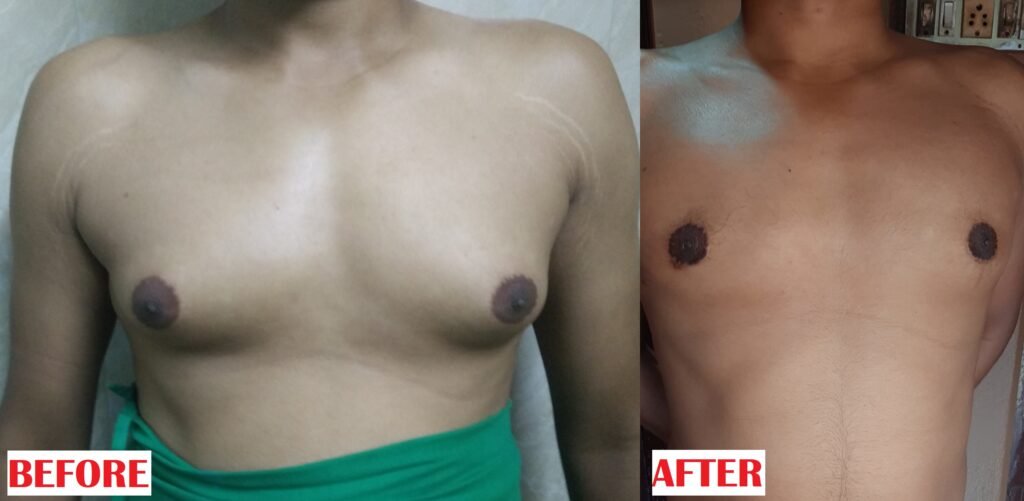
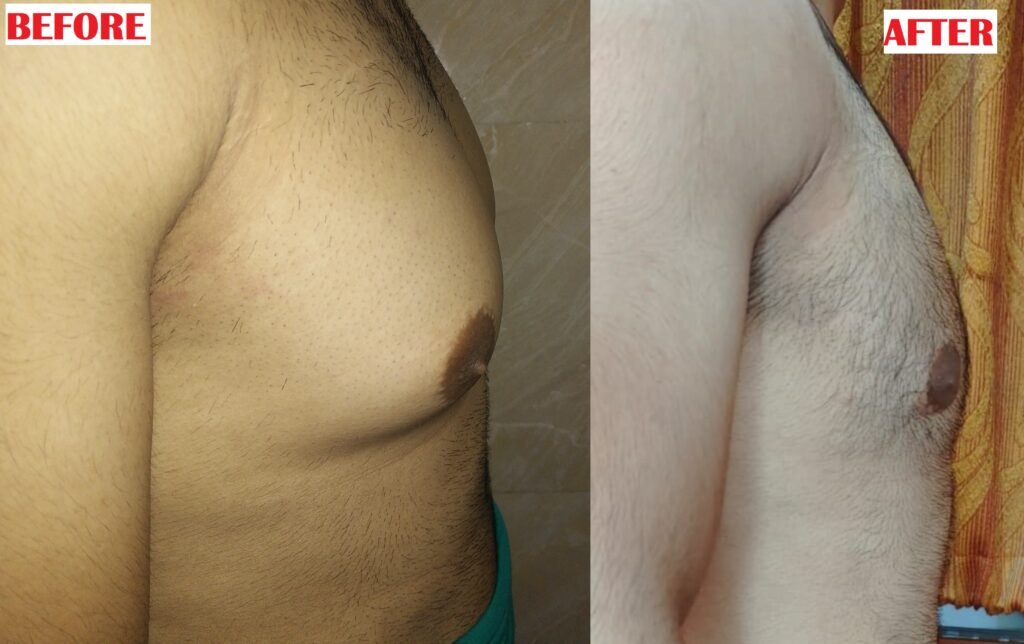
Gynecomastia Surgery Videos
Gynecomastia Surgery under Local Anesthesia
This video demonstrates gynecomastia surgery performed under local anesthesia. The procedure focuses on reducing excess male breast tissue and improving the overall contour of the chest. Depending on the individual patient, gynecomastia treatment may involve liposuction, removal of glandular breast tissue, or a combination of both techniques. Local anesthesia may be suitable for selected patients and procedures, depending on the extent of gynecomastia and the surgical plan. This surgical video provides an educational insight into the principles of male breast reduction and chest contouring.
Huge Gynecomastia Surgery after Massive Weight Loss
This video demonstrates the surgical treatment of severe gynecomastia in a patient following significant weight loss. After major weight reduction, some men may continue to have excess fatty tissue, persistent glandular breast tissue and loose skin around the chest, resulting in a prominent or sagging appearance. Treatment of post-weight-loss gynecomastia often requires a personalised approach. Depending on the patient's anatomy, surgery may involve liposuction, glandular tissue excision, removal of excess skin, or a combination of techniques to achieve a flatter and more proportionate male chest. This case demonstrates the importance of assessing both the underlying breast tissue and the quality and amount of excess skin when planning male breast reduction surgery after significant weight loss.
Gynecomastia Surgery under General Anesthesia
This video demonstrates gynecomastia surgery performed under general anesthesia. Male breast enlargement can result from excess fatty tissue, glandular breast tissue, or a combination of both. Surgical treatment is therefore planned according to the individual patient's chest anatomy and the composition of the enlarged breast tissue. Depending on the patient's requirements, gynecomastia surgery may involve liposuction to reduce excess fat, surgical excision of firm glandular tissue, or a combination of both techniques. The objective is to create a flatter, balanced and natural-looking male chest while maintaining appropriate nipple and areola contour. This video provides an educational overview of the surgical approach to male breast reduction and is intended to help patients understand the principles involved in gynecomastia treatment.
Frequently Asked Questions
Is Gynecomastia Surgery painful?
Discomfort is well controlled with a multimodal pain protocol. Most patients describe a tightness or soreness rather than sharp pain, easing significantly within the first week.
Will the scars be visible?
Incisions are placed in natural creases or hidden zones wherever anatomically possible, and scar care is guided for up to a year.
What is gynecomastia or man boobs surgery?
Gynecomastia surgery, also known as male breast reduction surgery or man boobs surgery, is performed to reduce excess breast tissue and improve the contour of the male chest. Depending on whether the enlargement is mainly due to glandular tissue, excess fat, loose skin, or a combination, treatment may involve surgical gland excision, liposuction, skin removal, or a combination of techniques.
Who is a good candidate for gynecomastia surgery?
A suitable candidate for gynecomastia surgery in Kolkata is generally a healthy adult with persistent male breast enlargement that has not adequately improved with weight management or treatment of an underlying cause. Stable weight and realistic expectations are important considerations before surgery.
Can gynecomastia be treated with liposuction?
Liposuction for gynecomastia can be effective when the chest enlargement is predominantly caused by excess fatty tissue. However, firm glandular breast tissue may require surgical excision. Many patients have a combination of fat and glandular tissue, in which case liposuction and gland removal may be performed together.
What is the difference between gynecomastia and chest fat?
Gynecomastia involves enlargement of glandular breast tissue, whereas chest fat is primarily an accumulation of adipose tissue. The two can occur together. A clinical examination helps determine the composition of the enlargement and whether liposuction, gland excision or a combination approach is appropriate.
Can gynecomastia come back after surgery?
Recurrence of properly removed glandular tissue is uncommon. However, new breast enlargement can occur if there are significant hormonal changes, certain medications, underlying medical conditions or substantial weight gain. Maintaining a stable weight and addressing any underlying cause can help preserve the result.
Can gynecomastia surgery remove the breast gland permanently?
When the enlarged glandular tissue is appropriately removed, the excised tissue does not grow back. However, significant weight gain, hormonal changes or certain medical conditions can affect the chest contour in the future. Identifying and addressing any underlying cause is therefore important.
When will I see the final results of gynecomastia surgery?
An improvement in chest contour is often noticeable once the initial swelling begins to decrease. However, final gynecomastia surgery results take time to develop as the tissues heal and settle. The final appearance is best assessed after adequate recovery.
Can gynecomastia surgery correct puffy nipples?
Yes. Puffy nipples associated with gynecomastia may result from enlarged glandular tissue beneath the nipple-areola complex. Appropriate gland excision can improve the prominence of the nipple and create a flatter, more masculine chest contour when this is the underlying cause.
Can gynecomastia surgery be performed after weight loss?
Yes. Men who continue to have excess chest fat or loose skin after significant weight loss may benefit from gynecomastia surgery after weight loss. The appropriate treatment depends on the amount of residual fat, glandular tissue and skin laxity.
Is gynecomastia surgery safe?
Like any surgical procedure, gynecomastia surgery carries potential risks, including bleeding, infection, fluid collection, changes in nipple sensation, asymmetry, contour irregularities, scarring and the possibility of revision surgery. Appropriate patient selection, careful surgical planning and postoperative follow-up are important for achieving a safe result.
Where can I get gynecomastia surgery in Kolkata?
If you are looking for gynecomastia surgery in Kolkata, consultation with a qualified plastic surgeon is the first step. A detailed assessment can determine whether the chest enlargement is due to glandular breast tissue, excess fat, skin laxity or a combination and help establish an appropriate treatment plan.
Honest assessment, written estimate, no pressure to book.