Labiaplasty in Kolkata is a specialised intimate surgery designed to reshape or reduce the labia minora, and in selected cases the labia majora, when a woman is concerned about excess tissue, asymmetry, discomfort or the appearance of the external genitalia. Women may consider labiaplasty for functional, aesthetic or personal reasons. A confidential consultation with an experienced plastic surgeon is important to understand the available options and determine whether surgery is appropriate.
Labiaplasty Techniques and Surgical Planning
Labiaplasty surgery in Kolkata is individually planned according to the patient’s anatomy, tissue distribution, asymmetry and concerns. Surgical techniques are selected carefully to preserve appropriate tissue, sensation and function while achieving the desired change in shape or size. There is no single ideal labial appearance, and treatment should focus on the patient’s individual concerns rather than conforming to a particular aesthetic standard.
Who May Consider Labiaplasty?
Women may seek labiaplasty in Kolkata because enlarged or asymmetric labial tissue causes discomfort during exercise, cycling, certain clothing or sexual activity. Others may be concerned about asymmetry or the appearance of the labia. In some cases, symptoms may have causes other than labial size, so a thorough clinical assessment is important before deciding on surgery.
Personalised and Natural-Looking Results
The objective of labiaplasty surgery is not simply to remove tissue. Careful planning is required to preserve the normal anatomy and function of the vulva while addressing the patient’s specific concerns. Conservative tissue management, appropriate symmetry and preservation of sensation are important considerations. Patients should also understand that some degree of natural asymmetry is normal and that surgical results vary between individuals.
Confidential Labiaplasty Care in Kolkata
Intimate concerns can be difficult to discuss, which is why privacy and respectful communication are essential. Prof. (Dr.) Souvik Adhikari provides confidential and personalised consultation for labiaplasty in Kolkata, allowing patients to discuss their concerns in a professional, non-judgemental environment. Treatment recommendations are based on individual anatomy, symptoms, expectations and overall health.
Labiaplasty Recovery and Aftercare
Recovery following labiaplasty surgery in Kolkata varies between patients. Swelling, bruising and tenderness are common during the initial healing period and gradually improve. Patients receive individualised instructions regarding hygiene, physical activity, clothing, wound care and sexual activity during recovery. The expected healing timeline, potential complications, scarring and realistic outcomes are discussed before surgery.
Labiaplasty by Prof. (Dr.) Souvik Adhikari
Prof. (Dr.) Souvik Adhikari brings 17+ years of surgical experience in cosmetic, plastic and reconstructive surgery, with additional AOCMF Fellowship training at Johns Hopkins University, USA. His approach to labiaplasty surgery in Kolkata emphasises careful anatomical assessment, meticulous surgical technique, patient privacy, safety and personalised care.
If you are considering labiaplasty in Kolkata, a confidential consultation can help you understand whether surgery is appropriate for your concerns and what approach may be suitable for your anatomy. The aim is to provide a carefully planned procedure with realistic expectations, preservation of function and an anatomically appropriate result.
Individualised Planning for Labiaplasty
Labiaplasty is not a one-size-fits-all procedure. Surgical planning depends on the anatomy of the labia, the amount and distribution of tissue, natural asymmetry, the patient’s symptoms or concerns, and the desired outcome. The aim is to address the specific problem while preserving appropriate tissue, sensation and vulvar function.
There is no single ideal appearance of the labia. A careful consultation helps distinguish normal anatomical variation from a problem that may reasonably be addressed with surgery.
Who May Consider Labiaplasty?
Labiaplasty may be considered by adult women who have persistent discomfort, functional difficulties, asymmetry or a personal concern about the appearance of the labia.
Some women experience irritation or pulling during exercise, cycling, certain clothing or sexual activity because of prominent or elongated labial tissue. Others may seek correction of asymmetry or changes that have persisted after childbirth.
Not every concern about the vulva requires surgery. When symptoms may have another cause, appropriate clinical assessment is important before deciding on labiaplasty.
Labiaplasty Techniques
Different surgical techniques may be appropriate depending on the patient’s anatomy and the area being treated. Common approaches include trimming or edge-resection techniques and wedge-based techniques. Modifications may be considered when there is asymmetry, excess tissue in a particular area or other anatomical considerations.
The choice of technique should be individualised rather than applying the same procedure to every patient. Conservative tissue management and preservation of important anatomical structures are key considerations.
Labiaplasty for Functional Discomfort
Some women seek labiaplasty because prominent or elongated labial tissue causes mechanical discomfort during activities such as cycling, running, exercise or wearing certain clothing.
In appropriately selected patients, reducing or reshaping the tissue may help decrease friction, pulling or irritation. However, genital discomfort can have multiple causes, so the underlying problem should be assessed before surgery.
Labiaplasty for Labial Asymmetry
Natural asymmetry of the labia is common. When one side is significantly different in size or shape and this causes concern or functional discomfort, labiaplasty may sometimes be used to improve the imbalance.
The objective is improvement rather than mathematical symmetry. The surgical plan is based on the individual’s anatomy and the amount of asymmetry that can reasonably be corrected while preserving healthy tissue.
Labiaplasty After Childbirth
Pregnancy and childbirth can alter the appearance and tissue characteristics of the vulva. In some women, labial enlargement, stretching or asymmetry may persist after childbirth and become a source of physical or personal concern.
Labiaplasty may be considered after the tissues have adequately recovered from pregnancy and delivery. The timing of surgery should be discussed individually, particularly when breastfeeding, further pregnancy or other postpartum factors are relevant.
Labiaplasty and Sexual Function
Some women consider labiaplasty because labial tissue causes discomfort or irritation during sexual activity. In selected cases, reshaping the tissue may reduce mechanical discomfort.
However, labiaplasty should not be presented as a procedure that guarantees improved sexual pleasure or sexual function. Sexual discomfort can have many causes, and outcomes vary between individuals. Preservation of sensation and appropriate anatomical structures should remain important considerations during surgical planning.
Labiaplasty and Vaginal Rejuvenation
Labiaplasty primarily involves reshaping or reducing the labia, particularly the labia minora. The term “vaginal rejuvenation” is broader and may refer to different surgical or non-surgical procedures involving the vagina, vaginal opening or surrounding tissues.
These procedures should not be considered interchangeable. Treatment should be selected according to the specific anatomical or functional concern rather than using a general “rejuvenation” label.
Labiaplasty vs Vaginoplasty
Labiaplasty and vaginoplasty are different procedures.
Labiaplasty primarily reshapes or reduces the labial tissue. Vaginoplasty involves surgical reconstruction or tightening of vaginal tissues and may be considered for specific anatomical or functional concerns.
A patient who is concerned about the appearance or discomfort of the labia may require a very different treatment from someone with vaginal laxity or other vaginal structural concerns. Individual assessment is therefore important.
Anaesthesia for Labiaplasty
The choice of anaesthesia depends on the extent of surgery, the technique being used, the patient’s health and the planned surgical setting. Depending on these factors, labiaplasty may be performed using local anaesthesia with appropriate sedation or another form of anaesthesia recommended after pre-anaesthetic assessment.
The anaesthetic plan is discussed before surgery and is individualised rather than following a fixed protocol for every patient.
Duration of Labiaplasty Surgery
The duration of labiaplasty varies according to the technique, the extent of tissue correction, whether asymmetry is being addressed and whether another procedure is being performed at the same time.
Rather than relying on a fixed operating time, the expected duration is discussed after the surgical plan has been established.
Recovery After Labiaplasty
Swelling, bruising, tenderness and temporary sensitivity are common during the early healing period. Recovery varies between individuals and depends on the extent of surgery and the body’s healing response.
Patients receive individualised instructions regarding hygiene, wound care, clothing, physical activity and sexual activity. Strenuous exercise, cycling and sexual intercourse should be avoided until the tissues have adequately healed and the surgeon has advised that these activities can safely be resumed.
Swelling and tissue firmness gradually settle over the following weeks and months, while scars continue to mature with time.
Risks and Possible Complications
Like any surgical procedure, labiaplasty has potential risks. These may include bleeding, infection, wound separation or delayed healing, scarring, asymmetry, changes in sensation, persistent discomfort and the possibility of revision surgery.
Because the labia contain sensitive anatomical structures, preservation of appropriate tissue and careful surgical planning are particularly important. The potential benefits, limitations and risks should be discussed during informed consent before surgery.
Expected Results After Labiaplasty
The initial appearance of the treated area changes as swelling and bruising settle. The tissues gradually soften and scars mature over the following weeks and months.
The goal is an anatomically appropriate and proportionate result that addresses the patient’s specific concern while preserving function and sensation as far as possible. The final appearance varies between individuals, and no surgical procedure can guarantee a particular cosmetic or sexual outcome.
Consultation for Labiaplasty in Kolkata
A confidential consultation is an important part of planning labiaplasty. During the consultation, the anatomy, symptoms, concerns, expectations and available treatment options can be discussed privately.
Where surgery is appropriate, the surgical technique, expected recovery, possible risks and realistic outcomes are explained before a decision is made. In some situations, non-surgical management or another treatment may be more appropriate than labiaplasty.

Prof. (Dr.) Souvik Adhikari
MS, MCh (Plastic Surgery)
17+ years experience
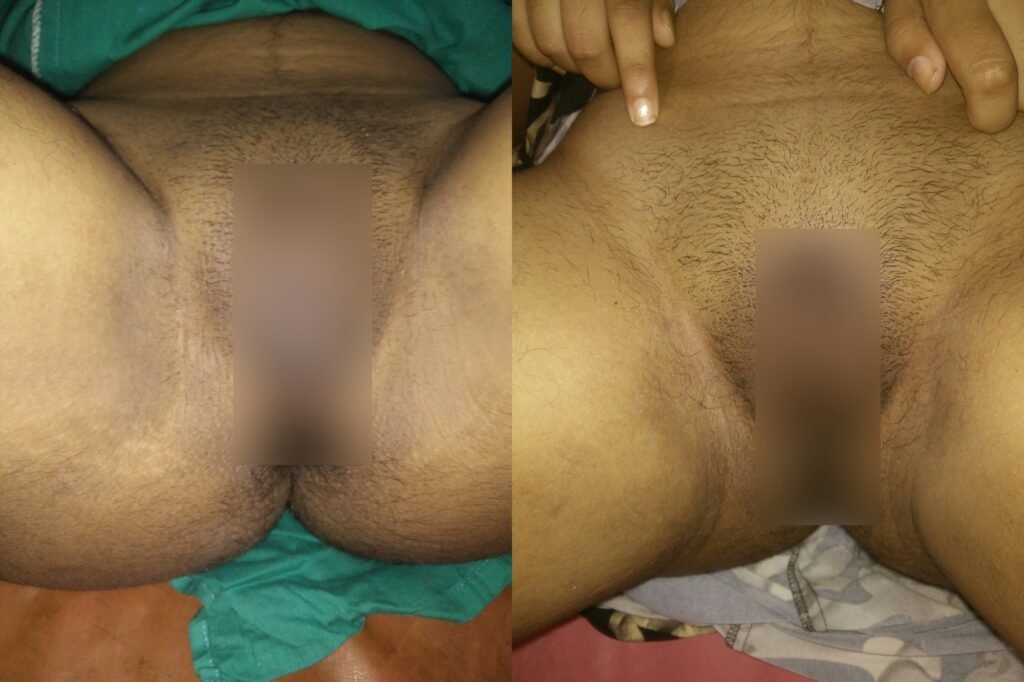
Gallery
Consented before-and-after photographs for labiaplasty surgery are reviewed privately during consultation, in line with medical advertising guidelines.
Video of Labiaplasty Surgery
Labiaplasty Surgery Kolkata India
Educational video demonstrating labiaplasty surgery in Kolkata performed by Prof. (Dr.) Souvik Adhikari. The video explains selected aspects of labial reshaping and surgical technique. Individual treatment planning varies according to anatomy and patient requirements.
Frequently Asked Questions
Is Labiaplasty Surgery painful?
Discomfort is well controlled with a multimodal pain protocol. Most patients describe a tightness or soreness rather than sharp pain, easing significantly within the first week.
How much does Labiaplasty surgery cost in Kolkata?
Cost depends on the extent of surgery, anaesthesia or consumables and hospital stay. A transparent labiaplasty surgery price estimate in Kolkata is shared after your consultation, with no hidden charges.
When can I return to work?
Desk-based work is usually possible in 3 -4 days. Physically demanding work and gym training resume in 4 to 6 weeks, on review.
Will the scars be visible?
Incisions are placed in natural creases or hidden zones wherever anatomically possible, and scar care is guided for up to a year.
Do you treat patients traveling from outside Kolkata?
Yes. Patients from across West Bengal, India and abroad are treated, with video consultations and coordinated travel and stay planning.
What is labiaplasty?
Labiaplasty is a surgical procedure that reshapes or reduces the size of the labia, most commonly the labia minora. It may be considered for women who experience physical discomfort, functional difficulties or concerns about the appearance of the labia. The procedure is individually planned according to anatomy and the patient's goals.
What is labiaplasty surgery?
Labiaplasty surgery involves carefully removing or reshaping excess labial tissue while preserving appropriate anatomy, sensation and function. The exact technique depends on the patient's anatomy, the amount and distribution of tissue and the desired outcome.
What is labia reduction surgery?
Labia reduction surgery, also called labia minora reduction, is a form of labiaplasty designed to reduce or reshape enlarged or elongated labial tissue. The goal is not simply to make the labia as small as possible, but to achieve a comfortable and proportionate result while preserving healthy tissue.
Who is a good candidate for labiaplasty?
A suitable candidate for labiaplasty in Kolkata is generally an adult who has persistent physical discomfort, functional concerns or a well-considered personal concern regarding the appearance of the labia. A consultation is important to understand the individual's anatomy, expectations and reasons for considering surgery.
Can labiaplasty help with discomfort during exercise?
Yes. Some women with elongated or prominent labial tissue experience discomfort during cycling, running, exercise or other physical activities. In appropriately selected patients, labiaplasty may reduce tissue-related irritation or mechanical discomfort.
Can labiaplasty reduce discomfort during sexual activity?
Some women seek labiaplasty for discomfort during sexual intercourse when excess or elongated labial tissue becomes irritated or caught during sexual activity. However, not all sexual discomfort is caused by the labia, so an appropriate medical assessment is important before considering surgery.
Can labiaplasty be performed after childbirth?
Yes. Labiaplasty after childbirth may be considered when changes in the labial tissue persist after pregnancy and delivery and cause ongoing physical or personal concerns. It is generally advisable to allow the tissues to recover fully after childbirth and breastfeeding before considering elective surgery.
Can labiaplasty be combined with other intimate procedures?
In selected patients, labiaplasty may be combined with other female intimate procedures, depending on the individual's anatomy and treatment goals. Each additional procedure should be assessed independently to ensure that the overall treatment plan is appropriate and safe.
What is the difference between labiaplasty and labia reduction surgery?
Labiaplasty and labia reduction surgery are often used to describe the same or closely related procedure. Labiaplasty generally refers to surgical reshaping or reduction of the labia, most commonly the labia minora. The procedure may involve removing excess tissue, correcting asymmetry, or reshaping the labial edges according to the patient's anatomy and concerns. The extent and technique are individualised rather than based on a fixed size or appearance.
Does labiaplasty affect vaginal tightness?
No. Labiaplasty primarily involves the labia and does not ordinarily tighten the vaginal canal. It is therefore different from vaginoplasty, which involves surgery on vaginal tissues for specific structural or functional concerns. If a patient is concerned about vaginal laxity rather than the size or shape of the labia, a separate assessment is needed to determine the most appropriate treatment.
Can labiaplasty improve hygiene?
In selected patients, excess labial tissue may make personal hygiene more difficult. Labiaplasty may improve ease of hygiene when the anatomy itself contributes to the problem. It should not, however, be considered necessary simply because the appearance of the labia differs from an idealised image.
Does labiaplasty affect sexual sensation?
The labia contain sensory nerves, so changes in sensation are a potential risk of labiaplasty. A carefully planned procedure aims to preserve important anatomical structures and sensation. Individual outcomes vary, and no surgery can guarantee a particular sexual outcome.
Can labiaplasty correct asymmetry?
Yes. Labiaplasty can be performed to address significant labial asymmetry when one side differs noticeably in size or shape and this causes functional discomfort or personal concern. Some degree of natural asymmetry is common, so the goal is usually to improve balance and proportion rather than create mathematically identical sides. The surgical approach depends on the individual's anatomy and the amount of correction required.
What techniques are used for labiaplasty?
Different labiaplasty techniques may be appropriate depending on the anatomy. Common approaches include trimming techniques and wedge-based techniques, while modifications may be used for specific anatomical concerns. The choice should be individualised rather than based on a single technique for every patient.
Does labiaplasty leave scars?
Yes. Labiaplasty scars are expected, although the incisions are positioned along the natural contours of the labial tissue where possible. Scars generally soften and become less noticeable as healing progresses, but individual scar formation varies.
What is the recovery time after labiaplasty?
Recovery varies between individuals. Swelling and tenderness are usually most noticeable during the early postoperative period and gradually improve. Patients generally need to avoid strenuous exercise, cycling and sexual activity until the tissues have adequately healed and their surgeon has advised that these activities can be resumed.
When can I have sexual intercourse after labiaplasty?
Sexual activity should be avoided during the initial healing period because friction and pressure can interfere with wound healing. The timing of returning to sexual intercourse should be determined by your surgeon based on your individual recovery, rather than following a fixed schedule.
When will I see the final results of labiaplasty?
An improvement in the treated area may be visible relatively early, but final labiaplasty results take time to develop. Swelling gradually decreases and the tissues soften and settle during the following weeks and months.
Is labiaplasty a form of vaginal rejuvenation?
The terms are sometimes used interchangeably in cosmetic surgery marketing, but they are not identical. Labiaplasty primarily involves the labia, whereas the term vaginal rejuvenation may refer to a range of procedures involving the vagina or surrounding tissues. It is important to identify the specific anatomical concern before choosing a procedure.
Is labiaplasty safe?
Like any surgical procedure, labiaplasty carries potential risks, including bleeding, infection, wound separation, scarring, changes in sensation, asymmetry, persistent discomfort and the possibility of revision surgery. Appropriate patient selection, conservative tissue management and postoperative follow-up are important.
Can the labia change again after labiaplasty?
The tissue that has been surgically removed does not simply grow back. However, changes in weight, hormones, pregnancy, ageing and tissue healing can alter the appearance of the vulva over time. The long-term result therefore varies between individuals.
Where can I get labiaplasty surgery in Kolkata?
If you are considering labiaplasty in Kolkata, a confidential consultation with a qualified plastic surgeon experienced in female intimate surgery can help determine whether the procedure is appropriate. Your anatomy, symptoms, expectations and desired outcome can be discussed privately before deciding on treatment.
Honest assessment, written estimate, no pressure to book.