Buried penis surgery in Kolkata is a reconstructive procedure for men whose penis is partially or completely concealed by surrounding skin, fat, scar tissue or other soft tissues. Although the underlying penis may be normally developed, the visible penile length can appear reduced because part of the shaft is hidden.
A buried or concealed penis may cause more than an aesthetic concern. Depending on its severity, it can make hygiene difficult and may contribute to problems with urination, recurrent skin irritation, discomfort or difficulty with sexual activity. Treatment therefore needs to address the underlying cause rather than simply focusing on the visible appearance.
Prof. (Dr.) Souvik Adhikari provides individualised assessment and surgical planning for patients considering buried penis treatment and reconstruction in Kolkata. Depending on the patient’s anatomy, treatment may involve removal of excess suprapubic tissue, excision of redundant skin, scar release or reconstruction of the surrounding penile tissues.
What Is a Buried Penis?
A buried penis, also known as a concealed penis, is a condition in which a normally developed penis is partially or completely hidden by the surrounding skin, fat or soft tissues. Although the penis itself may be normal in size and structure, its visible length can appear reduced because it is concealed within the tissues around the pubic region.
Buried penis can occur for several reasons, including excess suprapubic fat, loose or redundant skin, significant weight gain or weight loss, scarring, or changes in the tissues supporting the penis. In some individuals, the condition may be present from childhood, while in adults it may develop or become more noticeable over time.
The condition is not simply a cosmetic concern. Depending on its severity, a buried penis can make personal hygiene difficult and may cause problems with urination, recurrent skin irritation or infections, discomfort, and difficulty with sexual activity. A clinical assessment is important to determine the underlying cause and whether buried penis reconstruction is appropriate.
What Causes a Buried Penis in Adults?
A buried penis in adults can result from several anatomical and acquired factors. In many patients, more than one factor contributes to the concealment of the penis.
Common causes include:
Excess suprapubic fat: Accumulation of fatty tissue above the penis can push the penile shaft inward and reduce its visible length.
Obesity and significant weight gain: Increased tissue around the pubic region may progressively conceal the penis.
Significant weight loss: After substantial weight reduction, loose and redundant skin may remain around the lower abdomen and pubic region and contribute to penile concealment.
Excess or lax penile and surrounding skin: Redundant skin may partially cover the penile shaft.
Scarring or tissue tethering: Previous surgery, trauma, inflammation or other conditions may cause scar tissue that restricts normal exposure of the penis.
Changes associated with ageing: Loss of skin elasticity and changes in the distribution of soft tissue can contribute to concealment.
Congenital anatomical factors: In some individuals, a concealed or buried penis may be present from childhood because of the way the surrounding tissues attach to the penis.
Identifying the underlying cause is an important part of planning buried penis treatment. The surgical approach is therefore individualised rather than being the same for every patient.
Symptoms and Problems Associated With a Buried Penis
The effects of a buried penis vary according to the degree of concealment and the underlying cause. Some men primarily notice a change in appearance, while others experience significant functional difficulties.
A buried or concealed penis may be associated with:
Difficulty exposing the penis for adequate personal hygiene
Difficulty directing or controlling the urinary stream
Moisture, irritation or recurrent inflammation of the surrounding skin
Difficulty with sexual activity
Discomfort associated with trapped or irritated skin
Psychological distress or reduced confidence related to penile concealment
The appearance of an unusually short penis despite normal underlying penile development
These symptoms do not necessarily mean that surgery is required. A thorough examination is necessary to determine whether the symptoms are caused by a buried penis and whether surgical correction is likely to provide meaningful functional or aesthetic improvement.
Buried Penis vs Small Penis: What Is the Difference?
A buried penis and a genuinely small penis are different conditions. In buried penis syndrome, the underlying penis may be normally developed, but part or most of the penile shaft is concealed by surrounding fat, skin, scar tissue or other soft tissues. Consequently, the visible penile length may appear considerably shorter than the actual anatomical length.
A genuinely small penis involves reduced penile dimensions rather than concealment by surrounding tissues. This distinction is important because the treatment approaches are different.
Buried penis reconstruction aims to improve exposure of the concealed penis by addressing the tissues surrounding it. It should not be considered the same as penile lengthening surgery, and buried penis surgery does not necessarily increase the anatomical length of the penis itself.
A clinical examination is the best way to determine whether apparent shortening is caused by penile concealment or by another anatomical condition.
Does Buried Penis Surgery Enlarge the Penis?
Buried penis surgery is not primarily a penile enlargement procedure. The penis itself may be normally developed, but part of its shaft can be hidden by surrounding fat, loose skin, scar tissue or other soft tissues. As a result, the visible portion of the penis may appear shorter than its actual anatomical length.
The purpose of buried penis reconstruction is to improve exposure of the concealed penile shaft by addressing the tissues that are contributing to the concealment. Depending on the individual anatomy, this may involve removal of excess suprapubic tissue, excision of redundant skin, release of scar tissue or reconstruction of the surrounding tissues.
When the concealed portion of the penile shaft is successfully exposed, the visible penile length may increase even though the anatomical length of the penis itself has not necessarily changed.
This is different from penile lengthening surgery, which is intended to address penile length through a different surgical approach. Patients who are concerned about apparent penile shortening should therefore undergo an appropriate clinical assessment to determine whether the issue is caused by a buried penis, another anatomical condition, or genuinely reduced penile dimensions.
The expected outcome depends on the underlying anatomy, the degree of concealment and the reconstructive techniques required. A realistic discussion of these factors is an important part of the consultation.
Buried Penis Surgery in Kolkata
Buried penis surgery is a reconstructive procedure designed to improve exposure of a penis that has become partially or completely concealed by surrounding tissues. The precise operation depends on the cause of the concealment, the amount of excess tissue present, the condition of the penile skin and the patient’s functional concerns.
In selected patients, surgery may involve removal of excess suprapubic fat or tissue, excision of redundant skin, release of scar tissue, and reconstruction or repositioning of the surrounding tissues to allow better exposure of the penile shaft. Several techniques may be combined when necessary.
The objective of buried penis reconstruction is to create a stable and functional result while maintaining appropriate skin coverage and achieving a natural appearance. It is important to understand that the procedure primarily addresses concealment of the penis; it does not necessarily increase the anatomical length of the penis.
At Cosmetic Surgery Kolkata, treatment is planned on an individual basis after a confidential consultation and clinical examination.
Surgical Techniques Used for Buried Penis Correction
There is no single operation that is appropriate for every patient with a buried penis. The reconstructive technique is selected according to the underlying anatomy and the tissues responsible for penile concealment.
Suprapubic Fat Removal
Reduction of excess fat/tissue contributing to penile concealment.
Removal of Excess Skin
Removal of excess skin when laxity contributes to concealment.
Scar Release
Release of scar tissue or tethering where appropriate.
Penile Skin Reconstruction
Reconstruction of appropriate skin coverage when required.
Fixation of Surrounding Tissues
The surrounding tissues may require repositioning or fixation.
Suprapubic Lipectomy or Escutcheonectomy
When a prominent suprapubic fat pad or overhanging tissue contributes significantly to penile concealment, reduction or excision of the suprapubic tissue may form an important part of reconstruction. The extent of tissue removal depends on the patient’s anatomy, skin quality and degree of penile concealment.
Skin Grafting in Buried Penis Reconstruction
In more extensive cases, adequate penile skin coverage may not be available after release of the concealed penis and removal of unhealthy or redundant tissue. Skin grafting may therefore be considered when necessary to provide stable coverage. The choice of graft and reconstructive technique depends on the condition and availability of local tissues.
Combining Reconstructive Techniques
Buried penis reconstruction is often not a single-procedure operation. Depending on the underlying problem, suprapubic tissue reduction, excess skin removal, scar release, fixation of surrounding tissues and penile skin reconstruction may need to be combined. The appropriate combination is determined after detailed examination and surgical planning.
Buried Penis Surgery: Recovery and Aftercare
Recovery following buried penis surgery varies according to the extent of reconstruction and the techniques used. Some patients can return to light daily activities relatively quickly, while more extensive reconstruction may require a longer recovery period.
Following surgery, temporary swelling, bruising, sensitivity and discomfort around the operated area can occur. Wound care and hygiene are particularly important during the initial healing period. Patients are given specific instructions regarding dressings, bathing, physical activity and sexual activity.
Strenuous exercise, heavy lifting and sexual activity should generally be avoided until adequate healing has occurred and the surgeon confirms that these activities can be resumed. Follow-up appointments are important to monitor wound healing and identify any complications at an early stage.
The final appearance and degree of penile exposure continue to improve as postoperative swelling subsides and the tissues mature. Recovery times differ between individuals, particularly when extensive skin or soft-tissue reconstruction is required.
Risks and Possible Complications of Buried Penis Surgery
As with any surgical procedure, buried penis reconstruction carries potential risks and complications. The likelihood of a particular complication depends on the patient’s anatomy, underlying medical conditions, the extent of surgery and the reconstructive techniques required.
Possible complications may include:
Bleeding or collection of blood under the skin
Infection
Swelling and bruising
Delayed wound healing
Wound separation
Scarring or changes in scar appearance
Skin or soft-tissue problems
Changes in sensation
Persistent or recurrent penile concealment
Asymmetry or an unsatisfactory aesthetic result
Need for additional treatment or revision surgery
Patients with significant obesity, previous surgery or scarring, or other conditions affecting wound healing may have different risks. These factors are assessed during consultation.
A detailed discussion of the expected benefits, limitations and potential complications is an important part of the decision-making process before buried penis surgery.
Buried Penis Surgery Cost in Kolkata
The cost of buried penis surgery in Kolkata varies considerably between patients because the procedure is individually planned according to the underlying cause and extent of penile concealment.
Factors that may influence the overall cost include:
The amount of suprapubic fat or excess tissue requiring treatment
The extent of redundant skin
The need for scar release or reconstruction
The complexity of penile skin coverage
The surgical techniques required
Anaesthesia and operating-room requirements
Hospital or facility charges
Postoperative dressings, medications and follow-up care
A meaningful estimate can therefore be provided only after clinical assessment. During consultation, the recommended treatment plan and associated costs can be discussed clearly and confidentially.
If you are considering buried penis treatment in Kolkata, an in-person evaluation is important to determine whether surgery is appropriate and which reconstructive approach would best address your particular anatomy.
Buried Penis Surgery in Kolkata, West Bengal
Patients seeking buried penis treatment in Kolkata can undergo a confidential consultation and individualised assessment with Prof. (Dr.) Souvik Adhikari. Buried penis surgery is planned according to the underlying cause of penile concealment, the condition of the surrounding skin and soft tissues, and the patient’s functional concerns.
Consultations are available for patients from across Kolkata and the surrounding areas of West Bengal, including Howrah, Salt Lake, New Town, Hooghly, North 24 Parganas and South 24 Parganas. Patients from other parts of West Bengal, as well as other states of India, may also travel to Kolkata for specialist evaluation and treatment. International patients considering buried penis reconstruction can similarly arrange a consultation and plan their treatment and follow-up according to their individual requirements.
Because buried penis can have different underlying causes and may require different reconstructive techniques, an in-person assessment is important before deciding on treatment. The consultation provides an opportunity to discuss the diagnosis, available surgical options, expected recovery, potential risks and the likely outcome in a private and supportive setting.
Buried Penis Surgeon in Kolkata
Prof. (Dr.) Souvik Adhikari
Professor & Consultant Plastic Surgeon
MS, MCh (Plastic & Reconstructive Surgery)
17+ years of independent surgical practice
Buried penis surgery at Cosmetic Surgery Kolkata is individually planned according to the cause and severity of penile concealment. Prof. (Dr.) Souvik Adhikari evaluates the surrounding skin and soft tissues, suprapubic fat, penile skin coverage and functional concerns before recommending an appropriate reconstructive approach.
The aim is not simply to change appearance, but to improve penile exposure where appropriate and address problems such as difficulty with hygiene, urination or sexual activity. Treatment options, expected benefits, limitations, possible complications and recovery are discussed confidentially before surgery.
Who Is a Candidate for Buried Penis Surgery?
Buried penis surgery may be considered for adult men in whom the penis is partially or completely concealed by surrounding skin, fatty tissue, scar tissue or other soft tissues. The condition can affect appearance as well as hygiene, urination, sexual activity and overall quality of life.
You may be a suitable candidate for buried penis reconstruction if you:
Have persistent concealment of the penis despite normal or adequate underlying penile size.
Have excess fat or soft tissue in the suprapubic region that contributes to penile concealment.
Have excess or lax skin surrounding the penis, including changes following significant weight loss.
Experience difficulty maintaining hygiene because the penis is difficult to expose or clean.
Have problems with urination, such as difficulty directing the urinary stream because of penile concealment.
Experience discomfort or difficulty during sexual activity related to the buried or concealed penis.
Have scarring, skin tethering or other acquired changes that contribute to penile concealment.
Have realistic expectations regarding what surgery can and cannot achieve.
Are willing to follow postoperative instructions and attend scheduled follow-up appointments.
Individualised Planning for Buried Penis Reconstruction
Buried penis reconstruction is not a single standard operation. The surgical plan depends on why the penis is concealed, the amount of suprapubic fat or excess skin present, the quality of the penile skin, previous surgery or scarring, and whether there are associated functional problems.
During consultation, these factors are assessed carefully before deciding whether surgery is appropriate and which reconstructive techniques are likely to provide the most meaningful improvement.
Buried Penis Surgery After Significant Weight Loss
After substantial weight loss, some men are left with excess or lax skin and soft tissue around the lower abdomen and pubic region. This can continue to conceal part of the penile shaft even after major weight reduction.
In selected patients, removal or reshaping of the excess suprapubic and surrounding tissue can improve penile exposure. The extent of surgery depends on the amount and distribution of residual skin and soft tissue.
Buried Penis Surgery Associated With Obesity
Excess suprapubic fat can contribute substantially to penile concealment. In appropriate patients, reduction of the suprapubic tissue may improve exposure of the penile shaft.
However, buried penis associated with obesity is not always corrected by fat removal alone. Significant skin excess, scarring or inadequate penile skin coverage may require additional reconstructive procedures.
Buried Penis Reconstruction and Skin Grafting
When the existing penile skin is inadequate, damaged or significantly restricted, skin grafting may be required to provide appropriate coverage after the concealed penis has been released.
The need for grafting depends on the condition of the penile skin and the extent of reconstruction required. The reconstructive approach is determined individually rather than using the same technique for every patient.
Buried Penis Surgery and Urinary Function
Penile concealment can sometimes make directing the urinary stream difficult and may contribute to spraying, dribbling, skin irritation or hygiene problems.
When these problems are related to the buried penis, reconstruction may improve urinary function by allowing better exposure of the penis. The degree of improvement depends on the underlying anatomy and any associated urinary or urethral problems.
Buried Penis Surgery and Sexual Function
A concealed penis may interfere mechanically with sexual activity in some men. Improving penile exposure can make sexual activity easier when concealment is the underlying problem.
Buried penis reconstruction is not, however, a treatment for erectile dysfunction or other unrelated sexual disorders. The expected functional benefit depends on the individual patient’s condition.
Is Buried Penis Surgery the Same as Penile Lengthening?
No. Buried penis reconstruction primarily exposes penile shaft that is already present but concealed by surrounding tissues. It is therefore different from procedures intended specifically to alter penile length.
The visible penile length may increase after successful reconstruction, but this does not necessarily mean that the anatomical length of the penis has increased.
Anaesthesia for Buried Penis Surgery
The type of anaesthesia is selected according to the extent and complexity of reconstruction, the patient’s medical condition and the requirements of the planned procedure. Anaesthetic planning is discussed during the preoperative assessment.
Duration of Surgery
The duration of buried penis surgery varies considerably according to the extent of tissue removal, scar release, skin reconstruction, grafting and any additional procedures that may be required. A more meaningful estimate can be provided after examination and surgical planning.
Recovery After Buried Penis Reconstruction
Recovery varies according to the complexity of the operation. Swelling, bruising, sensitivity and discomfort are expected during the early healing period, while more extensive reconstruction may require a longer period of wound care and activity restriction.
Patients receive individual instructions regarding dressings, hygiene, bathing, walking, exercise and sexual activity. Follow-up is important to assess wound healing and identify any complications early.
Scars After Buried Penis Surgery
Scarring depends on the extent and location of the reconstruction. Incisions are planned with attention to tissue quality, functional requirements and the need to provide stable coverage.
Scars gradually mature over time, although they remain permanent. Scar management and follow-up may be recommended according to the individual case.
Risks and Complications
Potential complications of buried penis reconstruction include bleeding, infection, wound-healing problems, wound separation, fluid collection, scarring, altered sensation, skin or graft-related problems, recurrent penile concealment, asymmetry and the possible need for additional surgery.
The risks can vary substantially according to the patient’s anatomy, obesity or other medical conditions, previous surgery, the complexity of reconstruction and whether skin grafting or more extensive tissue removal is required.
Expected Results
The objective of buried penis reconstruction is to improve exposure of the concealed penile shaft while providing stable soft-tissue coverage and addressing associated functional problems where possible.
The final result develops progressively as swelling settles and the reconstructed tissues mature. Long-term outcome can also be influenced by future changes in body weight, skin laxity, scarring and other conditions affecting the surrounding tissues.
Confidential Consultation for Buried Penis Surgery in Kolkata
Buried penis is a highly personal condition and every case is different. A confidential consultation allows the cause and severity of penile concealment to be assessed, the available reconstructive options to be explained, and the expected benefits, limitations, risks and recovery to be discussed before treatment.

Prof. (Dr.) Souvik Adhikari
MS, MCh (Plastic Surgery)
17+ years experience
Buried Penis Surgery vs Penile Lengthening
Buried penis surgery and penile lengthening are different procedures with different objectives. In buried penis, the penis is generally normal in anatomical size, but part or all of the penile shaft is concealed by surrounding skin, subcutaneous fat, suprapubic tissue or scarring. The aim of buried penis reconstruction is therefore to expose the concealed penile shaft and restore appropriate surrounding soft-tissue anatomy, rather than to make the penis anatomically longer.
Penile lengthening, by contrast, refers to procedures specifically intended to alter the apparent or measured penile length. These procedures have different indications, techniques and considerations from buried penis reconstruction. In a man whose penis appears short because it is concealed by suprapubic tissue or excess skin, treating the underlying concealment may reveal shaft that was already present. As a result, visible penile length can increase after buried penis surgery even though the anatomical length of the penis itself has not necessarily changed.
Correct diagnosis is therefore important before considering any procedure for perceived penile shortness. A clinical assessment can distinguish buried or concealed penis from true penile size abnormalities and other conditions, because the appropriate treatment depends on the underlying anatomy. For men with buried penis, reconstructive surgery is directed primarily toward restoring penile exposure, improving function where possible, and addressing the tissues responsible for concealment.
Research and Academic Experience in Male Genital Reconstruction
Prof. (Dr.) Souvik Adhikari has an academic and clinical interest in reconstructive and aesthetic procedures involving male genital soft tissues. His experience includes the development and application of surgical techniques designed to improve both functional and aesthetic outcomes in appropriately selected patients.
His peer-reviewed work in male genital surgery includes a publication on penile soft-tissue reconstruction and augmentation:
Adhikari S. Penis Girth Augmentation Using SEPA Flap and Dermofat Grafts. Journal of Cutaneous and Aesthetic Surgery. 2023;16(3):198–204.
This work reflects an interest in reconstructive techniques involving local tissues and grafts in male genital surgery. While penile girth augmentation and buried penis reconstruction are different procedures, experience in male genital reconstruction contributes to a broader understanding of the anatomy, soft-tissue characteristics and reconstructive principles relevant to these procedures.
This publication concerns penile soft-tissue reconstruction and augmentation rather than buried penis surgery itself. Its relevance to this page is the broader experience with male genital soft-tissue anatomy, local tissue techniques and reconstructive principles. Buried penis reconstruction remains a distinct procedure requiring individual assessment of penile skin, suprapubic tissues, scarring and functional concerns.
Patients considering buried penis surgery are therefore assessed on the specific anatomical and functional factors contributing to penile concealment, rather than being offered a standardised procedure.
Buried Penis Surgery - Before and After (Blurred Images)
Consented before-and-after photographs for buried penis surgery are reviewed privately during consultation, in line with medical advertising guidelines.
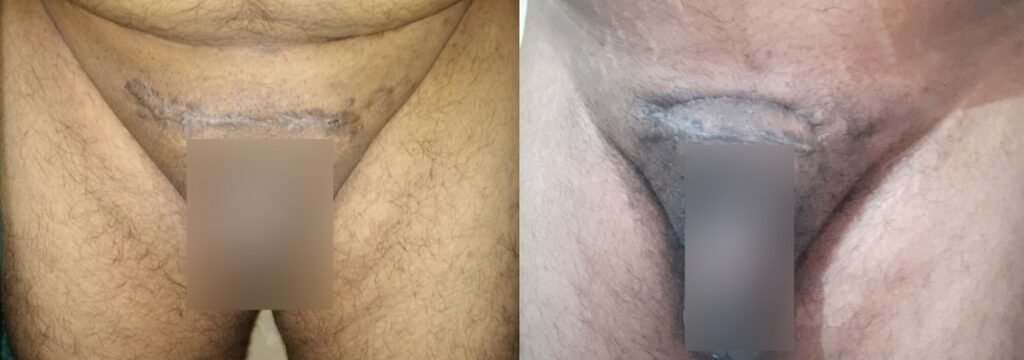
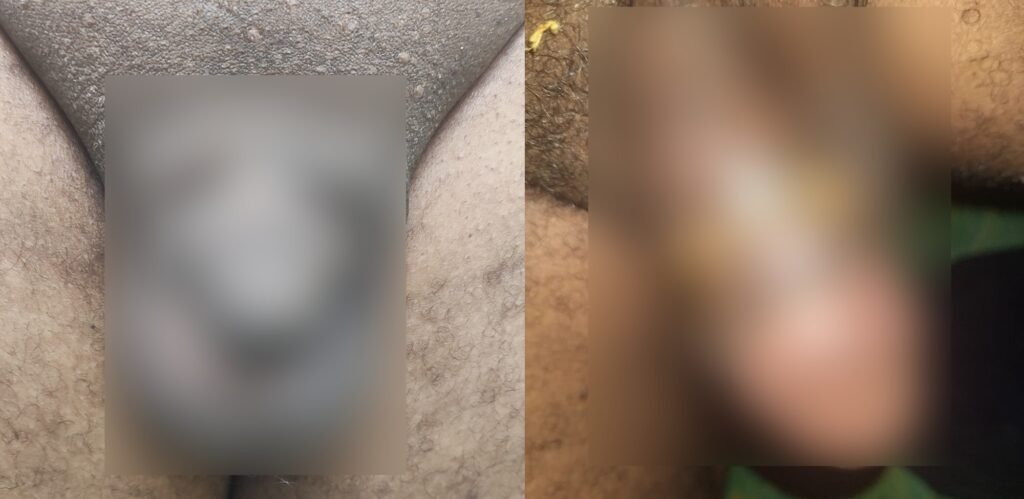
Buried Penis Reconstruction: Surgical Approach
Buried Penis Surgery Kolkata India
Educational overview of buried penis reconstruction, including assessment of penile concealment, suprapubic soft-tissue excess, redundant skin and reconstructive techniques used in appropriately selected patients.
Advanced Buried Penis Surgery in Kolkata
Buried penis reconstruction in Kolkata, with an overview of the surgical approach used to address penile concealment and surrounding soft-tissue excess.
Frequently Asked Questions
Is Buried Penis Surgery painful?
Discomfort is well controlled with a multimodal pain protocol. Most patients describe a tightness or soreness rather than sharp pain, easing significantly within the first week.
How much does Buried Penis Surgery cost in Kolkata?
The cost varies because buried penis reconstruction is individually planned. Factors include the amount of suprapubic tissue or excess skin requiring treatment, the need for scar release or skin reconstruction, whether skin grafting is required, the complexity of the operation, anaesthesia, hospital or facility charges and postoperative care. An individual estimate can be provided after clinical assessment and discussion of the recommended treatment plan.
When can I return to work after buried penis surgery?
The timing depends on the extent of reconstruction and the type of work you do. Some patients may return to desk-based activities relatively early, while physically demanding work, heavy lifting and exercise may require a longer period of recovery. Your surgeon will advise you when specific activities can be resumed based on wound healing and follow-up assessment.
Will the scars be visible?
Incisions are placed in natural creases or hidden zones wherever anatomically possible, and scar care is guided for up to a year.
Do you treat patients traveling from outside Kolkata?
Yes. Patients from across West Bengal, India and abroad are treated, with video consultations and coordinated travel and stay planning.
What is a buried penis?
A buried penis, also called a concealed or hidden penis, is a condition in which a normally developed penis is partially or completely hidden by surrounding skin, fat or soft tissue. The actual penile length may be normal, but only a portion of the penis is externally visible.
What is buried penis surgery?
Buried penis surgery is a reconstructive procedure designed to expose the concealed portion of the penis and improve its functional and visible appearance. Depending on the underlying cause, treatment may involve removal of excess suprapubic fat, release of restrictive tissues, removal of excess skin and reconstruction of the surrounding tissues.
What is the difference between a small penis and a buried penis?
A buried penis is not necessarily a small penis. In many cases, the penis is of normal size but becomes hidden by surrounding fatty tissue, skin or other soft tissues. Buried penis correction aims to reveal the existing penile shaft rather than artificially increasing its size.
What causes a buried penis in adults?
An adult buried penis may be associated with obesity, significant weight gain, excessive suprapubic fat, skin laxity, scarring, previous surgery or certain anatomical conditions. In some patients, the condition may have been present from an earlier age. Identifying the underlying cause is essential when planning treatment.
Can obesity cause a buried penis?
Yes. Obesity-related buried penis can occur when excess fat and soft tissue around the pubic region conceal part of the penile shaft. Weight management may improve the appearance in some individuals, but persistent concealed penile tissue may require surgical correction.
Is buried penis surgery permanent?
The objective of buried penis reconstruction is to provide a durable improvement in penile exposure and function. However, substantial future weight gain, recurrent skin laxity, scarring or other changes in the surrounding tissues can affect the long-term result.
Is buried penis surgery safe?
Like any surgical procedure, buried penis surgery has potential risks, including bleeding, infection, wound-healing problems, fluid collection, scarring, changes in sensation, recurrent concealment and the possibility of further surgery. Careful patient selection, appropriate surgical planning and postoperative follow-up are important.
What is concealed penis surgery?
Concealed penis surgery is another term used for procedures that address a penis hidden by surrounding tissues. The surgical approach varies according to the cause and may include suprapubic fat removal, skin excision, release of scar tissue and penile skin reconstruction.
Can suprapubic fat removal help a buried penis?
Yes. In appropriately selected patients, suprapubic fat removal can reduce the amount of tissue covering the base of the penis and improve penile visibility. When significant skin excess or other abnormalities are present, fat removal alone may not be sufficient and may need to be combined with reconstructive techniques.
Does buried penis surgery increase actual penile length?
Buried penis correction primarily improves visible penile length rather than increasing the anatomical length of the penis. By removing or repositioning tissue that is concealing the penis, a greater portion of the existing shaft may become externally visible.
Can buried penis surgery improve urination?
In some patients, buried penis reconstruction can improve urinary function when concealment makes urination difficult, causes spraying or creates problems with hygiene. The degree of functional improvement depends on the underlying anatomy and severity of the condition.
Can buried penis surgery improve sexual function?
Improved exposure of the penile shaft may make sexual activity easier for some patients, particularly when concealment was causing mechanical or functional difficulties. However, buried penis surgery is not primarily a treatment for erectile dysfunction, and outcomes vary according to the individual's underlying condition.
Is buried penis surgery performed only for cosmetic reasons?
No. Buried penis surgery can have both functional and aesthetic benefits. Difficulty urinating, maintaining hygiene, recurrent irritation and problems with sexual activity may be important reasons for treatment in addition to concerns about appearance.
Can weight loss cure a buried penis?
Weight loss may improve penile visibility when excess suprapubic fat is an important contributing factor, particularly in patients whose buried penis is associated with obesity. However, weight loss does not always correct the condition completely. Persistent excess skin, laxity, scarring or other tissue changes may continue to conceal the penis and may require reconstructive treatment.
Who is a good candidate for buried penis correction?
A suitable candidate for buried penis correction in Kolkata requires an individual assessment to determine the cause and severity of penile concealment. Factors such as body weight, suprapubic fat, skin quality, scarring, penile skin coverage and general health are considered before surgery.
What procedures may be combined with buried penis surgery?
Depending on the individual case, buried penis reconstruction may involve a combination of suprapubic fat removal, lipectomy, excess skin removal, scar release, penile skin reconstruction or other soft-tissue procedures. The treatment plan is tailored to the underlying cause rather than using the same technique for every patient.
Can buried penis surgery be performed after major weight loss?
Yes. Patients who have undergone massive weight loss may be left with excess skin and soft tissue around the pubic region that conceals part of the penis. In selected cases, reconstructive surgery can address this excess tissue and improve penile visibility.
Where can I get buried penis surgery in Kolkata?
If you are looking for buried penis surgery in Kolkata, a consultation with a qualified plastic surgeon experienced in reconstructive and male genital surgery is an important first step. A detailed assessment can determine the cause of penile concealment and whether suprapubic fat removal, skin excision, reconstruction or a combination approach is appropriate.
Honest assessment, written estimate, no pressure to book.