What is Gynecomastia?
Gynecomastia surgery in Kolkata, also known as male breast reduction surgery, is a specialised procedure for men with enlarged or prominent breasts caused by excess glandular tissue, fat, loose skin, or a combination of these factors. Depending on the cause and severity, treatment may involve liposuction, surgical gland excision, skin removal, or a combination of techniques.
Prof. (Dr.) Souvik Adhikari provides personalised gynecomastia treatment in Kolkata, with surgical planning based on the patient’s chest anatomy, tissue composition, skin quality and aesthetic goals. The aim is to create a flatter, proportionate and natural-looking male chest while maintaining realistic expectations about the outcome.
Gynecomastia Surgery at Cosmetic Surgery Kolkata is planned around your anatomy, lifestyle and goals. Prof (Dr.) Souvik Adhikari uses evidence-based, internationally accepted techniques so that the outcome looks unoperated — refined rather than altered. Every plan begins with an unhurried, confidential consultation where suitability, alternatives and realistic expectations for gynecomastia treatment in Kolkata are discussed in plain language.
Causes of Gynecomastia
Gynecomastia is the enlargement of male breast tissue caused by an imbalance between the effects of oestrogen and testosterone. It may affect one or both breasts and can occur at different stages of life. In some men, the cause can be clearly identified, while in others it may be classified as idiopathic gynecomastia, meaning that no specific underlying cause is found.
Common Causes of Gynecomastia
Puberty: Gynecomastia commonly develops during adolescence because of temporary hormonal changes. In many cases, the breast enlargement gradually settles as hormone levels stabilise.
Hormonal imbalance: A reduction in testosterone or an increase in the relative effect of oestrogen can stimulate the growth of glandular breast tissue in men. Hormonal disorders involving the testes, adrenal glands, thyroid or pituitary gland may occasionally contribute.
Weight gain and obesity: Excess body fat can increase the conversion of androgens into oestrogen and may also cause fatty enlargement of the chest. This is sometimes referred to as pseudogynecomastia or chest fat, which is different from true glandular gynecomastia.
Medications: Certain prescription medicines can contribute to breast enlargement in men. These include some medications used for hormonal conditions, prostate problems, cardiovascular disease and other medical disorders.
Alcohol and recreational drugs: Excessive alcohol consumption and the use of certain recreational or performance-enhancing drugs may affect hormone balance and contribute to gynecomastia.
Medical conditions: Liver or kidney disease, thyroid disorders and certain conditions affecting hormone production can occasionally cause gynecomastia.
Age-related hormonal changes: Gynecomastia can occur in older men as testosterone levels gradually decline and the balance between testosterone and oestrogen changes.
In many patients, more than one factor may contribute to the development of enlarged male breasts. A clinical assessment is therefore important to determine whether the enlargement is predominantly glandular tissue, excess fat, loose skin or a combination of these factors before considering treatment.
Gynecomastia Grades
The severity of gynecomastia can vary considerably from one patient to another. Grading systems are used by plastic surgeons to describe the degree of breast enlargement, the amount of glandular or fatty tissue present and whether excess skin is also involved. The grade can help in planning the most appropriate surgical approach.
Grade I Gynecomastia
Grade I generally involves a relatively small amount of glandular tissue, often concentrated beneath the nipple and areola. There is usually little or no excess skin, and the overall chest contour may remain relatively normal apart from a prominent or puffy nipple-areola complex.
Grade II Gynecomastia
Grade II represents a more noticeable enlargement of the male breast. The enlargement may extend beyond the area immediately beneath the nipple and can involve a combination of glandular tissue and excess fat. Depending on the individual anatomy, treatment may involve liposuction, gland excision or a combination of both.
Grade III Gynecomastia
Grade III is characterised by more pronounced breast enlargement and may be associated with a greater amount of excess skin. Patients may develop a more obvious drooping or sagging of the breast tissue. Treatment may require a combination of liposuction, removal of glandular tissue and, in selected cases, skin excision.
Severe Gynecomastia
In advanced cases, particularly following significant weight loss, there may be substantial excess skin together with residual glandular and fatty tissue. These patients may require more extensive male chest contouring procedures to achieve a flatter and more proportionate chest.
The grade of gynecomastia alone does not determine the treatment. The composition of the breast enlargement, skin quality, nipple position, chest anatomy and the patient’s individual goals are all considered when planning surgery.
Treatment Options for Gynecomastia
The treatment of gynecomastia depends on the underlying cause, the amount and type of breast tissue present, the degree of skin laxity and the patient’s individual goals. Enlarged male breasts may contain glandular breast tissue, excess fat, loose skin, or a combination of these, so there is no single surgical technique that is appropriate for every patient.
Before deciding on treatment, a thorough clinical assessment is important to determine the cause and composition of the breast enlargement. In selected patients, particularly when gynecomastia is recent or associated with a medical condition or medication, addressing the underlying cause may be appropriate before considering surgery.
Observation and Treatment of the Underlying Cause
Not every case of gynecomastia requires surgery. Gynecomastia associated with puberty may resolve spontaneously as hormonal levels stabilise. Similarly, when a medication, hormonal disorder or other medical condition is contributing to breast enlargement, treating or modifying the underlying cause may help.
Persistent gynecomastia that does not improve, particularly when it causes significant physical or psychological concerns, may eventually require surgical treatment.
Liposuction for Gynecomastia
Liposuction may be appropriate when chest enlargement is predominantly caused by excess fatty tissue. Through small incisions, a cannula is used to remove unwanted fat and improve the contour of the male chest.
Liposuction is particularly useful when the skin has reasonable elasticity and there is little significant glandular tissue. However, liposuction alone does not remove the firm glandular tissue that commonly lies beneath the nipple and areola.
Glandular Tissue Excision
When firm or fibrous glandular breast tissue is responsible for a significant component of the enlargement, surgical excision may be necessary. The excess glandular tissue can typically be removed through a carefully placed incision, often around the margin of the areola, depending on the patient’s anatomy and the amount of tissue that needs to be removed.
Glandular excision is often combined with liposuction to contour the surrounding chest and create a smoother transition between the treated area and the rest of the chest.
Combined Liposuction and Gland Excision
Many patients have a combination of excess fat and glandular breast tissue. In these cases, the most effective approach may involve both liposuction and surgical gland excision.
Liposuction can reduce the fatty component and contour the chest, while excision removes the firm glandular tissue that cannot be adequately treated with liposuction alone. Combining the two techniques can help produce a flatter, more natural-looking male chest contour.
Skin Excision and Chest Contouring
Patients with severe gynecomastia, significant skin laxity or substantial weight loss may have excess skin in addition to fat and glandular tissue. In such cases, simply removing the underlying tissue may not provide an optimal contour.
Skin excision or additional chest-contouring procedures may therefore be required to remove redundant skin and, in selected cases, improve the position or size of the nipple-areola complex. The extent and location of the incisions depend on the amount of excess skin and the individual anatomy.
Which Gynecomastia Treatment Is Right for You?
The appropriate treatment is determined on an individual basis. During consultation, factors such as the amount of glandular tissue and fat, skin elasticity, degree of breast enlargement, nipple position, chest anatomy, previous weight loss and the patient’s aesthetic goals are assessed.
Some patients may require liposuction alone, while others benefit from glandular excision, combined liposuction and gland excision, or additional skin removal and chest contouring. The goal is not simply to remove breast tissue, but to create a flatter, balanced and naturally proportioned male chest while maintaining appropriate nipple-areola position and contour.
Gynecomastia After Weight Loss
Significant weight loss can improve overall health and body shape, but some men are left with persistent fullness or sagging of the chest. This may be due to a combination of residual fatty tissue, glandular breast tissue and loose or stretched skin. As a result, the chest may remain enlarged even after substantial weight reduction.
It is important to distinguish gynecomastia from excess chest fat following weight loss. Weight loss can reduce fatty tissue, but established glandular breast tissue may persist. Similarly, when the skin has been significantly stretched, losing additional weight may not completely restore a firm and flat male chest.
What Treatment May Be Required After Weight Loss?
The appropriate treatment depends on the underlying cause and the condition of the chest. Some patients may benefit primarily from liposuction when excess fatty tissue is the main concern. If firm glandular tissue remains beneath the nipple, surgical gland excision may also be necessary.
Patients with significant skin laxity may require additional skin excision or chest contouring to remove excess skin and improve the position and shape of the nipple-areola complex. In more advanced cases, a combination of liposuction, gland excision and skin removal may be required to achieve a flatter and more proportionate chest.
Is Gynecomastia Surgery After Weight Loss Different?
Post-weight-loss gynecomastia surgery requires careful assessment because the surgeon must consider not only the amount of breast tissue but also skin elasticity, nipple position, chest width and the distribution of residual fat. The surgical plan is therefore individualised according to the patient’s anatomy and the amount of weight lost.
Ideally, patients should be close to a stable and sustainable weight before undergoing body-contouring or gynecomastia surgery. A consultation with a qualified plastic surgeon can help determine whether the remaining chest fullness is primarily due to fat, glandular tissue, excess skin or a combination of these factors.
Gynecomastia Surgery vs. Chest Fat: What Is the Difference?
Not every enlarged male chest is caused by gynecomastia. Some men have predominantly fatty tissue in the chest, particularly in association with overall weight gain, while true gynecomastia involves enlargement of glandular breast tissue. Many patients have a combination of glandular tissue and excess fat.
During clinical assessment, the composition of the chest enlargement, skin quality, nipple-areola complex and overall chest contour are evaluated. This helps determine whether weight management, liposuction, glandular excision or a combination of techniques is most appropriate.
Puffy Nipples and Gynecomastia
A prominent or “puffy” nipple-areola complex can occur when glandular tissue is concentrated beneath the nipple. In appropriate patients, removal of the underlying glandular tissue can reduce nipple prominence and improve the transition between the areola and surrounding chest. The exact approach depends on the underlying anatomy and whether excess fat or skin is also present.
Who Is a Candidate for Gynecomastia Surgery?
Gynecomastia surgery may be considered for men with persistent enlargement of the male chest caused by excess glandular breast tissue, fatty tissue, loose skin, or a combination of these factors.
Patients may consider surgery when breast enlargement:
persists despite achieving a stable and healthy weight
causes embarrassment or self-consciousness
makes certain clothing or physical activities uncomfortable
produces a prominent or puffy nipple-areola complex
remains after significant weight loss
is unlikely to improve through treatment of an underlying cause alone
Good general health, realistic expectations and a willingness to follow postoperative instructions are important considerations. Smoking can increase the risk of wound-healing problems and other complications, and patients who smoke may be advised to stop before and after surgery.
A clinical assessment is important before cosmetic treatment, particularly when breast enlargement is recent, painful, one-sided, rapidly increasing, or associated with a lump or nipple discharge.
Potential Benefits of Gynecomastia Surgery
The goals of male breast reduction are both functional and aesthetic. Depending on the individual’s anatomy, surgery may help to:
reduce excess glandular and fatty tissue
create a flatter and more proportionate male chest
improve the contour around the nipple and areola
reduce the prominence of puffy nipples when glandular tissue is responsible
address loose or redundant chest skin in selected patients
improve chest symmetry and overall body proportion
make clothing fit more comfortably
improve confidence in situations where the chest is visible
The degree of improvement varies between patients and depends on the amount and type of tissue removed, skin quality, chest anatomy and the extent of any pre-existing asymmetry.
How Is Gynecomastia Surgery Performed?
There is no single operation that is suitable for every patient with gynecomastia. The surgical technique is selected according to the composition of the enlarged chest, skin elasticity, degree of enlargement, nipple position and the patient’s desired outcome.
Liposuction
Liposuction may be used when excess fatty tissue is a significant component of the chest enlargement. Small incisions allow a cannula to remove unwanted fat and improve the overall contour.
Liposuction alone is not sufficient to remove firm glandular tissue beneath the nipple when this is a significant cause of the enlargement.
Glandular Tissue Excision
Firm glandular breast tissue may require direct surgical excision. Depending on the anatomy and amount of tissue involved, the incision may be placed around the margin of the areola or in another appropriately concealed location.
Combined Liposuction and Gland Excision
Many men have both excess fat and glandular tissue. In such cases, combining liposuction with glandular excision can allow both components to be addressed while creating a smoother transition between the treated chest and surrounding tissues.
Skin Excision and Chest Contouring
When substantial skin laxity is present, particularly after major weight loss or in severe gynecomastia, removing excess skin may be necessary. More extensive chest contouring may also be considered in selected patients.
The exact incision pattern and surgical approach are determined individually rather than according to the gynecomastia grade alone.
Gynecomastia Surgery After Weight Loss
Men who have lost a substantial amount of weight may continue to have excess chest skin, residual fat and persistent glandular tissue.
In these patients, treatment requires careful assessment of skin elasticity, nipple position, chest width and the distribution of remaining tissue. Depending on the findings, surgery may involve liposuction, gland excision, skin removal or a combination of techniques.
Ideally, body weight should be reasonably stable before surgery so that further major weight changes do not significantly alter the chest contour.
Anaesthesia for Gynecomastia Surgery
The type of anaesthesia depends on the extent of gynecomastia, the surgical techniques required and the patient’s individual circumstances.
Selected limited procedures may be performed with local anaesthesia, with or without appropriate sedation. More extensive correction may require general anaesthesia.
The final anaesthetic plan is determined after clinical assessment and pre-anaesthetic evaluation.
How Long Does Gynecomastia Surgery Take?
The duration of gynecomastia surgery varies according to the amount of tissue present, the surgical techniques required, the degree of skin excess and whether liposuction, gland excision or skin removal is performed.
Rather than applying a fixed operating time to every patient, the expected duration is discussed during surgical planning.
Recovery After Gynecomastia Surgery
Swelling, bruising, tightness and temporary changes in sensation are common during the early recovery period.
Patients are generally encouraged to begin gentle movement early while avoiding strenuous activity and heavy lifting until advised.
Desk-based activities may be resumed relatively early in uncomplicated cases, but the timing varies according to the extent of surgery and the individual’s recovery. Strenuous exercise, chest training and heavy lifting are usually introduced gradually after appropriate review.
A compression garment may be recommended in selected patients to support the treated area during healing.
The chest contour continues to refine as postoperative swelling decreases, and final results take longer to assess than the early postoperative appearance.
Risks and Possible Complications
Gynecomastia surgery is generally well established, but like any surgical procedure it carries potential risks.
These may include:
bleeding or haematoma
infection
seroma or fluid collection
delayed wound healing
changes in nipple or chest sensation
contour irregularities
asymmetry
residual or recurrent fullness
visible or unfavourable scarring
skin or nipple-areola healing problems in extensive procedures
need for revision surgery
complications related to anaesthesia
venous thromboembolism and other general surgical risks
The specific risks relevant to an individual patient are discussed during consultation and informed consent.
Results of Gynecomastia Surgery
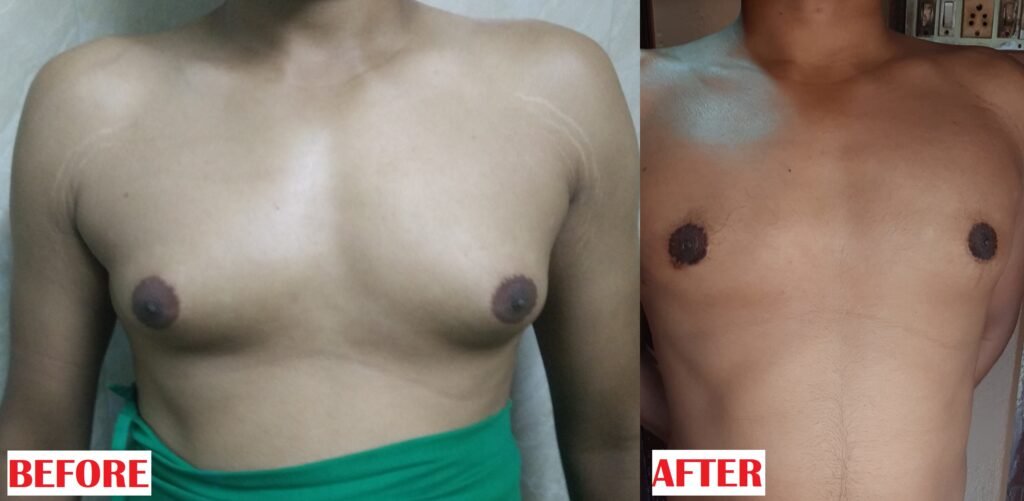
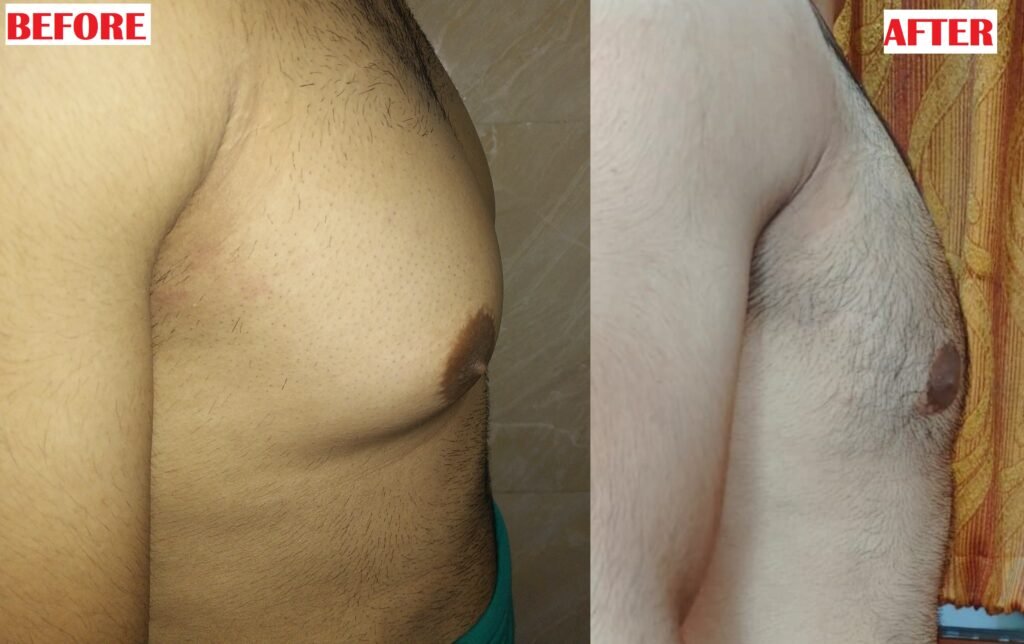
A flatter and more defined chest contour is often noticeable as the initial swelling subsides. However, the chest continues to change during the healing process as swelling decreases and the tissues settle.
The final appearance is generally assessed over the following months rather than immediately after surgery.
Results can be long-lasting when the underlying cause has been appropriately assessed and body weight remains reasonably stable. However, substantial weight gain, hormonal changes, certain medications or underlying medical conditions may alter the chest contour in the future.
Perfect symmetry cannot always be guaranteed, particularly when some asymmetry was present before surgery.

Prof. (Dr.) Souvik Adhikari
MS, MCh (Plastic Surgery)
17+ years experience
Research and Surgical Expertise in Gynecomastia
Prof. (Dr.) Souvik Adhikari has published peer-reviewed research on a minimal-incision approach to gynecomastia surgery. His work contributes to the surgical literature on techniques for male breast reduction and reflects his academic involvement in plastic and reconstructive surgery.
Adhikari S. Minimal Incision Technique for Gynecomastia. J Cutan Aesthet Surg. 2021;14(3):344-350.
Gallery
Consented before-and-after photographs for gynecomastia surgery are reviewed privately during consultation, in line with medical advertising guidelines.
Gynecomastia Surgery Videos
Gynecomastia Surgery under Local Anesthesia
This video demonstrates gynecomastia surgery performed under local anesthesia. The procedure focuses on reducing excess male breast tissue and improving the overall contour of the chest. Depending on the individual patient, gynecomastia treatment may involve liposuction, removal of glandular breast tissue, or a combination of both techniques. Local anesthesia may be suitable for selected patients and procedures, depending on the extent of gynecomastia and the surgical plan. This surgical video provides an educational insight into the principles of male breast reduction and chest contouring.
Huge Gynecomastia Surgery after Massive Weight Loss
This video demonstrates the surgical treatment of severe gynecomastia in a patient following significant weight loss. After major weight reduction, some men may continue to have excess fatty tissue, persistent glandular breast tissue and loose skin around the chest, resulting in a prominent or sagging appearance. Treatment of post-weight-loss gynecomastia often requires a personalised approach. Depending on the patient's anatomy, surgery may involve liposuction, glandular tissue excision, removal of excess skin, or a combination of techniques to achieve a flatter and more proportionate male chest. This case demonstrates the importance of assessing both the underlying breast tissue and the quality and amount of excess skin when planning male breast reduction surgery after significant weight loss.
Gynecomastia Surgery under General Anesthesia
This video demonstrates gynecomastia surgery performed under general anesthesia. Male breast enlargement can result from excess fatty tissue, glandular breast tissue, or a combination of both. Surgical treatment is therefore planned according to the individual patient's chest anatomy and the composition of the enlarged breast tissue. Depending on the patient's requirements, gynecomastia surgery may involve liposuction to reduce excess fat, surgical excision of firm glandular tissue, or a combination of both techniques. The objective is to create a flatter, balanced and natural-looking male chest while maintaining appropriate nipple and areola contour. This video provides an educational overview of the surgical approach to male breast reduction and is intended to help patients understand the principles involved in gynecomastia treatment.
Frequently Asked Questions
Is Gynecomastia Surgery painful?
Discomfort is well controlled with a multimodal pain protocol. Most patients describe a tightness or soreness rather than sharp pain, easing significantly within the first week.
How much does Gynecomastia Surgery cost in Kolkata?
The cost of gynecomastia surgery in Kolkata varies depending on the extent of glandular tissue, excess fat or skin, surgical technique, anaesthesia and facility requirements. A personalised estimate is provided after clinical assessment and discussion of the recommended treatment plan.
When can I return to work?
Desk-based work is usually possible in 3 -4 days. Physically demanding work and gym training resume in 4 to 6 weeks, on review.
Will the scars be visible?
Incisions are placed in natural creases or hidden zones wherever anatomically possible, and scar care is guided for up to a year.
Do you treat patients traveling from outside Kolkata?
Yes. Patients from across West Bengal, India and abroad are treated, with video consultations and coordinated travel and stay planning.
What is gynecomastia?
Gynecomastia is the enlargement of male breast tissue, which may occur in one or both breasts. It can result from an imbalance between oestrogen and androgen activity, and may also be associated with certain medications, hormonal conditions, weight changes or other medical factors. A proper evaluation is important before deciding on cosmetic surgery.
What is gynecomastia surgery?
Gynecomastia surgery, also known as male breast reduction surgery, is performed to reduce excess breast tissue and improve the contour of the male chest. Depending on whether the enlargement is mainly due to glandular tissue, excess fat, loose skin, or a combination, treatment may involve surgical gland excision, liposuction, skin removal, or a combination of techniques.
Who is a good candidate for gynecomastia surgery?
A suitable candidate for gynecomastia surgery in Kolkata is generally a healthy adult with persistent male breast enlargement that has not adequately improved with weight management or treatment of an underlying cause. Stable weight and realistic expectations are important considerations before surgery.
Can gynecomastia be treated with liposuction?
Liposuction for gynecomastia can be effective when the chest enlargement is predominantly caused by excess fatty tissue. However, firm glandular breast tissue may require surgical excision. Many patients have a combination of fat and glandular tissue, in which case liposuction and gland removal may be performed together.
What is the difference between gynecomastia and chest fat?
Gynecomastia involves enlargement of glandular breast tissue, whereas chest fat is primarily an accumulation of adipose tissue. The two can occur together. A clinical examination helps determine the composition of the enlargement and whether liposuction, gland excision or a combination approach is appropriate.
Can gynecomastia surgery remove the breast gland permanently?
When the enlarged glandular tissue is appropriately removed, the excised tissue does not grow back. However, significant weight gain, hormonal changes or certain medical conditions can affect the chest contour in the future. Identifying and addressing any underlying cause is therefore important.
What is the recovery time after gynecomastia surgery?
Most patients experience swelling and bruising during the early recovery period. Light activities can usually be resumed progressively, while strenuous exercise and heavy lifting may need to be avoided temporarily. The final chest contour develops gradually as postoperative swelling subsides.
When will I see the final results of gynecomastia surgery?
An improvement in chest contour is often noticeable once the initial swelling begins to decrease. However, final gynecomastia surgery results take time to develop as the tissues heal and settle. The final appearance is best assessed after adequate recovery.
Can gynecomastia come back after surgery?
Recurrence of properly removed glandular tissue is uncommon. However, new breast enlargement can occur if there are significant hormonal changes, certain medications, underlying medical conditions or substantial weight gain. Maintaining a stable weight and addressing any underlying cause can help preserve the result.
Can gynecomastia surgery correct puffy nipples?
Yes. Puffy nipples associated with gynecomastia may result from enlarged glandular tissue beneath the nipple-areola complex. Appropriate gland excision can improve the prominence of the nipple and create a flatter, more masculine chest contour when this is the underlying cause.
Can gynecomastia surgery be performed after weight loss?
Yes. Men who continue to have excess chest fat or loose skin after significant weight loss may benefit from gynecomastia surgery after weight loss. The appropriate treatment depends on the amount of residual fat, glandular tissue and skin laxity.
Is gynecomastia surgery safe?
Like any surgical procedure, gynecomastia surgery carries potential risks, including bleeding, infection, fluid collection, changes in nipple sensation, asymmetry, contour irregularities, scarring and the possibility of revision surgery. Appropriate patient selection, careful surgical planning and postoperative follow-up are important for achieving a safe result.
Can gynecomastia affect only one breast?
Yes. Unilateral gynecomastia can occur, with enlargement affecting only one side of the chest. Differences between the two sides are also common. A proper clinical assessment is important, particularly when new or sudden breast enlargement occurs.
Where can I get gynecomastia surgery in Kolkata?
If you are looking for gynecomastia surgery in Kolkata, consultation with a qualified plastic surgeon is the first step. A detailed assessment can determine whether the chest enlargement is due to glandular breast tissue, excess fat, skin laxity or a combination and help establish an appropriate treatment plan.
Honest assessment, written estimate, no pressure to book.