Breast reduction in Kolkata is a specialised cosmetic and reconstructive breast surgery designed to reduce excessive breast volume and create a more comfortable, balanced and proportionate breast shape. Very large or heavy breasts can affect clothing choices, posture, physical activity and overall quality of life, and may be associated with symptoms such as neck, shoulder and back discomfort, bra-strap indentations and skin irritation. Prof. (Dr.) Souvik Adhikari provides personalised breast reduction surgery in Kolkata, with treatment plans tailored to each patient’s anatomy, concerns and aesthetic goals.
What is Breast Reduction Surgery?
Breast reduction surgery, also known as reduction mammoplasty, involves removing carefully planned amounts of excess breast tissue, fat and skin while reshaping the remaining breast tissue to achieve a more proportionate contour. The nipple and areola may also be repositioned as part of the procedure when required. The surgical technique is selected according to breast size, shape, skin quality, degree of sagging and the patient’s desired outcome. The aim is not simply to make the breasts smaller, but to create a balanced, natural-looking and aesthetically harmonious breast shape.
Who May Consider Breast Reduction Surgery?
Women with disproportionately large breasts may consider breast reduction surgery in Kolkata for both functional and aesthetic reasons. Persistent neck, shoulder or upper back discomfort, bra strap indentations, difficulty exercising, limitations in daily activities, posture-related problems, difficulty finding appropriately fitting clothing, or recurrent skin irritation beneath the breasts may all be concerns worth discussing with a qualified plastic surgeon. Breast reduction may also address breast asymmetry and sagging when these are present. A detailed consultation is essential to determine whether surgery is appropriate and what outcome can realistically be achieved.
Problems Caused by Very Large Breasts
Very large or heavy breasts can cause more than concerns about appearance. Excessive breast weight may place continuous strain on the neck, shoulders and upper back and can interfere with exercise, sleep and everyday activities. For some women, these symptoms can persist despite maintaining a healthy weight or trying conservative measures.
Common problems associated with very large breasts include:
Neck, shoulder and upper-back pain: The weight of the breasts can place additional strain on the neck, shoulder and upper-back muscles, contributing to persistent discomfort.
Shoulder grooves from bra straps: Heavy breasts can cause bra straps to press deeply into the shoulders, resulting in discomfort and visible indentations.
Skin irritation and rashes: Moisture and friction beneath large breasts can contribute to recurrent irritation, rashes and inflammation of the skin.
Difficulty exercising: Breast heaviness and discomfort may make running, jumping and other physical activities difficult or uncomfortable.
Postural discomfort: The forward pull of heavy breasts may contribute to poor posture and muscular strain in some women.
Difficulty finding suitable clothing: Breast size may make it difficult to find bras, tops and other clothing that fit comfortably and proportionately.
Discomfort during sleep: Some women experience difficulty finding a comfortable sleeping position because of breast size and weight.
Limitations in everyday activities: Breast heaviness may interfere with work, household activities and other routine movements.
Emotional and psychological distress: Some women may experience self-consciousness, unwanted attention or dissatisfaction with their body proportions because of disproportionately large breasts.
Can Breast Reduction Help With These Problems?
For appropriately selected patients, breast reduction surgery can reduce excessive breast volume and weight while reshaping and lifting the breasts. By reducing the physical burden of very large breasts, surgery may help improve comfort, physical activity and overall quality of life.
The decision to undergo breast reduction is individual. During consultation, the extent of breast enlargement, symptoms, breast shape, skin quality, overall health and desired breast size are assessed to determine whether reduction mammoplasty is appropriate.
Breast Reduction for Back, Neck and Shoulder Pain
Very large or heavy breasts can contribute to discomfort involving the neck, shoulders and upper back and may make exercise or everyday activities difficult. Some women also experience pressure from bra straps, skin irritation beneath the breasts and difficulty finding comfortable clothing.
Breast reduction surgery reduces breast volume and weight while reshaping the remaining breast tissue. For appropriately selected patients, reducing the physical burden of excessively large breasts may improve comfort and make physical activity easier.
The extent to which symptoms improve varies between individuals, and breast reduction should not be presented as a guaranteed treatment for every cause of back, neck or shoulder pain.
Breast Reduction Techniques
Breast reduction surgery, or reduction mammoplasty, can be performed using different surgical techniques depending on the size and shape of the breasts, the amount of tissue and skin that needs to be removed, the degree of breast sagging, nipple position, skin quality and the desired degree of reduction. The aim is to reduce excessive breast volume while reshaping and lifting the remaining breast tissue to create a more proportionate and natural-looking breast contour.
Vertical or Lollipop Breast Reduction
A vertical breast reduction, often called a lollipop breast reduction, involves an incision around the areola with a vertical incision extending down towards the breast crease. This technique can be suitable for selected patients with moderate breast enlargement and a degree of breast sagging.
The technique allows removal of excess breast tissue and skin while reshaping the remaining breast tissue and repositioning the nipple-areola complex. The resulting scar is generally confined to the area around the areola and the vertical portion of the breast.
Wise Pattern or Inverted-T Breast Reduction
The Wise pattern breast reduction, also known as an inverted-T or anchor-pattern breast reduction, involves an incision around the areola, a vertical component and an incision along the breast crease.
This technique can be particularly useful when there is substantial breast volume, significant skin excess or more pronounced breast sagging. It provides the surgeon with greater flexibility to remove excess tissue and skin and to reshape and lift the breast.
Liposuction-Assisted Breast Reduction
In carefully selected patients, liposuction may be used as part of breast reduction surgery to remove excess fatty tissue and improve the contour of the breast or surrounding areas. Liposuction alone may be appropriate in selected patients whose breast size is predominantly related to fatty tissue and who have good skin elasticity, but it is not suitable for every type of breast enlargement.
The most appropriate breast reduction technique is determined individually after assessment of breast size, shape, tissue composition, skin quality, nipple position and the amount of reduction required. In many patients, a combination of tissue removal, skin reduction, reshaping and lifting provides the most balanced result.
Breast Reduction and Breast Lift
Breast reduction surgery and breast lift surgery are closely related procedures, but they address different aspects of breast shape. Breast reduction (reduction mammoplasty) is performed primarily to reduce excessive breast volume and weight, while a breast lift (mastopexy) is primarily performed to correct breast sagging and improve breast position.
When breasts are very large and heavy, they are often also sagging. In these situations, breast reduction surgery commonly incorporates a lifting and reshaping component. Excess breast tissue and skin are removed, the remaining breast tissue is reshaped, and the nipple-areola complex may be repositioned to create a smaller, lifted and more proportionate breast.
Breast Reduction vs Breast Lift
A breast reduction is generally considered when excessive breast size causes physical discomfort or creates disproportionate breast volume. A breast lift is more appropriate when the principal concern is drooping or loss of breast shape without a significant need to reduce breast volume.
In some patients, a breast reduction with lift provides the most appropriate approach. The amount of tissue and skin removed, the degree of lifting required and the surgical technique are individualised according to breast size, breast shape, skin quality, nipple position, body proportions and the patient’s goals.
Can Breast Reduction Correct Sagging Breasts?
Yes. Breast reduction can improve breast sagging when excess breast tissue and skin are removed and the remaining breast is reshaped and elevated. The nipple-areola complex can also be repositioned when required.
The aim is not simply to make the breasts smaller, but to achieve a smaller, lifted and naturally proportioned breast shape while addressing the physical symptoms associated with excessive breast weight.
During consultation, the appropriate balance between breast reduction, lifting and reshaping is determined based on your individual anatomy and expectations.
Scars of Breast Reduction
Breast reduction surgery involves scars, because excess breast tissue and skin generally need to be removed through surgical incisions. The location and extent of the scars depend on the reduction technique, the size and shape of the breasts, the degree of sagging and the amount of skin that needs to be removed.
Depending on the technique used, breast reduction scars may include:
A scar around the areola
A vertical scar extending from the areola towards the breast crease
A horizontal scar along the breast fold, producing an inverted-T or anchor-shaped pattern
Not every patient requires the same incision pattern. Smaller reductions with less skin excess may be possible with shorter scar techniques, while patients requiring a larger reduction or significant skin removal may need a longer incision pattern.
Do Breast Reduction Scars Fade?
Breast reduction scars are permanent, but they generally become softer and less noticeable as they mature. Scar appearance varies considerably between individuals and may be influenced by skin type, genetics, wound healing, surgical technique and postoperative care.
The scars are usually positioned so that much of them can be concealed beneath a bra or swimsuit. Your postoperative scar-care plan may include measures such as appropriate wound care, silicone-based scar management and protection from excessive sun exposure when advised.
It is important to understand that scar quality cannot be guaranteed, and the final appearance of scars may continue to improve for many months after surgery.
Breast Reduction After Pregnancy
Pregnancy can cause significant changes in breast size, shape and skin elasticity. Some women experience persistent breast enlargement, heaviness or sagging even after completing pregnancy and breastfeeding. For women whose breasts remain excessively large and cause physical discomfort, breast reduction after pregnancy may be considered.
Breast reduction can remove excess breast tissue and skin while reshaping and lifting the remaining breast tissue. This can help improve breast proportion and may reduce symptoms associated with excessively large breasts, such as neck, shoulder and back discomfort, bra-strap grooves and difficulty with physical activity.
When Can Breast Reduction Be Done After Pregnancy?
It is generally preferable to allow the breasts to settle into a relatively stable size and shape before undergoing elective breast reduction surgery. If you are breastfeeding, surgery is usually planned after breastfeeding has ended and the breasts have stabilised.
The appropriate timing varies from person to person and depends on breastfeeding status, breast size and stability, overall health and future pregnancy plans. Women who have experienced breast changes following pregnancy may sometimes consider breast reduction as part of a broader mommy makeover, depending on their individual concerns and anatomy.
What If I Plan to Have Another Pregnancy?
Future pregnancy can change breast size and shape and may partially alter the results of a previous breast reduction. Therefore, if another pregnancy is planned in the near future, it may be appropriate to discuss whether surgery should be postponed.
A personalised consultation can help determine the most appropriate timing and surgical approach.
Breast Reduction After Weight Loss
Significant weight loss can improve overall health and body proportions, but it may also leave some women with breasts that remain disproportionately large or have excess skin and sagging. Breast reduction after weight loss can address persistent breast volume while reshaping and lifting the remaining breast tissue.
After substantial weight loss, the breasts may contain a combination of excess fatty tissue, glandular tissue and loose skin. The appropriate surgical approach therefore depends on the individual’s breast composition, skin elasticity, breast shape and degree of sagging.
Should You Lose Weight Before Breast Reduction?
If you are actively losing a significant amount of weight, it may be preferable to approach or maintain a stable weight before breast reduction surgery. Further weight loss after surgery can change breast volume and shape and may affect the long-term result.
However, the decision is individual. For some women, excessively large breasts can make exercise uncomfortable or difficult, and reduction surgery may itself make physical activity easier.
During consultation, the timing of surgery can be discussed in relation to your current weight, weight-loss goals, breast symptoms and overall health.
Breast Reduction or Breast Lift After Weight Loss?
Women who have lost significant weight may have both excessive breast volume and substantial skin laxity. Depending on the individual anatomy, breast reduction may be combined with a lifting and reshaping component to achieve a smaller and more proportionate breast contour.
Can You Breastfeed After Breast Reduction?
Breastfeeding after breast reduction is possible for many women, but it cannot be guaranteed. The ability to breastfeed after reduction mammoplasty can depend on the surgical technique, the amount of breast tissue removed and how the nipple-areola complex and milk ducts are managed during surgery.
Breast reduction techniques are designed, whenever appropriate, to preserve the connection of the nipple and areola with underlying breast tissue and its blood supply. However, because breast tissue and ductal structures may be altered during surgery, some women may experience reduced milk production or may have difficulty breastfeeding fully.
If you are considering breast reduction and plan to have children in the future, it is important to discuss your plans with your plastic surgeon before surgery. The surgical technique can then be considered in the context of your future breastfeeding goals.
Can I Have Breast Reduction Before Pregnancy?
Breast reduction can be performed before pregnancy in appropriately selected patients, but pregnancy and breastfeeding may subsequently change breast size, skin elasticity and breast shape. These changes can affect the appearance of the breasts after previous surgery.
If future pregnancy is planned soon, postponing breast reduction until childbearing is complete may be worth considering. The decision should be individualised after discussing your symptoms, timing of pregnancy and breastfeeding plans with your surgeon.
Personalised Breast Reduction in Kolkata
Every patient has a different breast shape, tissue distribution, skin quality and body proportion. Therefore, breast reduction in Kolkata should be planned individually rather than based solely on breast size. During consultation, the patient’s medical history, breast anatomy, degree of asymmetry, skin characteristics and aesthetic expectations are assessed. The surgical plan, possible scars, nipple position, recovery period, potential complications and expected results are discussed carefully before proceeding.
Breast Reduction and Natural-Looking Results
A successful breast reduction aims to achieve more than a reduction in breast volume. Careful tissue reshaping and proportionate positioning can help create a breast contour that complements the patient’s overall body shape. When appropriate, breast reduction can also be combined with techniques to address breast sagging (ptosis) and improve breast shape. Realistic expectations and detailed preoperative planning are important for achieving a satisfactory result.
Why Choose Prof. (Dr.) Souvik Adhikari?
Prof. (Dr.) Souvik Adhikari brings more than 17 years of independent surgical experience in cosmetic, plastic and reconstructive surgery. His training includes MBBS and MS from Medical College Kolkata and MCh in Plastic & Reconstructive Surgery from IPGME&R Kolkata, along with AOCMF Fellowship training at Johns Hopkins University, USA.
Breast reduction surgery is planned according to breast size, tissue distribution, skin quality, degree of ptosis, nipple position, body proportions and the patient’s functional and aesthetic concerns. During consultation, the proposed technique, expected reduction, scars, breastfeeding considerations, recovery and potential complications are discussed before surgery.
Breast Reduction Surgery: Consultation & Recovery
Recovery after breast reduction surgery in Kolkata varies from patient to patient and depends on the extent of surgery, individual healing and the surgical technique used. Patients receive personalised postoperative instructions regarding wound care, activity, supportive garments and follow-up. During consultation, you can discuss the expected recovery timeline, potential risks, scarring and when normal activities can generally be resumed.
If you are considering breast reduction in Kolkata, a consultation with an experienced plastic surgeon can help determine whether the procedure is suitable for your needs and what surgical approach may provide the most appropriate result. The goal is to combine comfort, proportion, breast shape and aesthetic harmony while maintaining realistic expectations about what surgery can achieve.
Who Is a Candidate for Breast Reduction Surgery?
Breast reduction surgery may be considered by women whose breasts are disproportionately large or heavy and cause physical discomfort, limitations in activity or concerns about breast proportion and appearance.
Patients may benefit from breast reduction when they experience symptoms such as neck, shoulder or upper-back discomfort, bra-strap indentations, skin irritation beneath the breasts, difficulty exercising, problems finding suitable clothing or dissatisfaction with the size and shape of the breasts.
Suitability for surgery depends on breast size and shape, skin quality, degree of breast sagging, nipple position, general health, weight stability, future pregnancy plans and individual expectations. Patients who smoke may be advised to stop smoking for an appropriate period before and after surgery because smoking can adversely affect wound healing.
A detailed consultation is important to determine whether breast reduction is appropriate and how much reduction can realistically be achieved.
Benefits of Breast Reduction Surgery
The potential benefits of breast reduction surgery include:
Reduction in excessive breast volume and weight
Improvement in neck, shoulder and upper-back discomfort associated with very large breasts
Reduction in bra-strap pressure and shoulder indentations
Improved comfort during physical activity and exercise
Reduction of recurrent irritation beneath the breasts in appropriate patients
Improved ability to find comfortable and well-fitting clothing
Improved breast proportion and contour
Reshaping and lifting of breasts that are both large and sagging
Improvement of certain forms of breast asymmetry
The extent of symptom improvement varies between individuals. Breast reduction is planned not simply to make the breasts smaller, but to achieve an appropriate balance between breast volume, shape, body proportions and the patient’s functional and aesthetic goals.
How Is Breast Reduction Surgery Performed?
Breast reduction surgery, or reduction mammoplasty, involves removing an appropriate amount of excess breast tissue, fat and skin and reshaping the remaining breast tissue.
The surgical technique is selected according to breast size, breast shape, skin quality, degree of sagging, nipple position, amount of tissue requiring removal and the desired degree of reduction.
During surgery, the nipple-areola complex may be repositioned to a more appropriate position while maintaining its blood supply and connection with the surrounding breast tissue whenever the chosen technique permits. The remaining breast tissue is then reshaped to create a smaller, lifted and proportionate breast contour.
Different techniques may be used, including vertical or lollipop breast reduction and Wise-pattern or inverted-T breast reduction. In selected patients, liposuction may also be incorporated when excess fatty tissue contributes significantly to breast volume.
The final surgical plan is individualised according to the patient’s anatomy rather than using one technique for every breast reduction.
Anaesthesia for Breast Reduction Surgery
Breast reduction surgery is generally performed under general anaesthesia following appropriate pre-anaesthetic assessment.
The anaesthetic plan is determined according to the extent of surgery, the patient’s medical history, whether other procedures are being performed at the same time and the assessment of the anaesthesia team.
Duration of Breast Reduction Surgery
The duration of breast reduction surgery varies according to breast size, the amount of tissue and skin that needs to be removed, the surgical technique, degree of reshaping required and whether additional procedures are performed.
Rather than using a fixed operating time for every patient, the expected duration is discussed during consultation according to the planned surgical approach.
Recovery After Breast Reduction Surgery
Recovery after breast reduction varies between patients and depends on the extent of surgery, surgical technique and individual healing.
During the initial recovery period, swelling, bruising, tightness and breast tenderness are common. Walking and light activity are generally encouraged, while heavy lifting and strenuous exercise should be avoided until adequate healing has occurred.
Patients with desk-based work may often return to work within approximately 1–2 weeks, depending on the extent of surgery and individual recovery. Physically demanding work, heavy lifting and strenuous exercise usually require a longer recovery period and should be resumed according to the surgeon’s advice.
Postoperative care may include wound care, supportive garments, medication and scheduled follow-up. The breasts gradually settle into their new shape as swelling decreases.
Risks and Possible Complications
Breast reduction surgery is generally performed safely in appropriately selected patients, but as with any surgical procedure, complications can occur.
Potential risks include:
Bleeding or haematoma
Infection
Delayed wound healing
Wound separation
Changes in nipple or breast sensation
Breast asymmetry
Unfavourable or widened scars
Seroma or fluid collection
Changes in breast shape over time
Possible difficulty with breastfeeding in the future
Rare problems affecting the blood supply to the nipple-areola complex or breast skin
Need for revision surgery in selected cases
Anaesthetic and thromboembolic complications
The individual risk profile depends on breast size, surgical technique, medical history, smoking status and other patient-specific factors. These issues are discussed during informed consent before surgery.
Breast Reduction Scars
Breast reduction requires surgical incisions and therefore leaves scars. Depending on the technique and the amount of tissue and skin that needs to be removed, scars may occur around the areola, vertically down the breast and, in some patients, along the breast crease.
The scar pattern is selected according to the patient’s breast anatomy and surgical requirements. Smaller reductions with less skin excess may sometimes be performed with shorter scar patterns, whereas larger reductions or greater skin excess may require a longer incision.
Breast reduction scars are permanent, but they generally become softer and less noticeable as they mature. Scar appearance varies between individuals and is influenced by skin characteristics, genetics, wound healing and postoperative care.
Results After Breast Reduction Surgery
A reduction in breast volume is usually apparent soon after surgery, although swelling can affect the early appearance. As postoperative swelling decreases and the breast tissues settle, the breast shape and contour become progressively more defined.
The final result develops gradually over the following months, while scars continue to mature.
Breast reduction provides long-lasting reduction in the breast tissue that has been removed, but future pregnancy, significant weight changes, hormonal changes and ageing can alter breast size and shape over time.
The aim of surgery is to create a smaller, lighter and proportionate breast shape while addressing the patient’s functional and aesthetic concerns. A specific cup size or perfectly symmetrical result cannot always be guaranteed.
Breast Reduction Surgery by Prof. (Dr.) Souvik Adhikari
Prof. (Dr.) Souvik Adhikari brings more than 17 years of independent surgical experience in cosmetic, plastic and reconstructive surgery. His training includes MBBS and MS from Medical College Kolkata and MCh in Plastic & Reconstructive Surgery from IPGME&R Kolkata, along with AOCMF Fellowship training at Johns Hopkins University, USA.
Breast reduction surgery is planned according to breast size, tissue distribution, skin quality, degree of breast ptosis, nipple position, body proportions and the patient’s functional and aesthetic concerns.
During consultation, patients can discuss the desired reduction in breast volume, surgical technique, scar pattern, nipple position, breastfeeding considerations, recovery, possible complications and the potential effect of future pregnancy or weight changes on the result.
Consultation for Breast Reduction Surgery in Kolkata
A consultation is the first step in determining whether breast reduction surgery is appropriate. Breast size and shape, degree of asymmetry, skin quality, nipple position, symptoms, medical history, weight stability and future pregnancy plans are assessed.
The proposed surgical technique, expected degree of reduction, scar pattern, recovery, risks and long-term considerations are discussed before surgery.
The goal is not simply to reduce breast size, but to achieve a comfortable, proportionate and naturally shaped breast contour while addressing the individual patient’s functional and aesthetic concerns.

Prof. (Dr.) Souvik Adhikari
MS, MCh (Plastic Surgery)
17+ years experience
Breast Reduction Cost in Kolkata
The cost of breast reduction surgery in Kolkata varies from patient to patient because the procedure is individually planned according to breast size, the amount of tissue and skin that needs to be removed, the degree of breast sagging, surgical technique, anaesthesia, hospital or facility requirements and postoperative care.
A more extensive breast reduction requiring greater tissue and skin removal may involve a different surgical approach from a smaller reduction. Additional factors may also influence the overall cost, including preoperative investigations, medications, facility charges and follow-up requirements.
Rather than quoting a single price for every patient, a personalised estimate is provided after clinical assessment and discussion of the recommended surgical plan. This allows the proposed breast reduction procedure and associated costs to be explained clearly before surgery.
If you are considering breast reduction in Kolkata, a consultation provides an opportunity to discuss your symptoms, desired breast size, surgical options, expected recovery, scars, risks and the estimated cost of treatment.
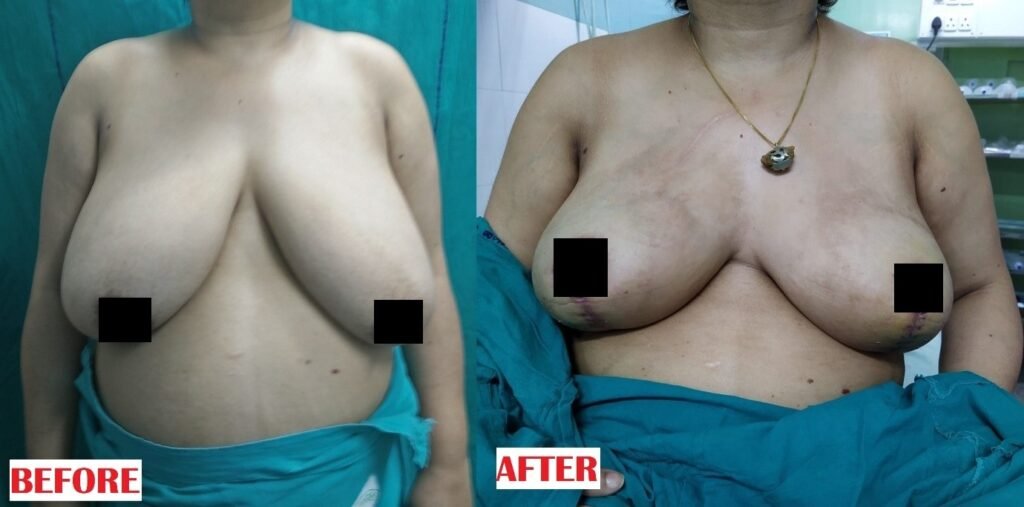
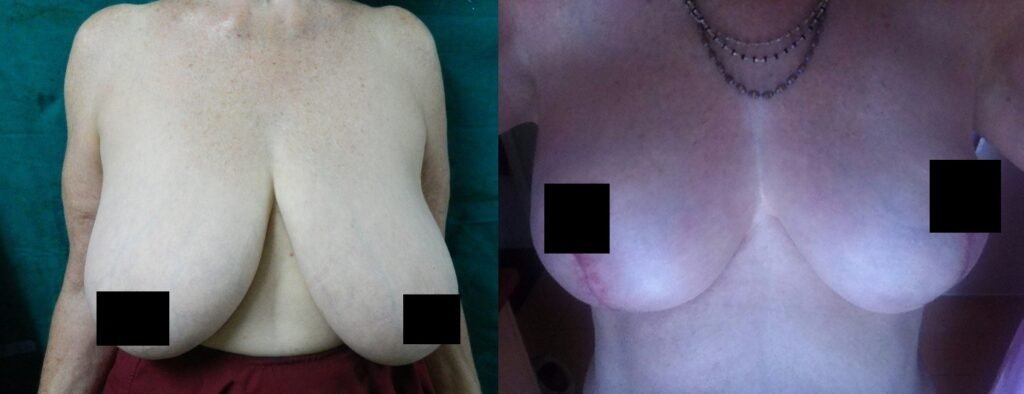
Breast Reduction - Before and After
Consented before-and-after photographs for breast reduction surgery are reviewed privately during consultation, in line with medical advertising guidelines.
Video of Breast Reduction Surgery
Breast Reduction Surgery Kolkata
A surgical video demonstrating breast reduction surgery performed by Prof. (Dr.) Souvik Adhikari. The video provides an educational overview of reduction mammoplasty, including breast tissue reduction, reshaping and lifting. Individual surgical techniques and outcomes vary according to breast anatomy and patient requirements.
Frequently Asked Questions
Is Breast Reduction Surgery painful?
Discomfort is well controlled with a multimodal pain protocol. Most patients describe a tightness or soreness rather than sharp pain, easing significantly within the first week.
How much does Breast Reduction Surgery cost in Kolkata?
Cost depends on the extent of surgery, anaesthesia or consumables and hospital stay. A transparent breast reduction surgery cost estimate in Kolkata is provided after consultation, based on the surgical plan and facility requirements.
When can I return to work?
Many patients with desk-based work can return within approximately 1–2 weeks, depending on the extent of surgery and individual recovery. Physically demanding work, heavy lifting and strenuous exercise usually require a longer recovery period and should be resumed according to the surgeon's advice.
Will the scars be visible?
Breast reduction necessarily involves scars because breast tissue and skin have to be removed through surgical incisions. Depending on the technique, scars may be located around the areola, vertically on the breast and sometimes along the breast crease. They usually become softer and less noticeable as they mature, but scar appearance varies between individuals.
Do you treat patients traveling from outside Kolkata?
Yes. Patients from across West Bengal, India and abroad are treated, with video consultations and coordinated travel and stay planning.
What is breast reduction surgery?
Breast reduction surgery, medically known as reduction mammoplasty, is a procedure designed to reduce the size and weight of excessively large breasts by removing excess breast tissue, fat and skin and reshaping the remaining breast tissue. The goal is to create breasts that are more proportionate to the patient's body while addressing physical discomfort and aesthetic concerns.
Who is a good candidate for breast reduction surgery?
Women with large or heavy breasts that cause physical discomfort, difficulty exercising, shoulder or neck pain, back pain, skin irritation or problems finding suitable clothing may benefit from breast reduction surgery. A consultation is necessary to assess breast size, skin quality, overall health and individual expectations.
What problems can breast reduction surgery help with?
Breast reduction surgery in Kolkata can help address symptoms associated with excessively large breasts, including neck and shoulder discomfort, back pain, skin irritation beneath the breasts, difficulty with physical activity and problems with clothing fit. The procedure can also improve breast proportion and contour.
How much smaller will my breasts be after breast reduction?
The amount of breast tissue removed is individualised according to breast size, body proportions, symptoms, breast shape, skin quality and the patient's desired outcome. A specific cup size cannot always be guaranteed because bra sizing varies between manufacturers and breast shape is influenced by several factors. During consultation, the desired reduction and a realistic postoperative breast size and shape can be discussed.
What is reduction mammoplasty?
Reduction mammoplasty is the medical term for breast reduction surgery. It involves removing an appropriate amount of excess breast tissue, fat and skin and reshaping the breast to create a smaller, lighter and more proportionate appearance.
Can breast reduction reduce very large breasts?
Yes. Breast reduction for very large breasts can substantially reduce breast volume when clinically appropriate. The amount of tissue removed is determined individually according to the patient's anatomy, symptoms, desired size and surgical safety considerations.
Can breast reduction affect breastfeeding?
Breast reduction surgery can potentially affect future breastfeeding depending on the surgical technique, the amount of tissue removed and how the nipple and milk ducts are managed. Patients who are planning future pregnancies or breastfeeding should discuss this carefully with their surgeon before surgery.
Will the breasts grow again after breast reduction surgery?
The breast tissue removed during surgery does not grow back. However, future weight gain, pregnancy, hormonal changes and ageing can change breast size and shape. Maintaining a stable weight may help preserve the long-term result.
Can breast reduction surgery be combined with a breast lift?
Yes. A breast reduction usually incorporates breast reshaping and lifting because removing excess tissue and skin requires the remaining breast tissue and nipple-areola complex to be repositioned. The result is therefore often both a reduction in breast size and an improvement in breast shape and position.
Will breast reduction surgery improve sagging breasts?
Breast reduction surgery can improve breast sagging by removing excess skin and repositioning the breast tissue and nipple. Patients with very large, heavy or significantly drooping breasts may particularly benefit from the combined reduction and lifting effect of the procedure.
Can breast reduction surgery reduce breast asymmetry?
Breast reduction can sometimes improve breast asymmetry by removing different amounts of tissue from each breast and carefully reshaping them. However, perfect symmetry cannot always be achieved because some degree of natural breast asymmetry is common.
What are the common breast reduction scar patterns?
Depending on the individual anatomy and surgical requirements, breast reduction may involve a scar around the areola with a vertical component, or an additional horizontal scar beneath the breast. Your surgeon can explain the most appropriate incision pattern during consultation.
Can breast reduction be performed without implants?
Yes. Breast reduction surgery is generally performed by removing excess breast tissue, fat and skin and reshaping the remaining breast tissue, without the need for breast implants. The procedure is intended primarily to reduce excessive breast volume and weight while improving breast shape and position. Whether implants have any role depends on the individual patient's anatomy and goals.
When will I see the final results of breast reduction?
An immediate reduction in breast size can be noticeable after surgery, but final breast reduction results develop gradually as swelling subsides and the breast tissues settle. Scar maturation and changes in breast shape can continue for several months.
Can breast reduction surgery help with shoulder and back pain?
For appropriately selected patients, breast reduction may relieve symptoms associated with very large breasts, including neck, shoulder and upper-back discomfort. It may also reduce the physical burden associated with heavy breasts and improve the ability to participate in certain activities.
Can breast reduction surgery help with problems caused by heavy breasts?
Yes. Breast reduction surgery may help patients who experience discomfort, bra-strap pressure, skin irritation, difficulty exercising or problems with clothing because of excessive breast weight. The potential benefits vary between individuals.
Can breast reduction surgery be performed after pregnancy?
Yes. Breast reduction after pregnancy is possible once the breasts have stabilised following pregnancy and breastfeeding. If future pregnancy is planned, the timing of surgery should be discussed because pregnancy and breastfeeding can alter breast size and shape.
Is breast reduction surgery safe?
Like any surgical procedure, breast reduction surgery carries potential risks, including bleeding, infection, wound-healing problems, changes in nipple sensation, asymmetry, scarring and, rarely, problems affecting the nipple or breast skin. A detailed assessment and appropriate surgical planning are important for reducing risks.
Can breast reduction surgery be performed using liposuction?
Breast reduction using liposuction may be suitable for selected patients whose breast enlargement is primarily related to excess fatty tissue and who have good skin elasticity. However, liposuction alone cannot remove significant excess skin or reshape the breast in the same way as surgical reduction mammoplasty.
Where can I get breast reduction surgery in Kolkata?
If you are considering breast reduction surgery in Kolkata, a consultation with a qualified plastic surgeon can help determine whether reduction mammoplasty is appropriate for you. Your breast size, shape, skin quality, symptoms, overall health and desired outcome can be assessed to develop an individualised surgical plan.
Honest assessment, written estimate, no pressure to book.