Facelift surgery in Kolkata is an advanced facial rejuvenation procedure designed to address visible signs of ageing in the lower face, jawline and neck. As the skin loses elasticity and underlying facial tissues gradually descend, patients may develop jowls, deep folds, loose facial skin and an undefined jawline. A facelift can reposition and tighten selected facial tissues while removing carefully planned excess skin to create a firmer, more youthful and naturally balanced appearance.
Facelift Surgery Techniques
A facelift in Kolkata, also known as rhytidectomy, is not simply a procedure for tightening facial skin. Modern facelift techniques focus on repositioning the deeper supporting tissues of the face to achieve a more durable and natural-looking improvement. Depending on the patient’s anatomy and degree of ageing, different approaches may be considered, including SMAS-based techniques and other forms of deep tissue lifting. The surgical plan is customised according to facial structure, skin quality and individual goals.
Who May Benefit from Facelift Surgery?
Patients concerned about facial sagging, jowls, deep nasolabial folds, marionette lines or loss of jawline definition may consider facelift surgery. A facelift is generally most beneficial when the primary concerns involve tissue descent and skin laxity rather than isolated wrinkles. During consultation, the face and neck are assessed comprehensively to determine whether a facelift alone or a combination with other procedures would provide the most harmonious result.
Facelift and Neck Lift for Complete Facial Rejuvenation
For patients with significant ageing of both the lower face and neck, facelift and neck lift surgery in Kolkata may be combined. Addressing the jawline, jowls and neck together can create a smoother transition between these areas. Depending on individual requirements, additional procedures such as blepharoplasty, brow lift, facial fat grafting or neck liposuction may also be considered. The combination is carefully selected rather than routinely performed for every patient.
Natural-Looking Facelift Results
The objective of a facelift in Kolkata is not to create an overly tight or artificial appearance. Modern facial rejuvenation aims to restore youthful contours while preserving the patient’s individual facial characteristics and natural expressions. Careful assessment of the underlying facial tissues, skin laxity and facial proportions helps determine how much lifting and skin removal is appropriate.
Facelift by Prof. (Dr.) Souvik Adhikari
Prof. (Dr.) Souvik Adhikari brings 17+ years of surgical experience in cosmetic, plastic and reconstructive surgery, with additional AOCMF Fellowship training at Johns Hopkins University, USA. His approach to facelift surgery in Kolkata focuses on detailed facial assessment, individualized surgical planning, anatomical precision and natural-looking facial rejuvenation.
Facelift Recovery and Aftercare
Recovery following facelift surgery in Kolkata varies according to the technique used and whether additional procedures are performed. Swelling, bruising, tightness and temporary changes in sensation can occur during the initial healing period and gradually improve. Patients receive personalised instructions regarding wound care, activity, sleeping position and follow-up. The final facial contour becomes increasingly apparent as swelling subsides and the tissues settle.
If you are considering a facelift in Kolkata, a personalised consultation can help determine whether facelift surgery is appropriate for your facial ageing concerns. The goal is to achieve a firmer, refreshed and naturally rejuvenated appearance, with realistic expectations regarding the degree of improvement, scars, recovery and long-term ageing.
Individualised Facelift Planning
Facelift surgery is not a single standard operation. The appropriate technique depends on the pattern of facial ageing, skin laxity, descent of the deeper facial tissues, facial proportions, volume changes and the condition of the neck. During consultation, the face and neck are assessed as a whole so that the surgical plan addresses the areas that actually require correction.
The objective is to improve facial contours and reduce the visible effects of tissue descent while preserving the individual’s facial characteristics and natural expression. Depending on the findings, facelift surgery may be performed alone or combined with procedures such as a neck lift, facial fat grafting, blepharoplasty or brow lift.
Facelift Techniques for Different Patterns of Facial Ageing
Modern facelift surgery may involve repositioning the deeper supporting tissues of the face rather than relying solely on removal of excess skin. Techniques can differ in how the SMAS and deeper facial tissues are treated, and the choice should be based on the patient’s anatomy and treatment goals rather than on the name of a particular technique.
SMAS Facelift
A SMAS facelift addresses the superficial musculoaponeurotic system, an important supporting layer beneath the skin. Depending on the anatomy and degree of tissue descent, the SMAS may be repositioned or tightened to improve the contours of the cheeks, lower face and jawline.
Deep-Plane Facelift
A deep-plane facelift works at a deeper anatomical level and involves mobilisation of the facial soft tissues beneath the SMAS in selected patients. It may be considered when there is significant descent of the midface, jowls or lower facial tissues. The technique requires detailed knowledge of facial anatomy and is not automatically appropriate for every patient.
Limited or Short-Scar Facelift
A limited or short-scar approach uses a more restricted incision and may be considered when facial laxity is relatively mild or when the principal areas requiring correction can be addressed through a more limited procedure. The extent of improvement is influenced by the degree of skin and deeper tissue laxity.
Lower Facelift
A lower facelift focuses particularly on the lower face, jowls and jawline. It may be appropriate when the main concerns are descent around the corners of the mouth, jowling and loss of definition along the mandibular border.
Facelift with Neck Lift
When ageing affects both the lower face and neck, facelift and neck lift surgery may be combined. This can allow coordinated treatment of jowls, the jawline, loose neck skin, submental fullness and selected platysmal changes. The decision to combine the procedures is made according to the patient’s anatomy rather than as a routine part of every facelift.
Facelift for Jowls, Jawline and Lower-Face Sagging
Jowls and loss of jawline definition are among the common reasons patients consider facelift surgery. These changes may result from descent of facial soft tissues, skin laxity and age-related changes in facial volume.
A facelift can reposition descended tissues and remove appropriate excess skin to improve the transition between the cheek, lower face and jawline. When significant neck laxity or submental fullness is also present, a neck lift or carefully selected neck-contouring procedure may be incorporated into the treatment plan.
Facelift and Facial Fat Grafting
Ageing of the face involves more than skin laxity. Changes in facial fat distribution and volume can contribute to hollowing or loss of youthful facial contours.
For selected patients, facial fat grafting may be combined with facelift surgery to restore volume in areas such as the cheeks, temples or other areas of volume deficiency. The decision to add fat grafting depends on the individual’s facial structure and whether volume restoration is actually required.
What a Facelift Can and Cannot Correct
A facelift primarily addresses sagging facial tissues, jowls, lower-face laxity and selected changes in the neck. It can improve facial contours and reduce the appearance of deeper folds associated with tissue descent.
A facelift does not, by itself, correct every sign of facial ageing. Fine surface wrinkles, pigmentation, sun damage and changes in skin texture may require separate skin-focused treatments. Similarly, upper facial ageing may require consideration of procedures such as brow lift or blepharoplasty rather than simply extending a facelift.
Facelift Incisions and Scars
Facelift incisions are planned according to the surgical technique, facial anatomy and areas requiring correction. Incisions commonly extend around the ear and may continue into the hairline; additional incisions may sometimes be required for treatment of the neck.
The aim is to position incisions as inconspicuously as possible within natural contours and existing anatomical boundaries. Scars are permanent, but their appearance generally changes and matures over time. Individual scar quality varies according to healing characteristics, skin type, surgical technique and postoperative care.
Anaesthesia and Surgical Planning
Facelift surgery may be performed under general anaesthesia or, in appropriately selected cases, under local anaesthesia with sedation. The choice depends on the extent of surgery, associated procedures, the patient’s medical status and the anaesthetic assessment.
The duration of surgery varies considerably because a facelift may range from a more limited procedure to a comprehensive operation combined with neck lift, blepharoplasty or facial fat grafting. A personalised estimate is therefore more meaningful than assigning one fixed operating time to every facelift.
Recovery After Facelift Surgery
Swelling, bruising, tightness and temporary numbness are expected during the early healing period. The duration and intensity of recovery vary according to the facelift technique, extent of surgery, associated procedures and individual healing.
Patients are generally advised to keep physical activity restricted initially and gradually resume normal activities according to their progress and postoperative review. Although visible improvement occurs as swelling settles, subtle changes in facial contour may continue for several months.
Risks and Possible Complications
Facelift surgery is a major surgical procedure and has potential complications. These may include bleeding or haematoma, infection, wound-healing problems, visible or unfavourable scarring, temporary or persistent changes in sensation, asymmetry, hair loss near the incision, skin or tissue healing problems and the possibility of revision surgery.
Facial nerve-related complications are uncommon but important because facial nerve branches are present within the operative field. Individual risks are influenced by the patient’s health, smoking status, medications, anatomy and the surgical technique used. These factors are reviewed during consultation and informed consent.
Expected Facelift Results
The aim of facelift surgery is improvement rather than a complete reversal of ageing. A successful result should restore facial contours and reduce the appearance of sagging while remaining appropriate for the patient’s individual facial structure.
Results can be long-lasting, but the natural ageing process continues after surgery. The longevity of improvement varies between individuals and is influenced by factors including age, skin quality, genetics, lifestyle and the extent and technique of surgery.
Facelift by Prof. (Dr.) Souvik Adhikari
Prof. (Dr.) Souvik Adhikari is a Professor & Consultant Plastic Surgeon with more than 17 years of independent surgical practice and academic experience in cosmetic, plastic and reconstructive surgery. His training includes MBBS, MS in General Surgery and MCh in Plastic & Reconstructive Surgery, along with AOCMF Fellowship training at Johns Hopkins University, USA.
Facelift surgery is approached with attention to facial anatomy, the pattern of tissue ageing, skin quality, facial proportions and the patient’s individual objectives. The appropriate technique is selected after clinical assessment rather than applying the same facelift approach to every patient.
Consultation for Facelift Surgery in Kolkata
A detailed consultation is the starting point for determining whether facelift surgery is appropriate and which areas require correction. The assessment may include the lower face, cheeks, jawline and neck, together with skin quality, facial volume, previous procedures and relevant medical factors.
The consultation also provides an opportunity to discuss alternative procedures, combination treatments, expected improvement, scars, recovery, potential complications and the limitations of facelift surgery so that the treatment plan is based on realistic expectations.
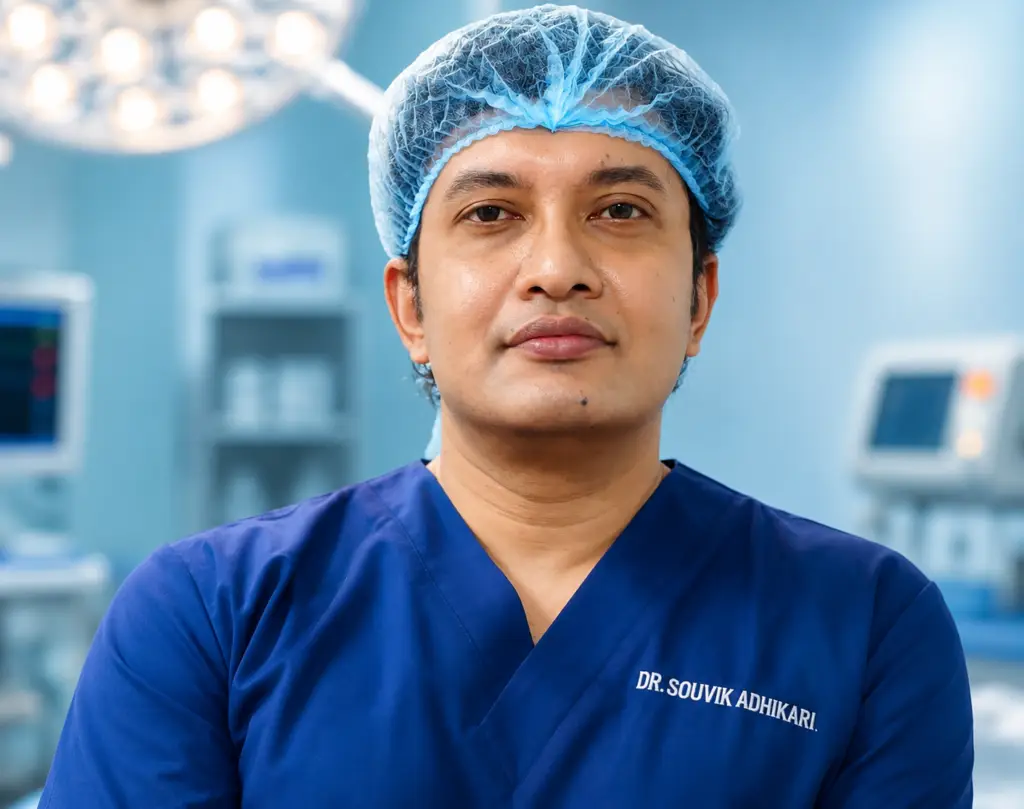
Prof. (Dr.) Souvik Adhikari
MS, MCh (Plastic Surgery)
17+ years experience
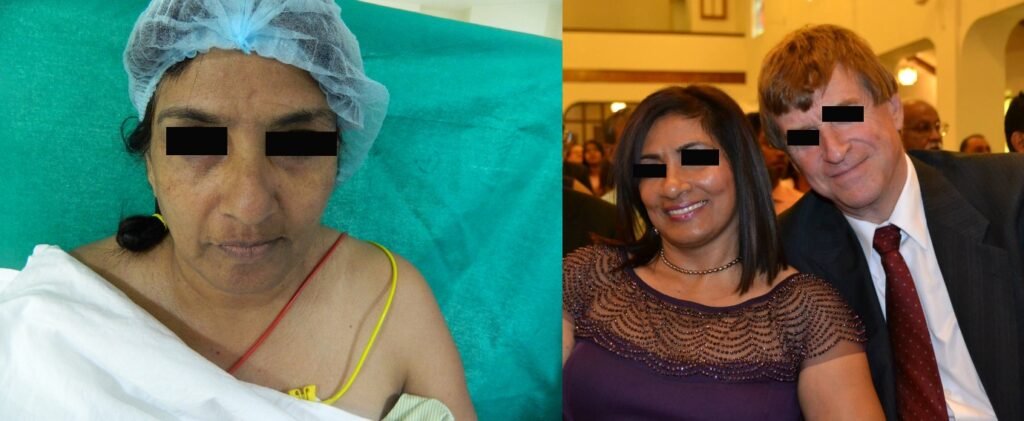
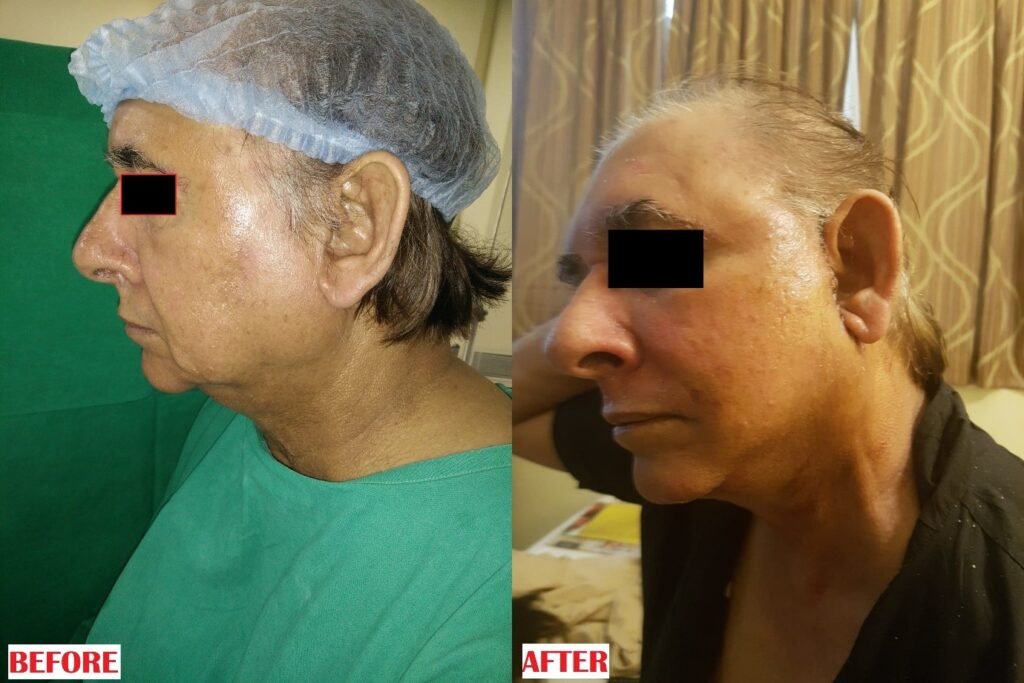
Gallery
Consented before-and-after photographs for facelift are reviewed privately during consultation, in line with medical advertising guidelines.
Frequently Asked Questions
What is a facelift surgery?
A facelift, or rhytidectomy, is a cosmetic surgical procedure designed to reduce visible signs of facial ageing by repositioning deeper facial tissues and removing or tightening excess skin. It can improve sagging cheeks, jowls, and loose skin along the jawline and neck while maintaining a natural-looking appearance.
What are the benefits of facelift surgery?
Facelift surgery can improve sagging skin, jowls, loss of jawline definition and descent of facial tissues associated with ageing. The procedure aims to restore facial contours while maintaining natural proportions and expression. The exact benefits depend on the degree and pattern of facial ageing in each patient.
Who is a good candidate for facelift surgery?
A good candidate is generally someone with noticeable facial skin laxity, jowls, or sagging of the lower face who is in good overall health and has realistic expectations about what surgery can achieve. Suitability is assessed individually during consultation.
At what age should I consider a facelift?
There is no fixed ideal age for a facelift. Many patients consider surgery when facial ageing becomes significant enough that non-surgical treatments no longer provide the desired improvement. Skin quality, tissue laxity, facial anatomy, and individual goals are more important than age alone.
What areas of the face can a facelift improve?
A facelift primarily addresses ageing of the lower and mid-face, including sagging cheeks, jowls, loose facial skin and loss of jawline definition. It may be combined with a neck lift when there is significant neck ageing, or with procedures such as blepharoplasty or facial fat grafting when these address separate areas of concern.
Does a facelift remove wrinkles and fine lines?
A facelift primarily treats sagging skin and underlying facial tissue rather than fine surface wrinkles. Wrinkles, pigmentation, and skin texture may require additional treatments such as resurfacing, peels, or other skin procedures.
What is the difference between a facelift and a neck lift?
A facelift primarily addresses ageing of the face, particularly the cheeks, lower face and jawline, whereas a neck lift focuses more specifically on loose skin and muscle laxity in the neck. The two procedures are frequently combined when both areas show signs of ageing.
What is the difference between a facelift and a mini facelift?
A mini facelift generally involves a more limited surgical approach and is often considered for patients with relatively mild to moderate facial laxity. A traditional facelift may be more appropriate when there is more significant skin and deeper tissue sagging. The appropriate procedure depends on individual anatomy and ageing changes.
Can facelift surgery make me look natural?
Yes. Modern facelift techniques are designed to reposition facial tissues rather than simply pulling the skin tightly. Careful surgical planning aims to restore facial contours while preserving natural facial expression and avoiding an excessively tight appearance.
How is facelift surgery performed?
Facelift surgery involves carefully placed incisions, usually around the ear and sometimes extending into the hairline, followed by repositioning of deeper facial tissues and removal or redistribution of excess skin. The exact technique is selected according to the patient's anatomy, degree of ageing, and treatment goals.
How long does facelift surgery take?
The duration varies according to the extent of surgery and whether procedures such as a neck lift, blepharoplasty, or fat grafting are performed at the same time. Your surgeon can provide a more accurate estimate after assessing your treatment plan.
What is the recovery time after facelift surgery?
Swelling and bruising are expected during the early recovery period and gradually improve over the following weeks. Most patients require some time away from work and strenuous activities, while the final refinement of facial contours may continue for several months.
How long do facelift results last?
Facelift surgery does not stop the natural ageing process, but the improvement can be long-lasting. The longevity of the result varies depending on factors such as age, skin quality, genetics, lifestyle, and the surgical technique used.
Does facelift surgery leave scars?
Facelift surgery requires incisions, but these are carefully positioned in natural skin creases and around the ear or hairline whenever possible. Scars generally mature and become less noticeable with time, although individual scar healing varies.
Is facelift surgery painful?
Facelift surgery is performed under appropriate anaesthesia, so significant pain during the procedure is not expected. Some tightness, swelling, bruising, numbness, and discomfort can occur during recovery and are managed with prescribed medication and postoperative care.
What are the risks of facelift surgery?
As with any surgery, facelift surgery has potential risks, including bleeding, infection, wound-healing problems, scarring, temporary or persistent numbness, asymmetry, nerve-related complications, and dissatisfaction with the cosmetic result. Individual risks are discussed during consultation.
Can a facelift be combined with a neck lift?
Yes. A facelift and neck lift are commonly combined when both the lower face and neck show significant ageing. Combining procedures can provide more harmonious improvement of the jawline, lower face, and neck.
Can facelift surgery be combined with facial fat grafting?
Yes. Facial fat grafting may be considered alongside a facelift when there is volume loss in areas such as the cheeks, temples, or under-eye region. Whether it is appropriate depends on the patient's facial anatomy and aesthetic goals.
How much does facelift surgery cost in Kolkata?
The cost of facelift surgery in Kolkata varies according to the surgical technique, extent of correction, anaesthesia, hospital or operating-facility charges, and whether additional procedures are required. An individualized estimate can be provided after consultation.
Where can I get facelift surgery in Kolkata?
Facelift surgery should be performed by a qualified plastic surgeon in an appropriate surgical facility with proper anaesthesia and postoperative care. Prof. (Dr.) Souvik Adhikari provides consultation for facelift surgery in Kolkata and evaluates each patient individually to determine the most appropriate surgical approach.
Honest assessment, written estimate, no pressure to book.