Keloids are raised, firm scars that grow beyond the boundaries of the original wound and may cause itching, pain, tenderness or cosmetic concern. They can develop after surgery, injuries, burns, acne, vaccinations or ear piercing and may occur on the chest, shoulders, back, face or ears.
Keloid treatment in Kolkata is not a one-size-fits-all procedure. Depending on the size, location, duration and previous treatment of the scar, management may involve intralesional steroid injections, silicone or pressure therapy, cryotherapy, surgical excision or a combination of treatments. Because keloids can recur even after apparently successful treatment, recurrence prevention and long-term scar management are important parts of treatment planning.
Prof. (Dr.) Souvik Adhikari provides personalised assessment and treatment planning for keloid scars, including persistent and recurrent keloids requiring surgical or combination treatment.
Keloid Treatment in Kolkata
Keloid removal in Kolkata may involve one or more treatment modalities depending on the size, location, duration and previous treatment of the keloid. Options can include intralesional steroid injections, surgical excision, silicone therapy, pressure therapy and other scar-management techniques. In selected cases, combination treatment may provide a better strategy than surgery alone. A detailed assessment is essential because the most appropriate treatment varies considerably between patients.
Keloid Removal Surgery in Kolkata
For larger or persistent keloids, keloid excision surgery in Kolkata may be considered. Surgical removal involves excising the abnormal scar tissue and carefully closing the wound to optimise healing. However, surgery alone does not eliminate the possibility of recurrence. For this reason, postoperative scar management and, where appropriate, additional treatment may be incorporated into the overall treatment plan.
Keloid vs Hypertrophic Scar
Not every raised scar is a keloid. A hypertrophic scar generally remains within the boundaries of the original wound, whereas a keloid can grow beyond the original injury. Correctly identifying the type of scar is important because treatment and recurrence patterns can differ. During consultation, the scar’s appearance, history, location and previous treatments are carefully assessed before recommending a treatment approach.
Personalised Keloid Treatment
There is no single best treatment for keloids that is appropriate for every patient. Smaller scars may respond to non-surgical treatment, while larger or persistent keloids may require a combination of approaches. Previous recurrence, scar location and skin characteristics are important factors when planning treatment. Patients are also counselled that even with appropriate treatment, keloids can recur and long-term scar monitoring may be necessary.
Keloid Treatment by Prof. (Dr.) Souvik Adhikari
Prof. (Dr.) Souvik Adhikari brings 17+ years of surgical experience in cosmetic, plastic and reconstructive surgery, with additional AOCMF Fellowship training at Johns Hopkins University, USA. His approach to keloid treatment in Kolkata focuses on accurate scar assessment, personalised treatment selection, meticulous surgical technique when required and appropriate postoperative scar management. View Profile →
Keloid Treatment Recovery and Aftercare
Recovery depends on the treatment selected and the size and location of the keloid. Following surgical excision, patients receive detailed instructions regarding wound care and scar management. Treatments such as steroid injections may require a series of sessions and follow-up assessments. Silicone therapy and pressure treatment, when recommended, may need to be continued for an extended period to help optimise scar maturation and reduce recurrence risk.
If you are looking for keloid treatment in Kolkata, a specialist consultation can help determine whether your scar is a keloid and identify the most appropriate treatment strategy. The goal is to reduce the size and symptoms of the keloid, improve its appearance and minimise the risk of recurrence through an individually planned approach.
Who may benefit from keloid treatment in Kolkata?
Keloid treatment may be considered for patients who have a raised or progressively enlarging scar that extends beyond the original wound and causes cosmetic concern, itching, pain, tenderness or discomfort. Treatment may also be appropriate for patients with recurrent keloids following previous surgery, piercing, injections or other treatment.
During consultation, the scar is assessed for its size, location, duration, symptoms and previous treatment history. This assessment helps determine whether injections, scar therapy, surgical excision or a combination of treatments is most appropriate.
How is keloid treatment performed?
Keloid treatment is planned according to the size, location, thickness and previous treatment history of the scar. Smaller or less established keloids may be managed with non-surgical treatments such as intralesional injections, silicone-based scar therapy or pressure treatment. Larger, persistent or recurrent keloids may require surgical excision, often combined with additional scar-management measures to reduce the risk of recurrence.
When surgery is appropriate, the abnormal scar tissue is carefully removed and the wound is closed with attention to minimizing tension on the healing scar. The need for postoperative injections, silicone therapy, pressure treatment or other measures is assessed on an individual basis.
Goals of Keloid Treatment
- Reduce the size and thickness of the keloid
- Relieve itching, pain or tenderness where present
- Improve the appearance of the scar
- Address functional problems where relevant
- Reduce the risk of recurrence through appropriate aftercare
Keloid Treatment Options
Steroid Injections for Keloids
Intralesional corticosteroid injections can help flatten and soften keloid scars and reduce symptoms such as itching, pain and tenderness. Multiple treatment sessions may be required depending on the size and response of the keloid.
Silicone and Pressure Therapy
Silicone-based scar therapy and pressure treatment may help reduce scar thickness and improve the appearance of keloids. These approaches are particularly useful in selected patients and may also be recommended after other forms of treatment to help reduce recurrence.
Surgical Keloid Excision
For large, persistent or resistant keloids, surgical excision may be considered to remove the excess scar tissue. Because keloids can recur after surgery, excision is often combined with appropriate postoperative scar management or other treatments to reduce the risk of recurrence.
Combination Treatment for Recurrent Keloids
Recurrent keloids may require a combination of treatments rather than a single approach. Depending on the individual case, treatment may include surgical excision followed by injections, silicone therapy, pressure treatment or other measures aimed at controlling recurrence.
Cryotherapy for Selected Keloids
Cryotherapy uses controlled freezing to damage excess scar tissue and may be considered for selected smaller keloids. It is sometimes used alongside other treatments, depending on the location, size and characteristics of the scar.
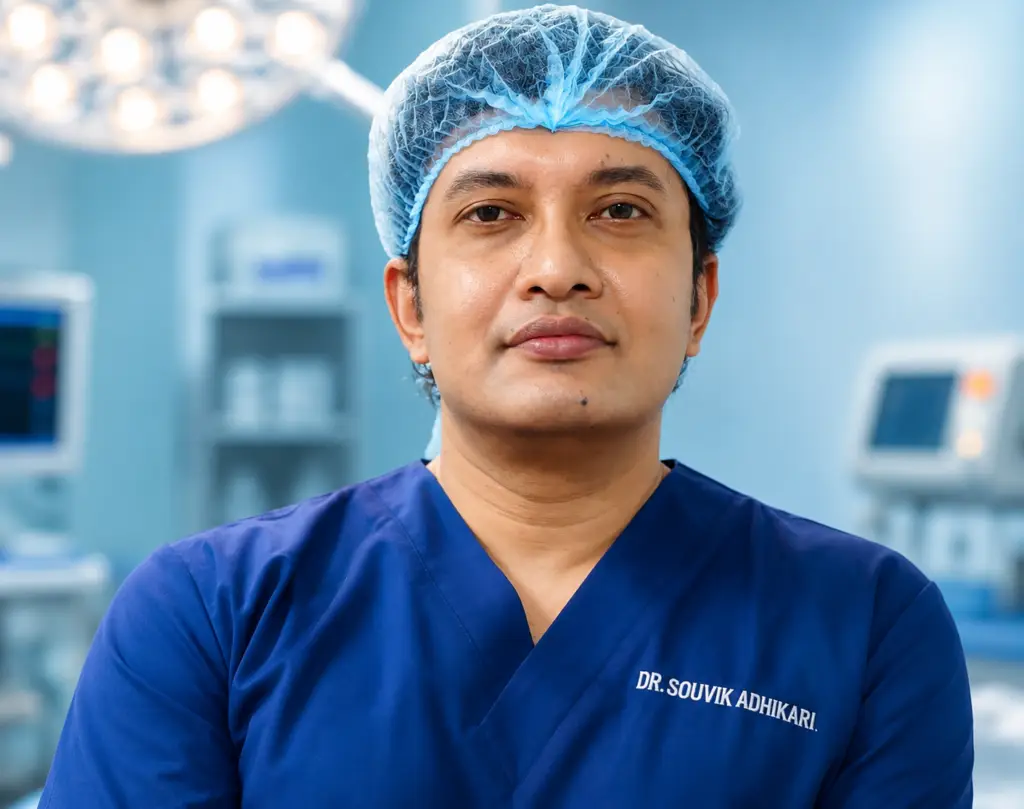
Prof. (Dr.) Souvik Adhikari
MS, MCh (Plastic Surgery)
17+ years experience
Treatment of Recurrent Keloids
Recurrent keloids can be more challenging to manage than a keloid that has not previously been treated. Previous surgery, injections or other treatments may influence the choice of the next treatment. Depending on the individual scar, treatment may involve injections, silicone or pressure therapy, surgical excision or a combination of approaches.
Because recurrence remains possible, treatment planning does not end with removal of the visible scar. Appropriate postoperative scar management and follow-up are important components of treatment.
Keloid Treatment in Kolkata
Keloids can be persistent and may recur even after apparently successful treatment, so the choice of treatment should be based on the individual scar rather than a single standard approach. During consultation in Kolkata, the size, location, duration, symptoms and previous treatment of the keloid are assessed to determine whether injections, silicone or pressure therapy, cryotherapy, surgical excision or a combination of treatments is most appropriate.
Prof. (Dr.) Souvik Adhikari provides personalised treatment planning for patients with keloid scars in Kolkata, including persistent, large or recurrent keloids that may require surgical or combination treatment. The aim is to control the scar, relieve symptoms where present and achieve the best possible improvement while taking appropriate measures to minimise the risk of recurrence.
Patients from Behala, Alipore, New Alipore, Tollygunge, Ballygunge and other parts of Kolkata and West Bengal can arrange a consultation for assessment and discussion of suitable treatment options. Patients travelling from outside Kolkata or elsewhere in India may also discuss consultation and treatment arrangements in advance.
Book a confidential consultation to have your keloid assessed and discuss the most appropriate treatment options for your individual case.
Frequently Asked Questions About Keloid Treatment
What is a keloid and how is it different from a normal scar?
A keloid is an abnormal overgrowth of scar tissue that extends beyond the original wound or injury. Unlike a normal scar, a keloid may continue to grow and can become raised, firm, itchy or painful. Keloids can develop after surgery, cuts, burns, piercings, acne or other skin injuries.
Can keloids turn cancerous?
No. Keloids are benign (non-cancerous) overgrowths of scar tissue and do not normally turn into cancer. However, a scar that suddenly changes in size, develops ulceration or bleeding, becomes unusually painful, or changes in appearance should be examined by a qualified doctor to confirm the diagnosis and exclude other skin conditions.
Can keloids be treated without surgery?
Yes. Many keloids can initially be managed without surgery. Depending on the individual case, treatment may include intralesional corticosteroid injections, other intralesional medications, silicone-based therapy, pressure therapy or cryotherapy. The appropriate treatment is decided after examining the keloid.
Are steroid injections effective for keloid scars?
Intralesional corticosteroid injections are among the commonly used treatments for keloids. They can soften and flatten the scar and may reduce symptoms such as itching and discomfort. Several treatment sessions may be required, and recurrence remains possible.
Do you treat patients traveling from outside Kolkata?
Yes. Patients from across West Bengal, India and abroad are treated, with video consultations and coordinated travel and stay planning.
Can a keloid be completely removed permanently?
Keloids can often be significantly improved, but no treatment can guarantee that a keloid will never return. Recurrence is an important consideration when planning treatment. For this reason, surgical removal is often combined with another treatment rather than relying on excision alone
Does keloid removal by surgery cause the keloid to come back?
It can. Surgical excision alone has a substantial risk of recurrence, which is why postoperative treatment may be recommended to reduce this risk. Depending on the location and characteristics of the keloid, options may include injections, pressure therapy, silicone-based treatment or other adjunctive treatments.
Can old or large keloids be treated?
Yes. Older or larger keloids can still be treated, although they may require a more individualized or combined treatment plan. The size, location, thickness, previous treatments and recurrence history are important when deciding the appropriate approach.
What is the treatment for a recurrent keloid?
A recurrent keloid requires careful assessment because previous treatment and recurrence history influence the next treatment plan. Depending on the case, treatment may involve injections, cryotherapy, pressure or silicone therapy, surgical excision with appropriate adjunctive treatment, or a combination of approaches.
Can ear keloids be treated without removing the entire earlobe?
Many earlobe keloids can be treated while preserving the shape and structure of the earlobe. The exact technique depends on the size, location, previous treatment and amount of normal tissue available. Pressure therapy may also be used after treatment in selected cases to help reduce recurrence.
Can keloids after ear piercing be treated?
Yes. Piercing-related earlobe keloids are a common reason for treatment. Depending on their size and characteristics, they may be treated with injections, pressure therapy, cryotherapy or surgical removal with appropriate measures to reduce recurrence.
Can keloid scars on the chest, shoulder or back be treated?
Yes. Keloids can occur on several areas, including the chest, shoulders, back, cheeks and earlobes. Treatment is selected according to the location, size, symptoms and previous treatment history.
Is keloid treatment painful?
Some keloid treatments, particularly intralesional injections, can cause temporary discomfort. The degree of discomfort varies depending on the size and location of the keloid and the treatment being used. Pain management measures can be discussed during consultation.
How many sessions are needed for keloid treatment?
The number of sessions varies from patient to patient. Some keloids respond to a series of injections or other non-surgical treatments, while larger, resistant or recurrent keloids may require a combination of treatments. Treatment response is assessed during follow-up before deciding on further sessions.
How much does keloid treatment cost in Kolkata?
The cost of keloid treatment in Kolkata varies considerably depending on the size and location of the keloid, whether injections or surgery are required, the number of treatment sessions, the technique used and whether additional treatment is needed to reduce recurrence. An examination is necessary to provide a meaningful estimate.
Can keloids be prevented after surgery or injury?
If you are prone to keloid formation, early scar management after an injury or surgery may help reduce the risk of problematic scar formation. Silicone-based products and pressure therapy are among the approaches used in appropriate situations. It is best to discuss prevention early, particularly if you have previously developed keloids.
Should I see a plastic surgeon or dermatologist for keloid treatment in Kolkata?
Both dermatologists and plastic surgeons may treat keloids. The appropriate specialist depends on the characteristics of the scar and the treatment required. Surgical excision and complex or recurrent keloids may require specialist surgical assessment, while many non-surgical treatments can be performed on an outpatient basis.
What is the best treatment for keloids?
There is no single treatment that is best for every keloid. Treatment depends on the size, location, age and previous treatment of the keloid, as well as the patient's tendency to develop recurrent scars. Options can include intralesional steroid injections, other injectable treatments, silicone or pressure therapy, cryotherapy and, in selected cases, surgical removal combined with additional treatment to reduce recurrence.
Where can I get keloid scar treatment in Kolkata?
Keloid treatment is available in Kolkata through dermatology and plastic surgery services. Treatment should be selected after assessing the size, location, symptoms, previous treatments and tendency of the keloid to recur. Prof. (Dr.) Souvik Adhikari provides personalised assessment and treatment planning for keloid scars, including cases requiring surgical management or combination treatment.
Honest assessment, written estimate, no pressure to book.