Scar Treatment in Kolkata
Scar treatment in Kolkata is a specialised area of plastic and reconstructive surgery focused on improving the appearance, texture and function of unwanted scars. Scars may develop after surgery, accidents, burns, injuries, acne, infections or other skin conditions. Depending on the type of scar, treatment may help reduce scar thickness, redness, pigmentation, irregular texture or tightness and create a smoother, less noticeable appearance.
Scar Revision in Kolkata
Scar revision surgery in Kolkata may be considered when a scar is wide, raised, depressed, irregular, contracted or positioned in a cosmetically prominent area. Treatment is selected according to the type, age, location and characteristics of the scar. Depending on the individual case, options may include surgical scar revision, steroid treatment, laser-based treatments, microneedling, silicone therapy or a combination of approaches. Not every scar requires surgery, and a proper assessment is essential before choosing treatment.
Types of Scars Treated
Different types of scars require different treatment strategies. Scar assessment considers the scar’s appearance, texture, depth, maturity, location and whether it causes pain, itching or functional restriction.
Scar treatment may be considered for:
- Surgical scars that are wide, irregular or prominent
- Facial scars following surgery, trauma or other injuries
- Acne scars, particularly selected depressed or irregular scars
- Hypertrophic scars that remain raised within the original wound
- Keloid scars that extend beyond the original wound
- Depressed or atrophic scars associated with loss of underlying tissue
- Burn scars that may be raised, contracted or associated with functional problems
- Contracture scars that restrict movement
- Traumatic scars following cuts, accidents or other injuries
The treatment is selected according to the characteristics of the individual scar rather than simply its appearance.
Scar Treatment Options
Scar treatment is individualized because different scars respond to different approaches. Depending on the type and characteristics of the scar, treatment may include:
Silicone-based scar therapy
Silicone gels or sheets may be recommended for selected healing or raised scars as part of scar management.
Steroid injections
Intralesional corticosteroid injections may be considered for selected hypertrophic scars and keloids, particularly when the scar is raised, firm or symptomatic.
Pressure therapy
Pressure treatment may have a role in selected raised or burn-related scars and may sometimes be used alongside other treatments.
Laser and resurfacing treatments
Selected scars with surface irregularity, pigmentation or textural changes may benefit from laser-based or resurfacing treatments when clinically appropriate.
Microneedling and other minimally invasive treatments
Certain superficial or depressed scars may be candidates for microneedling or other minimally invasive techniques.
Surgical scar revision
A scar that is wide, irregular, contracted or poorly positioned may sometimes benefit from surgical revision. Techniques can include scar excision, meticulous layered closure, Z-plasty, local tissue rearrangement, flap procedures or skin grafting depending on the defect.
Combination treatment
Some difficult scars require more than one treatment modality, either simultaneously or in stages.
Surgical Scar Revision in Kolkata
Scar revision surgery involves carefully modifying an existing scar and, where appropriate, repositioning or reshaping the surrounding tissue to create a more favourable scar. The aim is not to completely erase a scar—because every surgical incision heals with some degree of scarring—but to make the scar less conspicuous and more aesthetically acceptable. In selected cases, reconstructive techniques may also improve functional restriction caused by a scar. For scars specifically affecting the face, see our detailed guide to [Facial Scar Revision in Kolkata].
Keloid and Hypertrophic Scar Treatment
Keloid treatment in Kolkata requires particular care because keloids can recur after treatment. Depending on the individual case, treatment may involve steroid injections, silicone-based therapy, pressure therapy, surgical removal or combinations of these approaches. A personalised treatment plan is important because the most appropriate approach depends on the scar’s size, location, previous treatments and tendency to recur.
Scar Treatment by Prof. (Dr.) Souvik Adhikari
Prof. (Dr.) Souvik Adhikari brings 17+ years of surgical experience in cosmetic, plastic and reconstructive surgery, with additional AOCMF Fellowship training at Johns Hopkins University, USA. His approach to scar treatment in Kolkata focuses on accurate scar assessment, appropriate treatment selection and personalised care. Where surgery is required, careful tissue handling and scar placement are important considerations. His experience in plastic and reconstructive surgery is particularly relevant to complex scars where treatment may involve scar revision, tissue rearrangement, flap surgery, skin grafting or functional reconstruction.
Personalised Scar Treatment and Recovery
There is no single treatment that works for every scar. The appropriate treatment depends on whether the scar is raised, depressed, wide, pigmented, contracted or associated with excess tissue. Some patients may require a non-surgical approach, while others may benefit from scar revision surgery in Kolkata or a combination of treatments. During consultation, expected improvement, limitations, recurrence risk, recovery and aftercare are discussed realistically.
If you are looking for scar treatment in Kolkata, a specialist consultation can help identify the type of scar and determine the most appropriate treatment option. The goal is to achieve meaningful improvement in scar appearance and, where necessary, restore function, while setting realistic expectations about what scar treatment can achieve.
Potential Benefits of Scar Treatment
Depending on the type of scar and the treatment selected, scar treatment may help to:
- Reduce the prominence of raised or thick scars
- Improve the appearance of wide or irregular scars
- Soften selected hypertrophic scars and keloids
- Improve depressed or uneven scar contours
- Reposition scars into more favourable skin lines when surgical revision is appropriate
- Improve scar-related tightness or restricted movement
- Improve the overall texture and appearance of selected scars
- Restore a more natural contour where tissue deficiency or distortion is present
No scar can be guaranteed to disappear completely, and the degree of improvement varies between individuals.
How Is Scar Revision Performed?
The technique used for scar revision depends on the scar’s size, location, depth, direction, surrounding skin and functional effect.
For selected scars, the existing scar may be carefully excised and the wound closed with meticulous layered suturing to reduce tension on the healing scar. When a scar changes the direction of a natural skin line or causes tightness, techniques such as Z-plasty or local tissue rearrangement may be considered.
More extensive scars, particularly those associated with burns, tissue loss or contracture, may require local flap surgery, skin grafting or staged reconstructive procedures.
The objective is not to erase the scar completely, but to create a less conspicuous scar, improve tissue contour and, where necessary, restore function.
Anaesthesia
The type of anaesthesia depends on the size, location and complexity of the scar and the procedure being performed. Small scar revisions may be performed under local anaesthesia, while larger or more complex scar revisions and reconstructive procedures may require sedation or general anaesthesia.
The appropriate anaesthetic plan is determined during preoperative assessment.
Duration
The duration of scar treatment varies according to the size, location and type of scar and the treatment selected. Smaller scar procedures may be relatively short, while complex scar revision, flap surgery, skin grafting or contracture release may require a longer procedure.
Recovery After Scar Treatment
Recovery depends on the type of scar and the treatment performed.
After a minor scar procedure, patients may be able to resume light activities relatively quickly. More extensive surgical scar revision, flap procedures, skin grafting or contracture release may require a longer period of wound care and activity modification.
Swelling, mild discomfort and temporary changes in scar colour or texture may occur during early healing. The revised scar continues to mature gradually over several months, and appropriate wound care and follow-up are important for achieving the best possible result.
Results of Scar Treatment
The initial appearance of a treated scar may change as swelling settles and healing progresses. Scar colour, firmness and texture generally continue to evolve over time.
The goal is meaningful improvement rather than complete scar removal. Final results depend on the original scar, treatment method, individual healing characteristics and whether the patient has a tendency to develop prominent or recurrent scars.
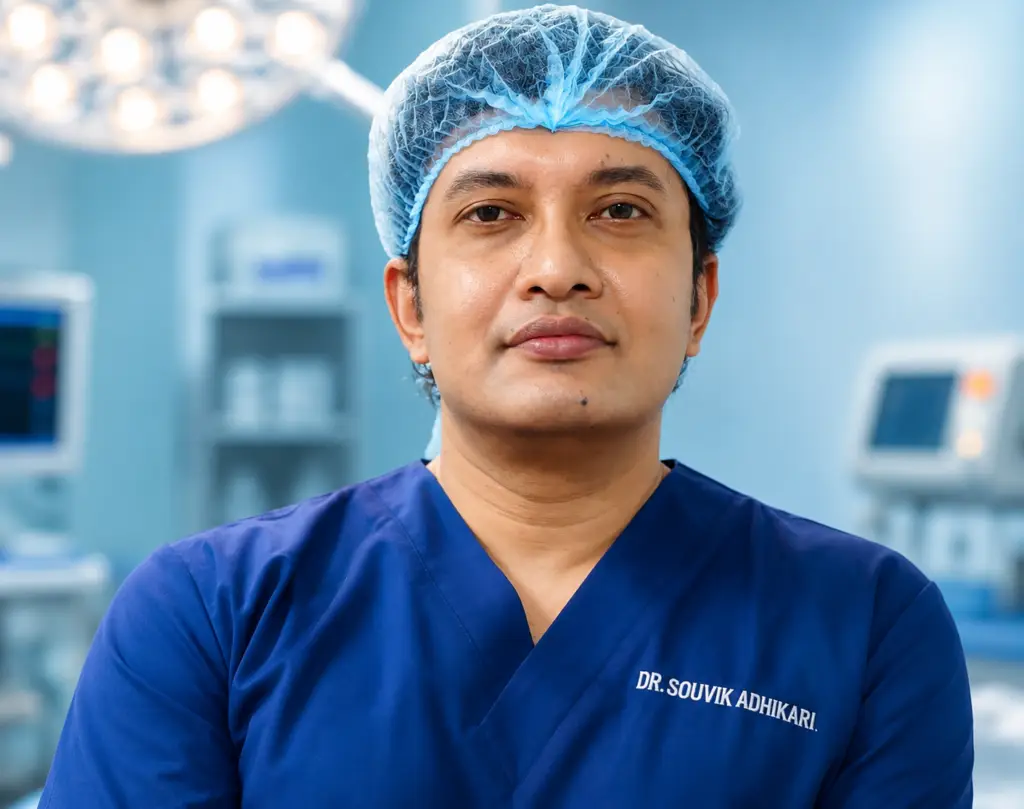
Prof. (Dr.) Souvik Adhikari
MS, MCh (Plastic Surgery)
17+ years experience
Scar Treatment vs Scar Revision: Which Do I Need?
Scar treatment includes non-surgical and minimally invasive approaches such as silicone therapy, injections, pressure therapy, selected laser treatments and other techniques used to improve an established scar.
Scar revision refers primarily to procedures that surgically modify an existing scar. It may be considered when a scar is wide, irregular, poorly positioned, contracted or associated with functional problems.
The two approaches are not mutually exclusive. Some scars may benefit from a combination of surgical and non-surgical treatment, either at the same time or in stages.
Frequently Asked Questions
What is scar revision surgery?
Scar revision is a treatment designed to make an existing scar less noticeable by improving its appearance, texture, position or, in some cases, function. Depending on the type, size and location of the scar, treatment may involve surgical scar revision, injections, resurfacing techniques, topical treatments or a combination of approaches. A scar usually cannot be completely erased, but its appearance can often be improved.
What is the difference between scar treatment and scar revision?
Scar treatment is a broad term that includes nonsurgical and surgical methods used to improve scars. Scar revision generally refers to procedures specifically intended to modify an established scar, including surgical excision, scar repositioning, Z-plasty, flap techniques or other selected procedures. The appropriate approach depends on the characteristics of the individual scar.
Which types of scars can be treated in Kolkata?
Scar treatment may be considered for many types of scars, including facial scars, surgical scars, injury scars, acne scars, hypertrophic scars, keloids, depressed scars, discoloured scars and contracture scars. The treatment depends on whether the main problem is scar thickness, pigmentation, texture, depression, widening, abnormal position or restricted movement.
Can facial scars be treated with scar revision surgery?
Yes. Facial scar revision can be used to improve selected scars caused by previous surgery, trauma, burns, accidents or other injuries. Treatment is planned carefully according to the scar's location, direction, surrounding skin and facial anatomy, with the aim of making the scar less conspicuous and preserving normal facial contours.
Can old scars be treated or revised?
Yes. Old scars can sometimes be improved, although the appropriate treatment depends on their type, maturity, thickness, texture and location. Some established scars may benefit from surgical revision, while others may be better suited to resurfacing, injections or other nonsurgical treatments.
Can scar revision completely remove a scar?
No. Scar revision cannot guarantee complete removal of a scar. The objective is to make the scar less conspicuous and better matched to the surrounding skin, rather than to make it disappear completely. The degree of improvement varies according to the original scar and the patient's healing response.
What is the best treatment for a surgical scar?
There is no single best treatment for every surgical scar. A thin but widened scar, a raised hypertrophic scar, a depressed scar and a contracture may require completely different approaches. Assessment of the scar's type, location, age, texture and surrounding skin is important before selecting treatment.
Can acne scars be treated with scar revision?
Selected acne scars can be improved with procedures aimed at irregular texture, depressed areas or other surface abnormalities. Depending on the scar pattern, treatment may include resurfacing or other scar-specific procedures. The most appropriate option depends on the depth and type of acne scarring.
What is the difference between a hypertrophic scar and a keloid?
A hypertrophic scar is raised but generally remains within the boundaries of the original wound. A keloid extends beyond the original wound and may continue to enlarge. Keloids can also be itchy, painful or firm. Because these scars behave differently, their treatment and risk of recurrence can also differ.
Can keloid scars be treated with surgery?
Selected keloids can be treated surgically, but surgery alone may not always be appropriate because keloids can recur. Depending on the individual case, additional treatments may be considered to reduce the risk of recurrence. Careful assessment is therefore important before deciding on surgical keloid treatment.
Can raised scars be treated without surgery?
Some raised scars may be treated without surgical excision. Depending on the diagnosis, options can include silicone-based treatments, compression or injections such as corticosteroid-based therapy. The treatment should be selected according to the type and behavior of the scar rather than simply its appearance.
Can depressed scars be corrected?
Some depressed or sunken scars can be improved using treatments selected according to their depth, location and underlying tissue changes. In selected cases, scar revision surgery or injectable treatments may be considered, while other scars may benefit from resurfacing techniques.
What is Z-plasty in scar revision?
Z-plasty is a surgical scar-revision technique in which the scar is incorporated into a Z-shaped arrangement of incisions and tissue flaps. It can be useful for changing the direction of a scar, reducing tension or improving the flexibility of a scar that is causing contracture.
Can scar revision improve a scar that restricts movement?
Yes. Some scars, particularly contracture scars following burns or significant tissue injury, can restrict movement. Surgical scar revision may be used to release the contracture and improve tissue flexibility. Depending on the extent of tissue loss, flap surgery, skin grafting or other reconstructive techniques may sometimes be required.
Can burn scars be treated with scar revision?
Selected burn scars can be improved with scar revision and reconstructive techniques. Treatment depends on whether the main problem is raised scarring, contracture, tissue deficiency, restricted movement or an abnormal scar position. More complex burn scars may require flap surgery, skin grafting or staged reconstruction.
Can a scar from previous surgery be revised?
Yes. Scars from previous operations can sometimes be revised when they are widened, irregular, prominent, poorly positioned or associated with functional problems. The surgical plan is individualized according to the original scar and the available surrounding tissue.
Can traumatic scars from accidents or injuries be treated?
Yes. Scars resulting from cuts, road-traffic injuries, burns or other trauma may be treated depending on their appearance and functional effect. Facial trauma scars may require particularly careful planning to preserve facial contours and important anatomical structures.
When is the best time to undergo scar revision?
The appropriate timing depends on the type and maturity of the scar, how it is healing and whether there are functional problems. Some scars improve naturally as they mature, while others may require earlier intervention because of contracture or significant functional impairment. An individual assessment is therefore preferable to using a fixed waiting period.
How is scar revision surgery performed?
The technique depends on the scar. Treatment may involve carefully removing part or all of the existing scar and closing the wound with meticulous layered techniques. In selected cases, techniques such as Z-plasty, local flaps or skin grafting may be used to reposition the scar, release tension or replace deficient tissue.
Is scar revision performed under local or general anaesthesia?
The type of anaesthesia depends on the size, location and complexity of the scar and the procedure being performed. Some smaller scar revisions can be performed under local anaesthesia, while more extensive procedures may require sedation or general anaesthesia.
How long does scar revision surgery take?
The duration varies considerably according to the size and location of the scar and the technique required. A relatively small scar revision may be a short procedure, whereas complex reconstruction involving flaps, grafts or contracture release may take longer.
What is recovery like after scar revision surgery?
Early recovery may include swelling, mild discomfort and temporary discoloration around the treated area. The wound generally requires appropriate dressing and wound care, while the new scar continues to mature gradually. Although initial healing may occur over weeks, scar refinement and fading can continue for several months and sometimes longer.
How long does it take for a revised scar to fade?
Scar maturation is gradual. The scar may initially appear red, darker, firmer or more noticeable before progressively softening and becoming less conspicuous. Final scar maturation can take several months and, in some cases, around a year or longer.
Will scar revision leave another scar?
Yes. Surgical scar revision necessarily creates a new wound, which produces a new scar during healing. The objective is to replace or reposition the existing scar with one that is potentially less conspicuous, better aligned with natural skin lines or associated with improved function.
Are scar revision results permanent?
The improvement from scar revision can be long-lasting, but scars continue to mature and the skin continues to age. Future injury, surgery, changes in skin quality or abnormal healing can influence the appearance of the revised scar.
What are the risks of scar revision surgery?
Possible risks include bleeding, infection, delayed healing, wound separation, changes in skin sensation, pigmentation changes, recurrence or prominence of the scar, contour irregularity and the possibility of requiring additional treatment. Individual risks depend on the scar and the procedure being performed.
Can scar revision be combined with other procedures?
In selected patients, scar revision may be combined with another reconstructive or cosmetic procedure when clinically appropriate. Whether procedures should be combined depends on the patient's health, the location and extent of the scar, the proposed techniques and overall surgical safety.
Can scar treatment improve the colour or pigmentation of a scar?
Some scars may remain darker, lighter or redder than the surrounding skin even after the wound has healed. Depending on the cause and type of pigmentation change, treatment may involve observation, topical therapy, laser-based treatment or other selected approaches. The appropriate treatment depends on the scar and surrounding skin and should be determined after assessment.
How much does scar revision cost in Kolkata?
The cost of scar revision in Kolkata varies according to the size, location and type of scar, treatment technique, anaesthesia, complexity of reconstruction and whether additional procedures are required. An accurate estimate can usually be provided only after examining the scar and discussing the appropriate treatment plan.
How do I choose a scar revision surgeon in Kolkata?
Choose a surgeon with appropriate training and experience in plastic and reconstructive surgery who can assess the type of scar and offer both surgical and nonsurgical treatment options when appropriate. Scar revision is highly individualized, and the treatment should be based on the scar's anatomy, functional effect and realistic achievable improvement.
Where can I get scar treatment and scar revision in Kolkata?
Scar treatment and scar revision are available in Kolkata for appropriately selected patients with facial scars, surgical scars, traumatic scars, hypertrophic scars, keloids, contractures and other problematic scars. Consultation with a qualified plastic surgeon allows the scar to be assessed and the most appropriate treatment approach to be discussed.
Honest assessment, written estimate, no pressure to book.