Transgender Surgery/Gender-Affirming Surgery in Kolkata
Gender-affirming surgery in Kolkata encompasses a range of specialised procedures that may help transgender and gender-diverse individuals align physical characteristics with their gender identity and personal goals. Depending on individual needs, procedures may include facial feminisation surgery, breast augmentation, chest surgery, body contouring and genital reconstruction. Each treatment plan is highly individualised, and not every person seeking gender-affirming care will require or desire the same procedures.
Types of Gender-Affirming Surgery
Gender-affirming surgery encompasses a range of procedures, and the appropriate approach depends on each person’s anatomy, goals and overall health. Depending on individual requirements and the availability of appropriate specialist care, procedures may include:
- Chest and breast surgery, including breast augmentation and chest masculinization
- Facial feminization surgery (FFS)
- Facial masculinization procedures
- Body contouring and selected fat-transfer procedures
- Genital reconstruction, including selected procedures such as vaginoplasty, vulvoplasty, phalloplasty or metoidioplasty
- Gonadal surgery, such as orchiectomy or oophorectomy, when appropriate
Not every procedure is suitable or desired for every individual. Some treatments may also require collaboration with other specialists or staged surgery.
Gender-Affirming Surgery in Kolkata
Gender-affirming procedures require careful assessment, appropriate surgical planning and a thorough understanding of the patient’s expectations. Depending on the procedure, treatment may involve plastic surgery, reconstructive techniques or collaboration with other medical specialists. A detailed consultation helps determine which procedures are appropriate, whether surgery should be performed individually or in stages, and what recovery and potential risks may be involved.
Gender-Affirming Facial and Body Surgery
Some patients may seek facial feminisation surgery (FFS) to modify selected facial features, while others may consider breast or chest procedures to achieve a body contour that better reflects their gender identity. Body contouring and fat transfer may also be considered in selected patients. Treatment should always be tailored to individual anatomy rather than following a standardised approach.
Gender-Affirming Genital Reconstruction
Gender-affirming genital surgery includes specialised reconstructive procedures designed to create or modify genital anatomy. These procedures are complex and require detailed preoperative assessment, careful counselling and appropriate postoperative follow-up. Depending on the desired procedure, patients may require multidisciplinary care involving plastic/reconstructive surgery, urology, gynaecology or other relevant specialists.
Personalised and Confidential Care
Choosing gender-affirming surgery in Kolkata is a deeply personal decision. A respectful, confidential and non-judgemental consultation is an important part of the process. Prof. (Dr.) Souvik Adhikari provides individualised surgical consultation focused on informed decision-making, patient privacy, realistic expectations and personalised treatment planning.
Gender-Affirming Surgery by Prof. (Dr.) Souvik Adhikari
Prof. (Dr.) Souvik Adhikari brings 17+ years of surgical experience in cosmetic, plastic and reconstructive surgery, with additional AOCMF Fellowship training at Johns Hopkins University, USA. His approach focuses on meticulous assessment, reconstructive principles, personalised surgical planning and patient-centred care. The availability of individual gender-affirming procedures depends on the patient’s requirements, surgical complexity and the specialist expertise required. Some procedures may require collaboration with urology, gynaecology, endocrinology, mental-health professionals or other members of a multidisciplinary team. During consultation, patients are advised which procedures can be appropriately managed within the available surgical pathway and when specialist referral or collaboration is recommended.
Consultation and Surgical Planning
The appropriate pathway for gender-affirming surgery in Kolkata varies considerably from person to person. During consultation, the desired changes, existing anatomy, medical history, previous procedures and realistic surgical outcomes can be discussed. Some procedures may be performed independently, while more complex treatments may require staged surgery and coordination with other specialists.
If you are considering gender-affirming surgery in Kolkata, a confidential consultation can help you understand the available surgical options and determine an appropriate treatment plan based on your individual goals and anatomy. The priority is to provide safe, respectful and personalised care throughout the surgical journey.
Who May Be Considered for Gender-Affirming Surgery?
Gender-affirming surgery is highly individualized and is considered for transgender and gender-diverse individuals who seek specific physical changes to better align their bodies with their gender identity.
Suitability for surgery depends on the particular procedure, the patient’s overall health, medical history, previous treatments or surgeries, personal goals and ability to understand the expected benefits, limitations and potential risks.
During consultation, factors such as the following may be considered:
- The specific physical changes the patient wishes to achieve
- Overall physical health and relevant medical conditions
- Previous surgeries, hormone therapy or other treatments
- Smoking and other factors that may affect wound healing
- Understanding of the proposed procedure and its limitations
- Ability to provide informed consent
- Expectations regarding appearance and function
- Fertility considerations when reproductive organs may be removed or permanently altered
- The need for additional specialist or multidisciplinary assessment where appropriate
Not every person requires surgery, and there is no single surgical pathway that applies to all transgender individuals. The treatment plan should therefore be based on the individual’s needs, anatomy and informed preferences.
Goals of Gender-Affirming Surgery
The goal of gender-affirming surgery is to create physical changes that are consistent with the patient’s gender-affirming goals while maintaining appropriate function, safety and anatomical balance.
Depending on the procedure, surgical goals may include:
- Creating a more feminine or masculine chest contour
- Increasing breast volume and improving breast proportions
- Creating a flatter, more masculine chest
- Modifying selected facial characteristics
- Improving facial and body proportions
- Addressing specific anatomical features associated with gender incongruence
- Creating or reconstructing selected genital anatomy
- Improving comfort and confidence related to gender incongruence
- Achieving an outcome that is appropriate for the patient’s individual anatomy rather than following a standardized appearance
The expected result varies between individuals. Surgical planning therefore focuses on realistic, individualized outcomes rather than a predetermined ideal appearance.
How Is Gender-Affirming Surgery Performed?
There is no single operation called transgender surgery. Gender-affirming surgery encompasses a range of procedures, and the surgical technique depends on the patient’s goals and the specific anatomical area being treated.
For transgender women, procedures may include breast augmentation, selected facial feminization procedures, body contouring and, where appropriate, genital reconstruction or other gender-affirming procedures.
For transgender men, procedures may include chest masculinization, selected facial masculinization procedures, body contouring and, where appropriate, genital reconstruction.
Chest and breast procedures are planned according to breast or chest anatomy, skin quality, tissue distribution, nipple position and the desired contour. Facial procedures require detailed assessment of facial proportions and the specific features the patient wishes to modify.
Genital reconstruction is more complex and may involve specialized reconstructive techniques and, in selected cases, staged surgery or multidisciplinary care.
Before surgery, the proposed procedure, technique, expected changes, scars, possible complications, recovery requirements and potential need for further procedures are discussed in detail.
FTM and MTF Gender-Affirming Surgery
Gender-affirming surgery is not a fixed sequence of procedures. The surgical pathway can be very different from one individual to another.
MTF / Transfeminine Surgery
Transgender women may consider procedures such as:
- Breast augmentation
- Facial feminization surgery
- Selected facial contouring procedures
- Body contouring
- Orchiectomy
- Vulvoplasty or vaginoplasty where appropriate
- Other individualized gender-affirming procedures
FTM / Transmasculine Surgery
Transgender men may consider procedures such as:
- Chest masculinization or FTM top surgery
- Facial masculinization procedures
- Body contouring
- Hysterectomy or oophorectomy where appropriate
- Metoidioplasty
- Phalloplasty
- Scrotoplasty
The choice of procedure depends on individual goals, anatomy, health, previous treatment and the specific surgical expertise required. Some complex procedures may require collaboration with other specialists or staged reconstruction.
The procedures described on this page represent the broader spectrum of gender-affirming surgical care. The suitability and availability of an individual procedure should be confirmed during consultation, as some complex procedures may require specialist collaboration, referral or staged treatment.
Choosing the Appropriate Gender-Affirming Procedure
The appropriate procedure should be determined through individualized consultation rather than by choosing an operation based solely on photographs, social-media examples or a desired body measurement.
Assessment may include:
- Detailed medical and surgical history
- Physical examination
- Anatomical measurements and proportions
- Previous hormone therapy or gender-affirming treatment
- Existing scars or previous operations
- Skin and soft-tissue characteristics
- Desired aesthetic and functional outcome
- Fertility and reproductive considerations
- Expected recovery and postoperative requirements
Where appropriate, different surgical options can be discussed together with their advantages, limitations, risks and possible alternatives.
Anaesthesia for Gender-Affirming Surgery
The type of anaesthesia depends on the specific procedure, its extent and the patient’s medical circumstances.
General anaesthesia is commonly used for many major gender-affirming operations, while the anaesthetic approach for smaller or less extensive procedures may differ.
The final anaesthetic plan is determined following preoperative assessment and discussion with the anaesthesia team.
Duration of Gender-Affirming Surgery
There is no single operating time for transgender surgery because the duration varies substantially between procedures.
A relatively straightforward breast or chest procedure may require considerably less operating time than complex facial or genital reconstruction. Surgery may also take longer when multiple procedures are performed together or when staged reconstruction is required.
The expected duration is discussed during preoperative planning based on the specific procedure and surgical plan.
Recovery After Gender-Affirming Surgery
Recovery depends primarily on the type and extent of surgery.
Patients undergoing breast or chest surgery may experience swelling, bruising, tightness and temporary discomfort during the early recovery period. Facial procedures may involve swelling and bruising that gradually subside over several weeks.
More extensive reconstructive procedures, particularly genital reconstruction, may require a substantially longer recovery period and more intensive postoperative care.
Patients receive individualized instructions regarding:
- Wound care
- Medications
- Physical activity
- Sleeping position where relevant
- Compression garments where appropriate
- Return to work
- Exercise and strenuous activity
- Travel after surgery
- Follow-up appointments
Healing continues after the initial recovery period, and the final appearance and functional outcome may take several months to develop.
Risks and Possible Complications
As with any major surgical procedure, gender-affirming surgery carries potential risks. The specific risks vary according to the operation being performed.
Possible complications may include:
- Bleeding or hematoma
- Infection
- Delayed wound healing
- Wound separation
- Scarring
- Changes in skin or nipple sensation
- Asymmetry or contour irregularity
- Seroma or fluid collection
- Anaesthetic complications
- Thromboembolic complications
- Need for revision surgery
Certain procedures have additional procedure-specific risks. For example, genital reconstruction may involve risks related to urinary function, wound healing, sensation, sexual function or reconstruction-specific complications.
These risks are discussed individually before surgery so that patients can make an informed decision.
Fertility Considerations Before Gender-Affirming Surgery
Some gender-affirming procedures can permanently affect reproductive function, particularly operations involving removal of the ovaries or testicles.
Patients who may wish to have biological children in the future should discuss fertility preservation options before undergoing an irreversible procedure.
The timing and available options depend on the individual’s circumstances and may require consultation with an appropriate fertility or reproductive specialist.
Multidisciplinary Gender-Affirming Care
Some gender-affirming procedures can be appropriately managed by a plastic and reconstructive surgeon, while others may require collaboration between several specialties.
Depending on the procedure and individual circumstances, care may involve plastic and reconstructive surgery, urology, gynaecology, endocrinology, anaesthesia, mental-health professionals, fertility specialists or other relevant specialists.
Where multidisciplinary expertise is required, appropriate specialist consultation or collaboration may be recommended. This approach helps ensure that medical suitability, surgical planning, informed consent, fertility considerations and postoperative care are addressed comprehensively.
Results of Gender-Affirming Surgery
Initial results become visible as postoperative swelling and bruising decrease, but the final appearance and functional outcome develop gradually.
The outcome depends on the specific procedure, individual anatomy, tissue characteristics, healing response and the extent of the surgical changes that can safely be achieved.
Gender-affirming surgery can provide meaningful and long-lasting physical changes, but it cannot guarantee a particular appearance or eliminate all differences between an individual’s preoperative anatomy and the desired outcome.
Ageing, changes in body weight, hormonal factors and future surgery may also influence the appearance over time.
Gender-Affirming Surgery by Prof. (Dr.) Souvik Adhikari
Prof. (Dr.) Souvik Adhikari, Professor & Consultant Plastic Surgeon, approaches gender-affirming surgery with an emphasis on detailed assessment, individualized surgical planning and reconstructive principles.
With 17+ years of independent surgical practice, postgraduate training in Plastic & Reconstructive Surgery and an AOCMF Fellowship at Johns Hopkins University, USA, surgical planning is based on the patient’s anatomy, goals and the specific procedure being considered.
Each consultation provides an opportunity to discuss the available options, expected results, limitations, risks, recovery and whether specialist collaboration or staged treatment may be appropriate.
The emphasis is on respectful, confidential and individualized care, with realistic expectations and informed decision-making throughout the surgical pathway.
His background in plastic and reconstructive surgery is relevant to gender-affirming procedures where careful tissue handling, anatomical reconstruction, contour refinement and individualized surgical planning are important.[Research & Publications]
Consultation for Gender-Affirming Surgery in Kolkata
A detailed consultation is the first step in determining whether gender-affirming surgery is appropriate and which procedure best addresses the patient’s goals.
During consultation, the proposed treatment can be discussed in detail, including:
- Desired physical changes
- Available surgical options
- Individual anatomy and suitability
- Expected aesthetic and functional outcomes
- Surgical technique
- Anaesthesia
- Recovery and postoperative care
- Potential risks and complications
- Fertility considerations
- Possibility of staged or additional procedures
- Need for multidisciplinary specialist care where appropriate
The aim is to ensure that every patient has a clear understanding of the proposed treatment before making a decision about surgery.
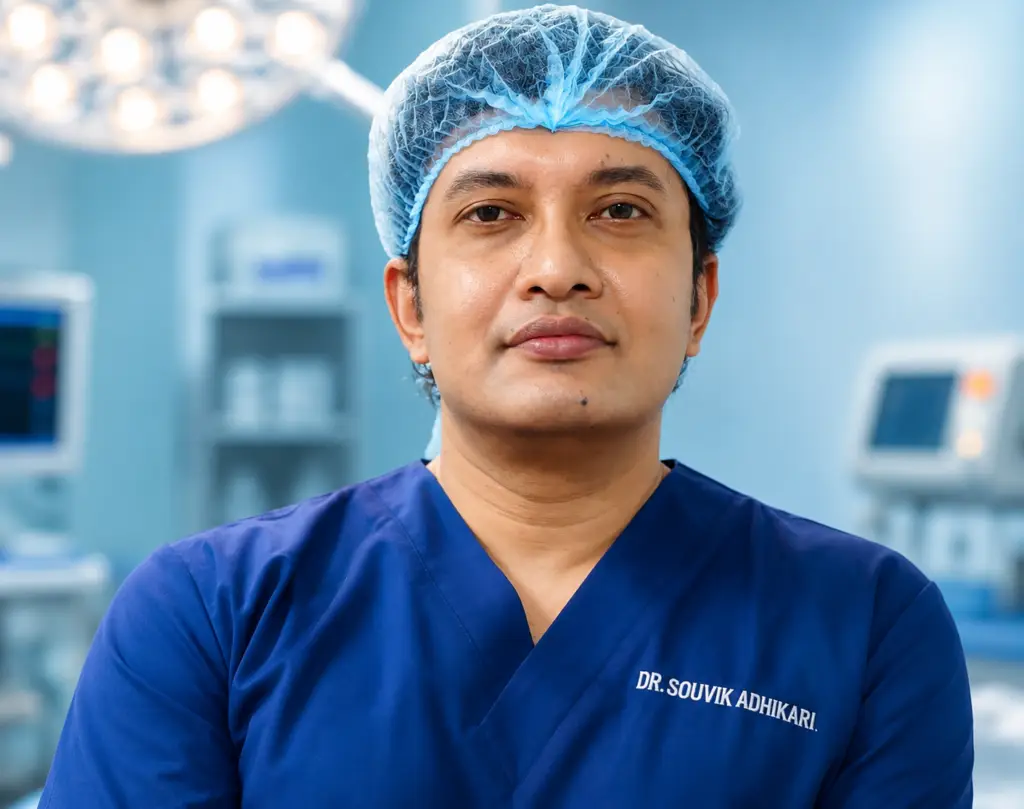
Prof. (Dr.) Souvik Adhikari
MS, MCh (Plastic Surgery)
17+ years experience
FTM and MTF Gender-Affirming Surgery
Gender-affirming surgical goals differ between individuals. Transgender women may consider procedures such as breast augmentation, facial feminization or selected genital procedures, while transgender men may consider chest masculinization, facial masculinization or selected genital reconstruction.
These terms describe broad categories rather than a fixed surgical pathway. The appropriate procedures depend on individual anatomy, goals, medical circumstances and the availability of appropriate specialist expertise.
Multidisciplinary Gender-Affirming Care
Some gender-affirming procedures require expertise extending beyond a single surgical specialty. Depending on the treatment being considered, care may involve plastic and reconstructive surgery, urology, gynaecology, endocrinology, mental-health professionals, anaesthesia and other specialists.
When multidisciplinary input is appropriate, coordination with relevant specialists helps ensure that medical suitability, informed consent, fertility considerations, surgical planning and postoperative care are addressed comprehensively.
Video of FTM Top Surgery
FTM Top Surgery, Kolkata
A surgical video demonstrating FTM top surgery in Kolkata performed by Prof. (Dr.) Souvik Adhikari. The video provides an educational overview of gender-affirming chest surgery and should be viewed alongside appropriate clinical consultation and individualized surgical planning.
Frequently Asked Questions
What is transgender surgery?
Transgender surgery, also called gender-affirming surgery, refers to surgical procedures that help align a person's physical characteristics with their gender identity. The procedures are individualized and may include chest or breast surgery, facial procedures, genital surgery and selected body-contouring procedures. Not every transgender person wants or needs surgery, and the choice of procedure depends on the individual's goals, anatomy and medical circumstances.
What is gender-affirming surgery?
Gender-affirming surgery is a broad term for surgical procedures undertaken to bring selected physical characteristics into greater alignment with a person's gender identity. Depending on the individual, this can include breast augmentation, chest reconstruction, facial feminization or masculinization, orchiectomy, vaginoplasty, vulvoplasty, metoidioplasty, phalloplasty and other procedures.
What types of transgender surgery are available?
Gender-affirming surgery encompasses a range of procedures. Depending on individual needs, these may include: Breast augmentation, Chest masculinization or gender-affirming mastectomy, Facial feminization surgery, Facial masculinization procedures, Orchiectomy, Vaginoplasty or vulvoplasty, Hysterectomy or oophorectomy, Metoidioplasty, Phalloplasty, Scrotoplasty, Selected body-contouring procedures Not every procedure is appropriate or desired for every individual, so treatment is planned on a personalized basis.
What is male-to-female transgender surgery?
The term male-to-female (MTF) surgery is sometimes used to describe gender-affirming procedures for transgender women. Depending on individual goals, treatment may include breast augmentation, facial feminization, orchiectomy, vulvoplasty or vaginoplasty. These procedures may be performed separately or as part of a staged treatment plan.
What is female-to-male transgender surgery?
The term female-to-male (FTM) surgery is sometimes used to describe gender-affirming procedures for transgender men. Depending on individual goals, procedures may include chest masculinization, hysterectomy or oophorectomy, metoidioplasty, phalloplasty and scrotoplasty. Treatment is individualized according to anatomy, health, goals and the procedures being considered.
Is transgender surgery the same as gender reassignment surgery?
The terms gender-affirming surgery, gender confirmation surgery and gender reassignment surgery have been used to describe overlapping forms of care. “Gender-affirming surgery” is widely used in current clinical practice because it encompasses a broad range of procedures rather than implying that every transgender person undergoes the same type of transition.
Does every transgender person need surgery?
No. Transgender people have diverse goals, and some may choose hormonal treatment, social transition, surgery, a combination of treatments or no medical transition. Gender-affirming surgery should be considered according to the individual's needs, informed preferences, health and goals rather than as a mandatory part of transition.
Can transgender surgery be performed as a single operation?
Some procedures can be performed as a single operation, while others may require multiple stages. The number and sequence of procedures depend on the type of surgery, anatomy, healing, individual goals and safety considerations. Complex genital reconstruction may particularly require staged treatment and prolonged follow-up.
Is hormone therapy required before transgender surgery?
This depends on the procedure and the individual's circumstances. Hormone therapy is not automatically required for every gender-affirming operation. WPATH recommends individualized assessment, including consideration of the person's gender-related goals, physical and mental health, capacity for informed consent and reproductive implications. For some procedures involving removal of the gonads, hormone and fertility considerations are particularly important.
Do I need a psychological or mental health assessment before transgender surgery?
Gender-affirming surgical care involves an assessment of the person's goals, informed consent capacity and relevant physical and mental health considerations. Depending on the procedure, local requirements and the clinical circumstances, assessment or documentation from appropriately qualified professionals may be required. The purpose is to support safe, informed and individualized care rather than to invalidate a person's gender identity.
What should I consider before choosing transgender surgery?
Important considerations include the specific surgical goals, expected benefits and limitations, possible complications, recovery requirements, future fertility considerations, long-term follow-up and whether additional procedures may be needed. A detailed consultation should allow the patient and surgical team to make an informed decision together.
Can transgender women undergo breast augmentation?
Yes. Gender-affirming breast augmentation may be considered for transgender women who want increased breast volume or improved breast proportions. Implant size, shape, profile and placement are selected according to chest anatomy, existing breast tissue, skin characteristics and the patient's desired outcome.
Can transgender men undergo chest masculinization surgery?
Yes. Chest masculinization, often called top surgery, may involve removal of breast tissue and reshaping of the chest to create a more masculine contour. The surgical technique depends on breast size, skin elasticity, nipple position, chest anatomy and the desired result.
What is facial feminization surgery?
Facial feminization surgery (FFS) is a group of procedures designed to modify selected facial features toward a more traditionally feminine appearance. Depending on individual anatomy and goals, procedures may involve the forehead, brow, nose, cheeks, jawline, chin, hairline or other facial structures. Not every patient requires all of these procedures.
Can facial masculinization surgery be performed for transgender men?
Selected facial procedures can be used to create more traditionally masculine facial contours. Depending on anatomy and goals, treatment may involve the jaw, chin, cheeks, nose or other facial structures. The appropriate procedures are determined individually after detailed facial assessment.
What is vaginoplasty?
Vaginoplasty is a gender-affirming genital surgery that creates a vulva and, when appropriate for the individual, a vaginal canal. Different surgical techniques exist, and the choice depends on anatomy, goals, previous procedures and surgeon expertise. The procedure requires careful preoperative planning and substantial postoperative care.
What is vulvoplasty?
Vulvoplasty is a gender-affirming genital procedure that creates external vulvar anatomy without creating a full-depth vaginal canal. It may be appropriate for individuals who do not desire vaginal depth or for whom a canal is not part of their surgical goals.
What is phalloplasty?
Phalloplasty is a gender-affirming reconstructive procedure that creates a penis using tissue from another part of the body. It is a complex procedure that may involve multiple stages and can include additional procedures depending on the individual's goals, such as urethral reconstruction or placement of implants.
What is metoidioplasty?
Metoidioplasty is a gender-affirming procedure that uses hormonally enlarged clitoral tissue to create a phallus. Depending on individual goals, additional procedures may include urethral reconstruction and scrotoplasty. The available options and expected outcomes should be discussed carefully before surgery.
What is orchiectomy in transgender women?
Orchiectomy is the surgical removal of the testicles. In transgender women, it may be performed as a gender-affirming procedure and can reduce endogenous testosterone production. Because removal of the gonads affects fertility and sex-hormone production, these implications should be discussed before surgery.
Can transgender surgery preserve fertility options?
Some gender-affirming surgeries can permanently affect fertility, particularly procedures involving removal of the ovaries or testicles. Fertility preservation should therefore be discussed before an irreversible procedure when future biological parenthood is important to the individual.
What are the risks of transgender surgery?
Risks vary considerably according to the procedure. Possible complications may include bleeding, infection, wound-healing problems, scarring, changes in sensation, asymmetry, contour irregularity, anaesthetic complications and the possibility of additional surgery. Genital procedures may have procedure-specific risks involving urinary function, sexual function, healing and reconstruction. These risks should be discussed individually during consultation.
How long does recovery take after transgender surgery?
Recovery depends greatly on the procedure. Breast and chest procedures generally have different recovery requirements from facial or genital reconstruction. Complex genital procedures may require substantially longer recovery and follow-up. Patients should receive procedure-specific instructions regarding wound care, physical activity, travel and postoperative appointments.
How important is postoperative follow-up after gender-affirming surgery?
Postoperative follow-up is an important part of gender-affirming surgical care. It allows the surgical team to monitor healing, identify complications early, manage wounds and address functional or aesthetic concerns. WPATH specifically emphasizes appropriate aftercare and postoperative follow-up.
Can transgender surgery require more than one operation?
Yes. Some gender-affirming procedures can require staged surgery, either because the reconstruction itself is complex or because additional procedures are chosen later to refine function or appearance. Patients should understand the possibility of further surgery before proceeding.
How much does transgender surgery cost in Kolkata?
The cost varies substantially according to the type and complexity of surgery, anaesthesia, hospital facilities, surgeon involvement, whether multiple procedures are combined and whether staged operations are required. A meaningful estimate can therefore be provided only after consultation and assessment of the specific procedure being considered.
Is transgender surgery available in Kolkata?
Gender-affirming surgical care may be available in Kolkata depending on the specific procedure, surgical expertise and multidisciplinary support required. Because transgender surgery encompasses many different operations, patients should establish exactly which procedure they require and whether the appropriate surgical and postoperative services are available.
How do I choose a transgender surgeon in Kolkata?
Look for a surgeon with appropriate training and documented experience in the specific gender-affirming procedure being considered. Important considerations include surgical expertise, knowledge of transgender health, informed-consent practices, postoperative follow-up, complication management and access to appropriate multidisciplinary care when needed. WPATH recommends that surgeons performing gender-affirming procedures have appropriate training, ongoing education and active experience in the relevant procedures.
Is transgender surgery confidential?
Medical consultations and treatment should be handled with appropriate respect for patient privacy and confidentiality. During consultation, patients can discuss their privacy concerns, medical records and communication preferences with the healthcare team.
What should I expect during a consultation for transgender surgery?
During consultation, the patient's gender-affirming goals, medical history, previous treatments or surgeries, relevant anatomy and expectations are discussed. The surgeon explains the appropriate surgical options, expected benefits and limitations, risks, recovery requirements and whether additional specialist assessment or staged surgery may be necessary. The aim is to support informed, individualized decision-making rather than recommend a predetermined procedure.
Where can I consult about transgender surgery in Kolkata?
A consultation provides an opportunity to discuss the individual's gender-affirming goals, relevant medical history, available surgical options, expected outcomes, risks, recovery and the need for any additional specialist assessment. Because transgender surgery is highly individualized, the appropriate procedure should be determined after a detailed clinical evaluation.
Honest assessment, written estimate, no pressure to book.