Rhinoplasty in Kolkata, commonly known as nose reshaping surgery, is a specialised cosmetic and reconstructive procedure designed to improve the shape, proportion and function of the nose. Patients may consider rhinoplasty to address concerns such as a prominent nasal hump, wide or asymmetrical nose, drooping or broad nasal tip, nasal deviation or disproportion between the nose and the rest of the face. The aim is to create a balanced, natural-looking nose while preserving or improving nasal function wherever possible.
Rhinoplasty Surgery in Kolkata
Rhinoplasty surgery in Kolkata requires detailed understanding of nasal bone, cartilage, skin and internal nasal structures. Depending on the patient’s anatomy and goals, rhinoplasty may involve reshaping the nasal bones and cartilage, refining the nasal tip, correcting asymmetry or modifying the nasal bridge. An open or closed rhinoplasty approach may be considered depending on the complexity of the procedure. Each operation is individually planned rather than following a standard nose shape.
Functional and Cosmetic Rhinoplasty
For some patients, the concern is primarily cosmetic, while others experience breathing difficulties associated with a deviated septum or other structural problems. Functional rhinoplasty in Kolkata may address structural abnormalities affecting nasal airflow, while cosmetic rhinoplasty focuses on external nasal appearance. In selected patients, both functional and aesthetic concerns can be addressed during the same surgical procedure.
Natural-Looking Nose Reshaping
The goal of rhinoplasty in Kolkata is not simply to create a smaller nose. A successful rhinoplasty considers facial proportions, nasal structure, skin characteristics and the patient’s overall appearance. The objective is a nose that looks natural and harmonious with the face rather than an obviously operated appearance. Individualised planning is particularly important because even small changes to the nasal framework can influence facial balance and nasal function.
Who May Benefit from Rhinoplasty?
Adults who are concerned about the appearance or function of their nose may consider rhinoplasty surgery after appropriate assessment. Common concerns include a nasal hump, crooked nose, broad nasal bridge, nasal tip irregularity, asymmetry or disproportionate nasal size. Patients should be in appropriate general health and have realistic expectations regarding what surgery can achieve.
Rhinoplasty by Prof. (Dr.) Souvik Adhikari
Prof. (Dr.) Souvik Adhikari brings 17+ years of surgical experience to cosmetic, plastic and reconstructive surgery, with additional AOCMF Fellowship training at Johns Hopkins University, USA. His approach to rhinoplasty in Kolkata focuses on detailed facial and nasal assessment, meticulous surgical planning, preservation of appropriate nasal function and natural-looking aesthetic results.
Rhinoplasty Recovery and Consultation
Recovery after rhinoplasty surgery in Kolkata varies according to the surgical technique and extent of nasal reshaping. Swelling and bruising are common during the early recovery period, while the final nasal contour develops gradually as the tissues heal. Patients receive personalised postoperative instructions regarding nasal care, physical activity and follow-up. During consultation, the proposed changes, limitations, recovery, potential risks and expected results are discussed in detail.
If you are considering rhinoplasty in Kolkata, a personalised consultation with an experienced plastic surgeon can help determine which approach is appropriate for your facial anatomy and goals. The objective is to achieve balanced, natural-looking nose reshaping while maintaining or improving nasal function whenever possible.
Who May Benefit from Rhinoplasty?
Rhinoplasty may be considered by adults who are concerned about the appearance or function of the nose, including a prominent nasal hump, broad or narrow nasal bridge, crooked or deviated nose, nasal tip irregularity, asymmetry or disproportion between the nose and the rest of the face.
Patients should have realistic expectations and understand that rhinoplasty can improve nasal appearance and, in selected cases, nasal function, but cannot create a completely different nose unrelated to their underlying anatomy.
Potential Benefits of Rhinoplasty
- Improved nasal proportion and facial harmony
- Correction of a nasal hump, broad bridge or other structural irregularity
- Refinement of nasal tip shape where appropriate
- Improvement of nasal asymmetry or deviation
- Improvement of nasal breathing in selected functional cases
- A personalised nasal shape based on facial proportions and underlying anatomy
How Is Rhinoplasty Performed?
Rhinoplasty is performed by reshaping the nasal bones, cartilage and soft tissues according to the patient’s anatomy and the planned correction. Depending on the surgical requirements, the procedure may involve modification of the nasal bridge, refinement of the nasal tip, correction of asymmetry or structural support using cartilage grafts.
An open or closed approach may be selected depending on the complexity of the procedure. When functional problems such as structural nasal obstruction are present, appropriate internal nasal structures may also be addressed as part of the surgical plan.
Anaesthesia
Rhinoplasty is usually performed under general anaesthesia, with the anaesthetic plan determined after appropriate preoperative assessment.
Duration
The duration varies according to the complexity of the rhinoplasty and any additional structural or functional procedures being performed.
Recovery After Rhinoplasty
- First week: Swelling, bruising and nasal congestion are common. Initial follow-up is usually arranged during this period.
- 1–2 weeks: Bruising and visible swelling generally improve, although the nose may still appear swollen.
- Several weeks: Most routine activities can gradually be resumed according to individual recovery and surgical advice.
- Several months: Nasal swelling continues to settle and the contour becomes progressively more defined.
- Long-term: Subtle changes may continue as the nasal tissues mature, particularly after more complex rhinoplasty.
Risks and complications of Rhinoplasty
As with any surgery, rhinoplasty carries potential risks including bleeding, infection, persistent swelling, asymmetry, changes in nasal sensation, breathing difficulties, dissatisfaction with the aesthetic result and the possibility of revision surgery. Specific risks depend on the surgical technique, nasal anatomy and whether functional or reconstructive procedures are performed at the same time. These risks and their relevance to your individual case are discussed during consultation and informed consent.
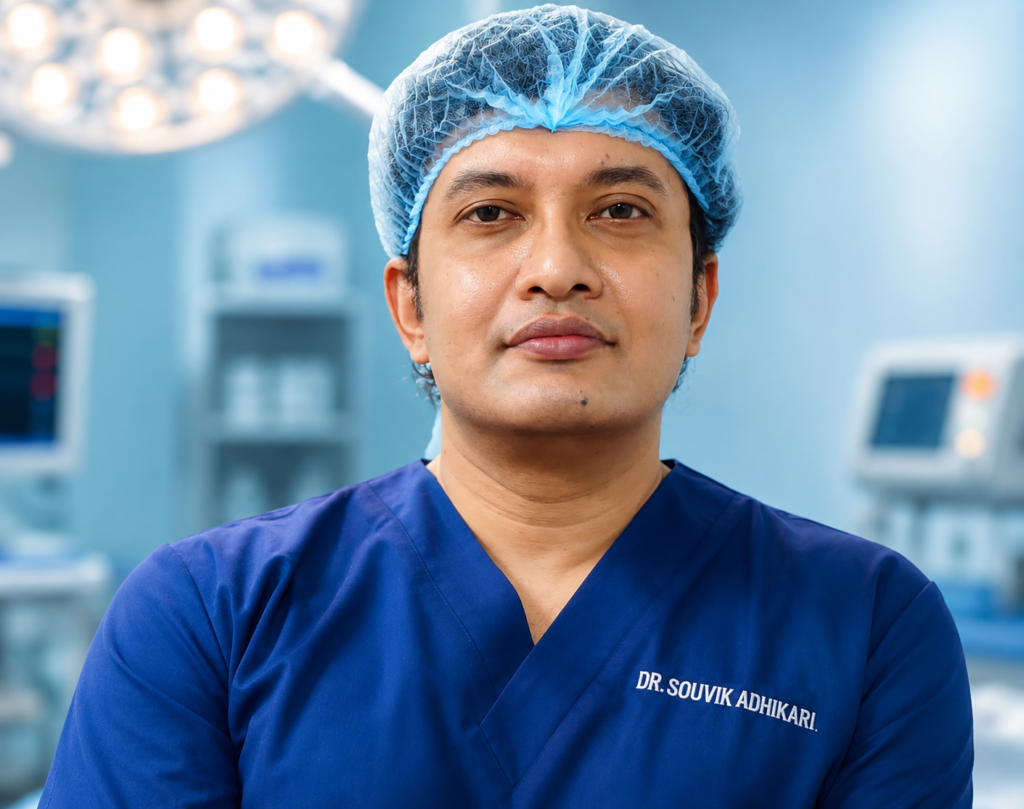
Prof. (Dr.) Souvik Adhikari
MS, MCh (Plastic Surgery)
17+ years experience
Primary vs Revision Rhinoplasty
Primary rhinoplasty is performed on a nose that has not previously undergone nasal reshaping surgery. The procedure may address the nasal bridge, tip, width, asymmetry or overall facial proportions.
Revision rhinoplasty is performed after previous nasal surgery when there are persistent aesthetic concerns, structural problems, asymmetry or functional difficulties. Revision procedures can be more complex because previous surgery may have altered the nasal framework or reduced the availability of cartilage for reconstruction.
Learn more about Revision Rhinoplasty →
Rhinoplasty for Indian and South Asian Noses
Rhinoplasty planning for Indian and South Asian patients requires careful consideration of nasal skin thickness, cartilage strength, nasal width, bridge height, tip structure and facial proportions. The objective is not to impose a standardised nasal shape but to create a balanced result that is appropriate for the individual’s anatomy and facial features.
Learn more about Asian Rhinoplasty →
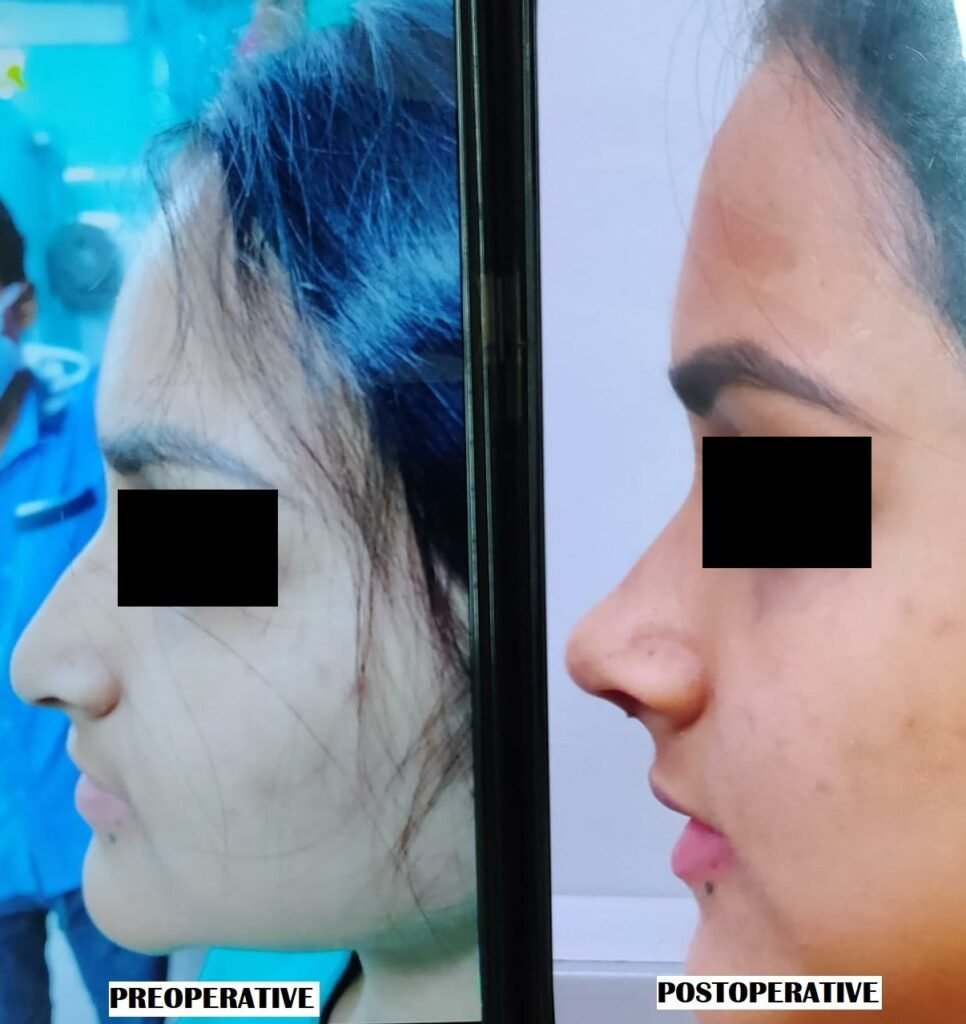
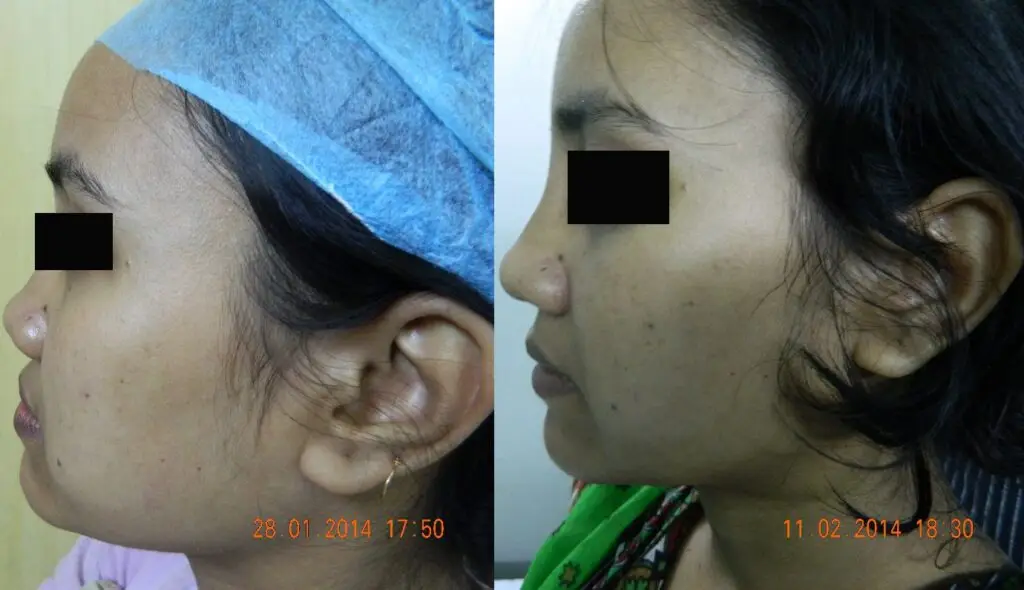
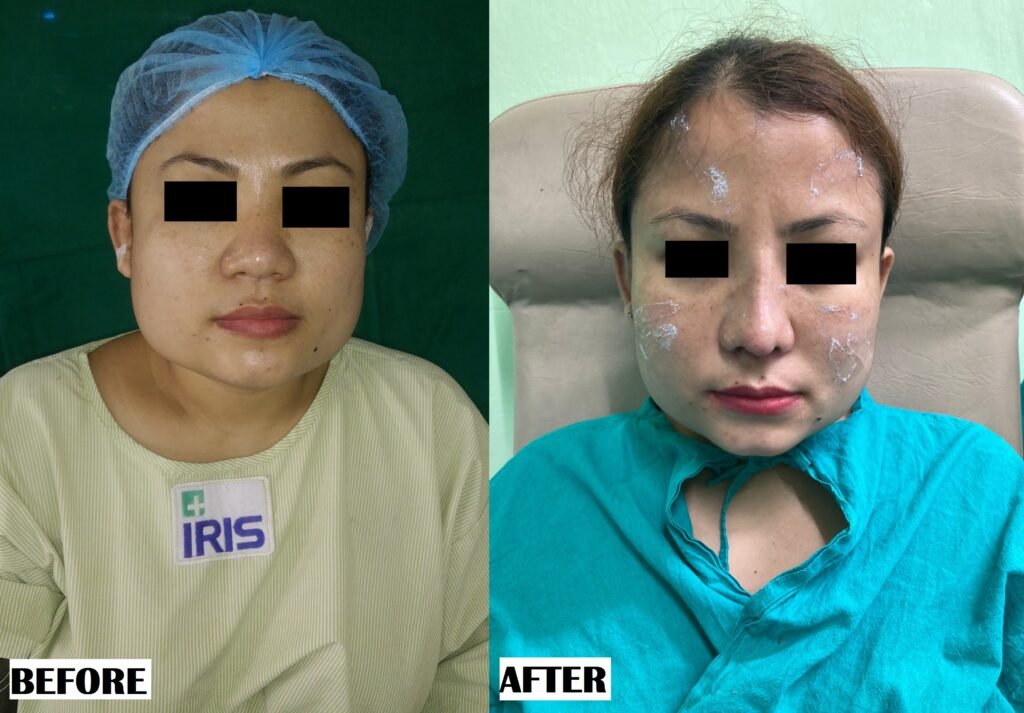
Gallery
Consented before-and-after photographs for rhinoplasty are reviewed privately during consultation, in line with medical advertising guidelines.
Frequently Asked Questions
Is Rhinoplasty Surgery painful?
Discomfort is well controlled with a multimodal pain protocol. Most patients describe a tightness or soreness rather than sharp pain, easing significantly within the first week.
How much does Rhinoplasty Surgery cost in Kolkata?
Cost depends on the extent of surgery, anaesthesia or consumables and hospital stay. A transparent rhinoplasty surgery price estimate in Kolkata is shared after your consultation, with no hidden charges.
When can I return to work?
Desk-based work is usually possible in 3 -4 days. Physically demanding work and gym training resume in 4 to 6 weeks, on review.
Will the scars be visible?
Incisions are placed in natural creases or hidden zones wherever anatomically possible, and scar care is guided for up to a year.
Do you treat patients traveling from outside Kolkata?
Yes. Patients from across West Bengal, India and abroad are treated, with video consultations and coordinated travel and stay planning.
What is rhinoplasty?
Rhinoplasty, commonly known as nose reshaping surgery or nose job surgery, is a procedure performed to change the shape, size or proportions of the nose. It may be performed for cosmetic reasons, functional concerns, or a combination of both, depending on the patient's anatomy and goals.
What is rhinoplasty surgery?
Rhinoplasty surgery involves carefully reshaping the bone, cartilage and soft tissues of the nose to achieve an appropriate balance with the rest of the face. The surgical approach is individualised according to the patient's nasal structure, skin characteristics, facial proportions and desired outcome.
Who is a good candidate for rhinoplasty?
A suitable candidate for rhinoplasty in Kolkata should generally be in good health, have realistic expectations and have a stable nasal structure. Patients may seek surgery because of concerns about nasal shape, size, a nasal hump, a crooked nose, nasal tip appearance or breathing difficulties.
Can rhinoplasty change the shape of my nose?
Yes. Nose reshaping surgery can modify several aspects of the nose, including the bridge, nasal tip, nostrils and overall nasal profile. The extent of correction depends on the individual's anatomy and what can be safely achieved through surgery.
Can rhinoplasty reduce the size of my nose?
Nose reduction surgery can reduce selected aspects of nasal size or projection when appropriate. The goal is not simply to make the nose smaller, but to create a proportionate and natural-looking nose that complements the patient's facial features.
Can rhinoplasty reduce a nasal hump?
Yes. Nasal hump reduction is a common component of rhinoplasty for patients who have a prominent dorsal hump. The nasal bridge can be carefully reshaped to create a smoother profile while maintaining appropriate structural support.
Can rhinoplasty correct a crooked nose?
Yes. Crooked nose correction may involve reshaping or repositioning the nasal bones and cartilage. When a crooked nose is associated with a deviated septum or breathing difficulty, functional nasal surgery may also be incorporated into the treatment plan.
Can rhinoplasty improve breathing?
In selected patients, functional rhinoplasty can improve nasal airflow when structural problems contribute to breathing difficulties. Depending on the underlying problem, treatment may involve correction of the nasal septum, nasal valves, turbinates or other structural components.
What is the difference between cosmetic and functional rhinoplasty?
Cosmetic rhinoplasty primarily focuses on improving the appearance and proportions of the nose, while functional rhinoplasty addresses structural problems that interfere with nasal breathing. Some patients require a combination of cosmetic and functional correction.
What is septorhinoplasty?
Septorhinoplasty combines rhinoplasty with correction of the nasal septum. It may be considered when a patient has both aesthetic concerns and a deviated septum or other structural problem affecting nasal breathing.
Can rhinoplasty be performed after a previous nose surgery?
Yes. Revision rhinoplasty may be considered for patients who have previously undergone rhinoplasty and remain concerned about nasal appearance or function. Revision surgery is often more complex because of scar tissue, altered anatomy and potentially limited cartilage.
What is revision rhinoplasty?
Yes. Revision rhinoplasty may be considered for patients who have previously undergone rhinoplasty and remain concerned about nasal appearance or function. Revision surgery is often more complex because of scar tissue, altered anatomy and potentially limited cartilage.
Can rhinoplasty correct a deviated septum?
When nasal obstruction is related to a deviated septum, septoplasty or septorhinoplasty may be considered. The appropriate procedure depends on the location and severity of the deviation and whether other nasal structures also require correction.
What is tip rhinoplasty?
Tip rhinoplasty, or nasal tip surgery, focuses specifically on reshaping the tip of the nose. It may be used to address a bulbous, drooping, asymmetric or poorly defined nasal tip while maintaining appropriate structural support.
What is Asian Rhinoplasty?
Asian rhinoplasty is a form of rhinoplasty tailored to the anatomical characteristics and aesthetic preferences that may be encountered in Asian patients. The procedure is highly individualised and focuses on achieving harmonious facial proportions while respecting the patient's existing nasal anatomy.
What is Indian Rhinoplasty?
Indian rhinoplasty refers broadly to rhinoplasty performed for Indian patients, taking into account individual nasal anatomy, skin thickness, facial proportions and aesthetic preferences. There is considerable anatomical variation among Indian patients, so treatment should always be personalised.
Can rhinoplasty be performed for a wide nose?
Yes. Wide nose correction may involve carefully modifying the nasal bones, cartilage, tip or nostrils depending on the underlying anatomy. The appropriate technique varies according to the cause of nasal width.
Can rhinoplasty reduce wide nostrils?
In selected patients, nostril reduction surgery or alarplasty can reduce excessive nostril width. It may be performed independently or as part of a comprehensive rhinoplasty when appropriate.
Will rhinoplasty make my nose look natural?
The objective of modern natural-looking rhinoplasty is to create a nose that complements the patient's facial features rather than appearing obviously operated on. The final result depends on anatomy, surgical technique, healing and the patient's individual characteristics.
Will rhinoplasty change my facial appearance?
Because the nose occupies a central position on the face, nose reshaping can influence overall facial balance and appearance. Even relatively subtle changes to the nasal bridge or tip can alter facial proportions.
What is the difference between open and closed rhinoplasty?
In open rhinoplasty, a small incision is made across the columella to provide greater access to the nasal framework. In closed rhinoplasty, incisions are confined to the inside of the nostrils. The choice depends on the complexity of the correction and the surgeon's preferred approach.
What is the recovery time after rhinoplasty?
Most patients experience swelling and congestion during the early recovery period. The initial recovery takes place over several weeks, while nasal swelling can continue to decrease gradually for many months. The final result therefore develops progressively rather than immediately.
When can I exercise after rhinoplasty?
Light activity can generally be resumed progressively, but strenuous exercise, heavy lifting and activities that could result in nasal trauma should be avoided during the early recovery period. Your surgeon will advise when it is appropriate to resume specific activities.
When will I see the final results after rhinoplasty?
The basic change in nasal shape may be visible relatively early, but final rhinoplasty results take time to develop. Swelling, particularly around the nasal tip, can persist for an extended period before the tissues fully settle.
Is rhinoplasty permanent?
The structural changes made during rhinoplasty are intended to be long-lasting. However, ageing, injury, changes in soft tissue and the natural healing process can alter the appearance of the nose over time.
Is rhinoplasty safe?
Like any surgical procedure, rhinoplasty carries potential risks, including bleeding, infection, changes in sensation or smell, persistent swelling, breathing difficulties, asymmetry, contour irregularities and the possibility of revision surgery. Appropriate patient selection and careful surgical planning are important.
Where can I get rhinoplasty surgery in Kolkata?
If you are considering rhinoplasty in Kolkata, a consultation with a qualified plastic surgeon can help determine the most appropriate approach for your nose. Your nasal structure, facial proportions, breathing, skin characteristics and aesthetic goals can be assessed before developing an individualised surgical plan.
Honest assessment, written estimate, no pressure to book.