Asian rhinoplasty in Kolkata is a specialised approach to nose reshaping that considers the distinctive anatomical characteristics commonly seen in Asian noses. The objective is not to create a Westernised or one-size-fits-all nose, but to achieve natural facial harmony while preserving individual ethnic identity. Asian rhinoplasty may address concerns such as a relatively low nasal bridge, broad nasal base, less-defined nasal tip or differences in nasal projection and proportion.
Asian Rhinoplasty Surgery in Kolkata
Asian rhinoplasty surgery requires careful assessment of the nasal bones, cartilage, skin thickness, nasal septum and overall facial proportions. Depending on the patient’s anatomy and goals, treatment may involve dorsal augmentation, nasal tip refinement, alar modification or structural cartilage grafting. The appropriate technique is selected individually, with particular attention to maintaining a natural appearance and appropriate nasal function.
Natural-Looking Asian Nose Reshaping
The goal of Asian rhinoplasty in Kolkata is to enhance nasal definition without compromising ethnic characteristics or creating an artificial appearance. A subtle increase in bridge height, improved nasal tip definition or refinement of the nasal base may be appropriate for some patients, while others may require a different combination of techniques. Facial proportions, skin thickness and the relationship between the nose, eyes, lips and chin are all considered during surgical planning.
Who May Benefit from Asian Rhinoplasty?
Patients who are concerned about a low nasal bridge, broad nasal tip, insufficient nasal projection, wide nostrils or nasal asymmetry may consider Asian rhinoplasty. Some patients may also have functional concerns, such as difficulty breathing, which can be assessed during consultation. Because nasal anatomy varies considerably between individuals, the treatment plan should be based on the patient’s specific anatomy rather than ethnicity alone.
Asian Rhinoplasty in Kolkata: Personalised Approach
Every patient has a different facial structure and aesthetic preference. Asian rhinoplasty surgery in Kolkata therefore requires an individualised approach to determine how much structural modification is appropriate. The aim is to improve facial balance while preserving a recognisable, natural appearance. Patients should have realistic expectations regarding the degree of change possible and understand that healing and final results vary between individuals.
Asian Rhinoplasty by Prof. (Dr.) Souvik Adhikari
Prof. (Dr.) Souvik Adhikari brings 17+ years of surgical experience to cosmetic, plastic and reconstructive surgery, with additional AOCMF Fellowship training at Johns Hopkins University, USA. His approach to Asian rhinoplasty in Kolkata focuses on detailed facial and nasal assessment, structural planning, precise surgical technique and natural-looking results.
Asian Rhinoplasty Recovery and Consultation
Recovery following Asian rhinoplasty varies according to the techniques performed and the extent of nasal reshaping. Swelling and bruising are common during the initial healing period, while the final nasal contour develops gradually over time. Patients receive personalised postoperative instructions regarding nasal care, physical activity and follow-up. During consultation, the proposed changes, surgical approach, potential risks, recovery and realistic expectations are discussed in detail.
If you are considering Asian rhinoplasty in Kolkata, a personalised consultation can help determine which techniques may be appropriate for your anatomy and aesthetic goals. The objective is to achieve natural facial harmony, appropriate nasal definition and preservation of individual ethnic characteristics, rather than imposing a standardized nose shape.
Individualised Planning for Asian Rhinoplasty
Asian rhinoplasty should be planned according to the individual’s nasal anatomy, facial proportions and aesthetic goals rather than using a standardised surgical template. Assessment includes the nasal bridge, nasal bones, cartilage framework, skin thickness, nasal tip, nostrils, septum and relationship of the nose to the eyes, lips and chin.
The amount of structural modification required varies considerably between patients. The aim is to create appropriate nasal definition and projection while maintaining facial harmony and, where possible, normal nasal function.
Who May Be Suitable for Asian Rhinoplasty?
Asian rhinoplasty may be considered by adults who have specific concerns about the appearance or function of their nose and have realistic expectations regarding what surgery can achieve.
Common aesthetic concerns include a relatively low nasal bridge, broad nasal base, limited tip definition, insufficient nasal projection, wide nostrils or nasal asymmetry. Patients with breathing difficulties may require additional assessment to determine whether a functional nasal problem is also present.
Asian Rhinoplasty for a Low Nasal Bridge
A relatively low nasal bridge is a common concern among some patients seeking Asian rhinoplasty. Bridge augmentation can increase nasal projection and alter the overall proportion of the nose in relation to the rest of the face.
The amount of augmentation should be carefully planned. Excessive bridge height may appear disproportionate, while insufficient augmentation may not produce the desired change. The appropriate technique and structural material depend on the individual anatomy and surgical requirements.
Asian Rhinoplasty for a Broad or Less-Defined Nasal Tip
A broad or poorly defined nasal tip may result from the underlying cartilage framework, soft-tissue characteristics or the relationship between the tip and nasal bridge.
Tip refinement aims to improve definition and proportion while preserving adequate structural support. Excessive narrowing should be avoided because the objective is a balanced, natural-looking tip rather than an artificially narrow appearance.
Asian Rhinoplasty for a Wide Nasal Base and Nostrils
Some patients seek Asian rhinoplasty because the nasal base or nostrils appear relatively broad compared with the rest of the face.
Where appropriate, modification of the nasal base or alar region may be incorporated into the overall rhinoplasty plan. The extent of correction should be conservative enough to maintain appropriate facial proportions and avoid an unnatural appearance.
Structural Grafting in Asian Rhinoplasty
Structural cartilage grafting may be used in selected patients to increase support, improve projection or refine particular areas of the nasal framework.
The type and source of graft material depend on the patient’s anatomy and the structural requirements of the operation. Grafting is not necessary in every Asian rhinoplasty, and the surgical plan should be determined after individual assessment.
Asian Rhinoplasty and Nasal Skin Thickness
Skin thickness is an important consideration in Asian rhinoplasty. Thicker nasal skin can influence how clearly underlying structural changes become visible, particularly around the nasal tip.
Surgical planning therefore needs to consider both the underlying framework and the soft-tissue envelope. The achievable degree of tip definition depends partly on these anatomical characteristics.
Asian Rhinoplasty and Nasal Function
Cosmetic and functional considerations should be assessed separately but can sometimes be addressed during the same operation. Nasal obstruction may be related to septal deviation, internal structural problems or other causes that require specific evaluation.
When functional concerns are present, the surgical plan should address the underlying structural problem rather than treating nasal appearance alone.
Asian Rhinoplasty vs Conventional Rhinoplasty
Asian rhinoplasty is not a completely separate operation from rhinoplasty performed in other populations. Rather, it refers to rhinoplasty planning that takes into account the anatomical characteristics and aesthetic goals commonly encountered in Asian patients.
The same fundamental principles of structural rhinoplasty apply, but the specific combination of bridge augmentation, tip refinement, alar modification, grafting or other techniques is selected according to the individual patient’s anatomy.
Asian Rhinoplasty for Men
Asian rhinoplasty can be performed in male patients as well as female patients. In men, the surgical plan should take into account facial proportions, nasal projection, brow-nose relationships and individual aesthetic preferences.
The objective is to create a nose that is appropriate for the patient’s face rather than applying a standard feminine or masculine nasal shape.
Asian Rhinoplasty After Previous Nasal Surgery
Patients who have previously undergone rhinoplasty or other nasal surgery may require a more detailed structural assessment. Previous surgery can alter the nasal framework, create scar tissue or reduce the availability of cartilage for reconstruction.
Revision Asian rhinoplasty therefore requires individualised planning, and the appropriate approach depends on the changes produced by previous surgery.
Anaesthesia for Asian Rhinoplasty
Asian rhinoplasty is generally performed under appropriate anaesthesia with preoperative assessment and monitoring. The anaesthetic plan depends on the extent of nasal reconstruction, the surgical technique and the patient’s individual medical circumstances.
How Long Does Asian Rhinoplasty Take?
The duration of Asian rhinoplasty varies according to the complexity of the nasal reshaping, the number of areas being addressed and whether structural grafting or functional correction is required.
Rather than applying a fixed operating time to every patient, an estimated duration can be discussed after examination and surgical planning.
Recovery After Asian Rhinoplasty
Swelling, bruising, nasal congestion and temporary changes in sensation may occur during the early postoperative period. The initial recovery varies according to the extent of surgery and the tissues involved.
Most patients require a period of reduced activity during the early healing phase. Strenuous exercise and activities that could injure the nose should be avoided until adequate healing has occurred and postoperative review has been completed.
Nasal swelling gradually decreases over time, but subtle swelling—particularly around the tip—can persist for several months.
Scars After Asian Rhinoplasty
The visibility of scars depends on the surgical approach. In an open rhinoplasty, a small incision is made across the columella, while closed rhinoplasty uses incisions within the nostrils.
When external incisions are required, careful closure and appropriate postoperative scar care can help the scar mature favourably. Individual healing varies, and no surgical scar can be guaranteed to be invisible.
Possible Risks and Complications
Potential complications of Asian rhinoplasty include bleeding, infection, persistent swelling, asymmetry, altered sensation, contour irregularity, breathing difficulties, graft-related problems, dissatisfaction with the appearance and the possibility of revision surgery.
The specific risks depend on the techniques used and the patient’s anatomy. These risks, together with appropriate measures to reduce them, should be discussed during informed consent.
Expected Results After Asian Rhinoplasty
Asian rhinoplasty can improve nasal projection, definition and proportion while aiming to maintain harmony with the patient’s facial characteristics.
The early postoperative appearance does not represent the final result because swelling can temporarily obscure the underlying nasal contour. The nose gradually settles as healing progresses, and subtle refinement may continue for many months.
The long-term result depends on the surgical technique, healing characteristics, tissue behaviour and the patient’s underlying anatomy.
Consultation for Asian Rhinoplasty in Kolkata
A detailed consultation is essential before Asian rhinoplasty. The assessment should consider the nasal bridge, tip, nostrils, skin thickness, cartilage framework, septum, breathing and overall facial proportions.
The proposed changes, possible techniques, grafting requirements, limitations, recovery, scars and potential risks can then be discussed so that the treatment plan is based on the patient’s anatomy and expectations rather than a predetermined nose shape.

Prof. (Dr.) Souvik Adhikari
MS, MCh (Plastic Surgery)
17+ years experience
Asian Rhinoplasty for Indian and South Asian Patients
Indian and South Asian patients have considerable variation in nasal anatomy, including differences in skin thickness, bridge height, nasal width, cartilage structure and facial proportions. Asian rhinoplasty should therefore not be based on ethnicity alone.
For Indian and South Asian patients, the surgical plan should be developed from the individual’s nasal anatomy, facial characteristics and aesthetic goals. The objective is to improve nasal proportion and definition while maintaining a result that remains appropriate for the patient’s face.
Gallery
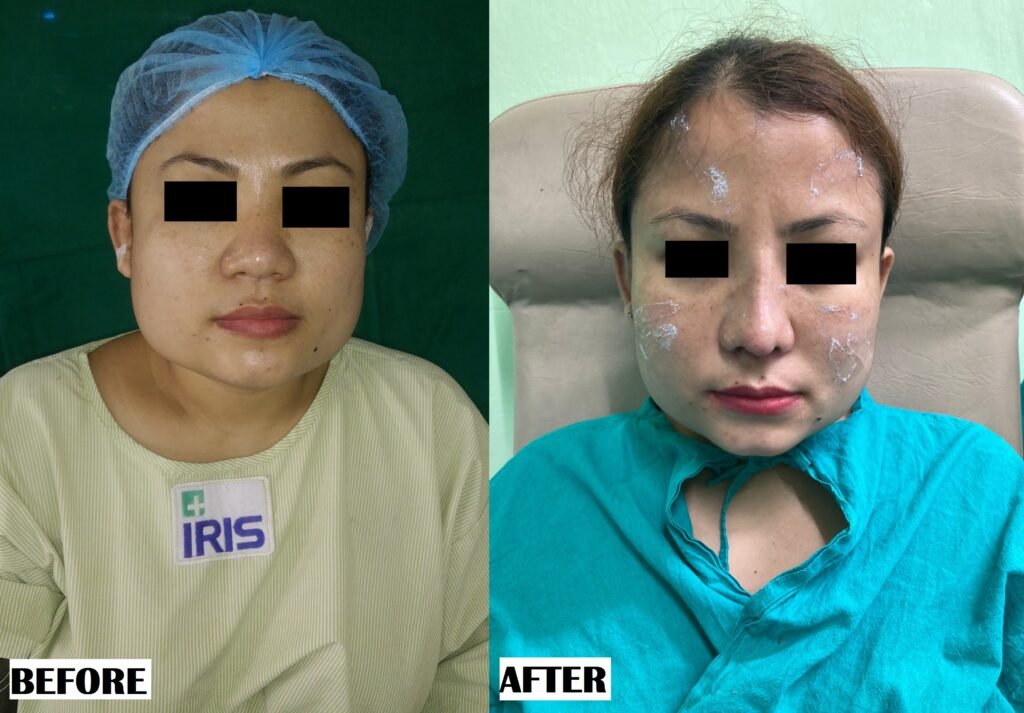
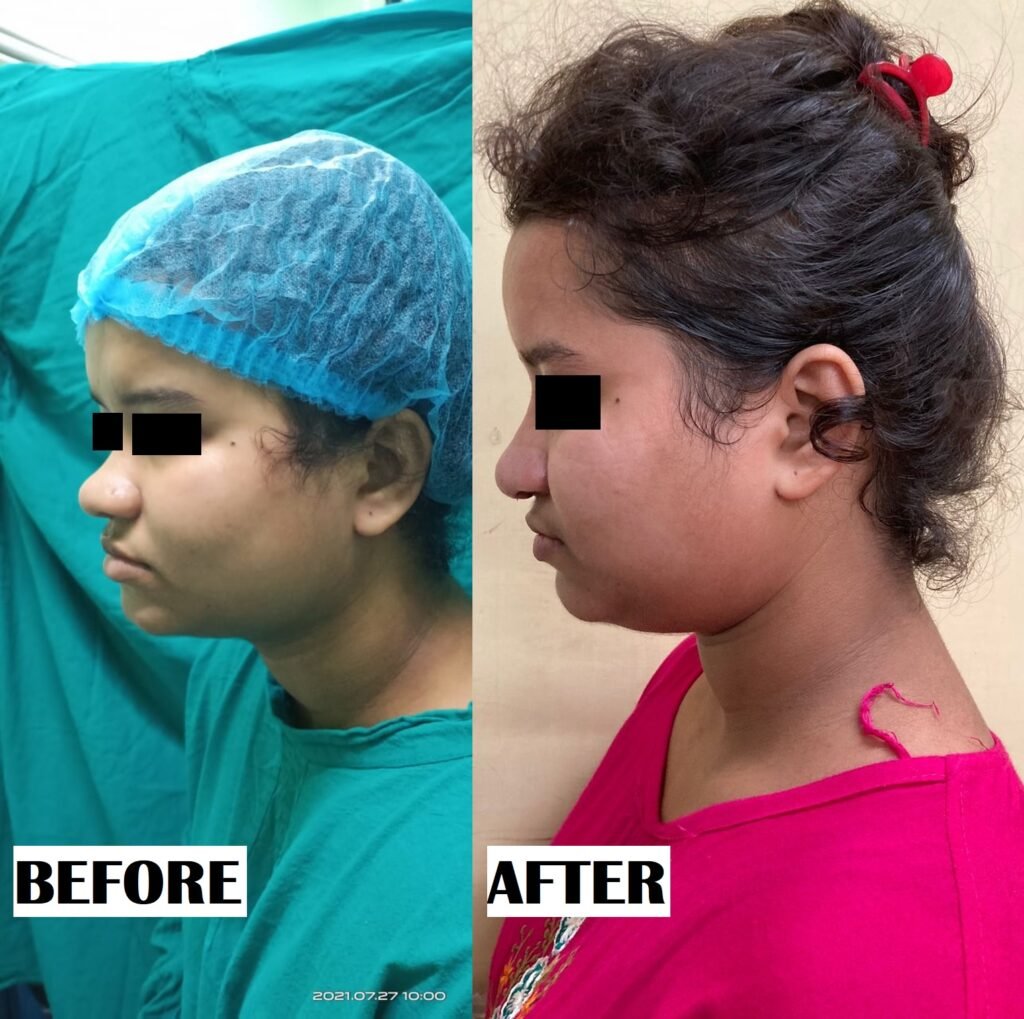
Consented before-and-after photographs for Asian rhinoplasty are reviewed privately during consultation, in line with medical advertising guidelines.
Frequently Asked Questions
Is Asian Rhinoplasty painful?
Discomfort is well controlled with a multimodal pain protocol. Most patients describe a tightness or soreness rather than sharp pain, easing significantly within the first week.
How much does Asian Rhinoplasty cost in Kolkata?
The cost of Asian rhinoplasty in Kolkata depends on the complexity of nasal reshaping, the surgical technique, whether bridge augmentation or structural grafting is required, anaesthesia, operating-facility charges and postoperative care. An individualised estimate is provided after assessment of the nasal anatomy and treatment plan.
When can I return to work after Asian Rhinoplasty?
The timing depends on the extent of surgery, postoperative swelling and the nature of your work. Patients with desk-based work may return relatively early once they are comfortable, while physically demanding work and activities that could risk injury to the nose generally require a longer recovery period. The timing should be guided by postoperative review.
Will Asian Rhinoplasty leave scars?
The visibility of scars depends on the surgical approach. Closed rhinoplasty uses incisions inside the nostrils, while open rhinoplasty also involves a small incision across the columella. External scars generally become less conspicuous as they mature, but individual healing varies and a scar cannot be guaranteed to be invisible.
Do you treat patients traveling from outside Kolkata?
Yes. Patients from across West Bengal, India and abroad are treated, with video consultations and coordinated travel and stay planning.
What is Asian rhinoplasty?
Asian rhinoplasty is a specialised form of nose reshaping surgery that takes into account the characteristic anatomical features and aesthetic preferences often associated with Asian noses. Depending on the patient's anatomy and goals, surgery may involve refinement of the nasal bridge, nasal tip, nostrils or overall nasal proportions while aiming for a natural and harmonious result.
How is Asian rhinoplasty different from conventional rhinoplasty?
Asian rhinoplasty requires careful consideration of nasal skin thickness, cartilage structure, nasal bridge height, tip definition and facial proportions. Rather than applying a standard rhinoplasty technique, the procedure is individually planned to achieve a result that complements the patient's existing facial features.
What can Asian rhinoplasty correct?
Asian nose surgery may be performed to address concerns such as a relatively low nasal bridge, broad or less-defined nasal tip, excessive nasal width, nostril shape or disproportion between the nose and the rest of the face. Functional concerns, including difficulty breathing, can also be assessed during consultation.
Can Asian rhinoplasty increase the height of the nasal bridge?
Yes. Nasal bridge augmentation is an important component of Asian rhinoplasty for appropriately selected patients. Depending on the patient's anatomy and surgical requirements, the bridge may be augmented using suitable grafting or implant techniques. The choice of material and technique should be individualised for safety and long-term stability.
Can Asian rhinoplasty refine a wide or broad nasal tip?
Yes. Asian rhinoplasty can be used for nasal tip refinement in selected patients. The objective is to improve tip definition and proportion while maintaining a natural appearance and avoiding excessive narrowing that may look disproportionate to the patient's face.
What is the recovery time after Asian rhinoplasty?
Recovery varies depending on the surgical technique and extent of nasal reconstruction. Swelling and bruising are generally more noticeable during the early postoperative period and gradually improve. The nose continues to settle and refine as healing progresses, and complete refinement can take several months.
Can Asian rhinoplasty make the nose look natural?
A key objective of modern Asian rhinoplasty in Kolkata is to achieve a natural-looking nose that remains harmonious with the patient's facial features. The desired amount of bridge augmentation, tip refinement and nasal projection should be carefully planned according to individual anatomy rather than following a fixed template.
Is Asian rhinoplasty suitable for men?
Yes. Asian rhinoplasty can be performed in both men and women. The surgical plan should take into account differences in facial proportions, nasal anatomy and individual aesthetic preferences. For male patients, maintaining appropriate nasal structure and facial balance is particularly important.
Who is a good candidate for Asian rhinoplasty?
A suitable candidate is generally an adult in good overall health who has specific concerns about nasal appearance or function and has realistic expectations. During consultation, the surgeon evaluates nasal structure, skin thickness, breathing, facial proportions and the patient's desired outcome before recommending an appropriate technique.
What materials can be used for Asian rhinoplasty bridge augmentation?
Depending on the patient's anatomy and surgical requirements, bridge augmentation may involve an implant or cartilage grafting. The appropriate material depends on factors such as the desired degree of augmentation, available tissue, nasal structure and the surgeon's assessment. There is no single material that is appropriate for every patient.
Can Asian rhinoplasty improve breathing?
It can, depending on the underlying problem. Functional rhinoplasty can address certain structural causes of nasal obstruction, while cosmetic Asian rhinoplasty focuses primarily on appearance. When both functional and aesthetic concerns are present, they can sometimes be addressed during the same operation.
When will I see the final results of Asian rhinoplasty?
An early improvement in nasal shape may be visible after the initial swelling decreases, but final Asian rhinoplasty results take time to develop. Subtle swelling, particularly around the nasal tip, can persist for an extended period, and the final contour becomes clearer as the tissues mature.
Is Asian Rhinoplasty suitable for Indian patients?
Yes. Asian rhinoplasty may be appropriate for Indian patients when the individual's nasal anatomy and aesthetic goals are suited to the procedure. Indian and South Asian noses show considerable anatomical variation, so treatment should be planned according to nasal structure, skin thickness, facial proportions and the patient's desired outcome rather than ethnicity alone.
Can Asian rhinoplasty be combined with other procedures?
In selected patients, Asian rhinoplasty may be combined with other nasal or facial procedures when clinically appropriate. The decision depends on the patient's anatomy, treatment goals and overall surgical safety. A personalised consultation is necessary before combining procedures.
Is Asian rhinoplasty permanent?
Rhinoplasty produces long-lasting structural changes to the nose. However, the nose continues to undergo natural ageing, and subtle changes may occur over time. The longevity of the result also depends on the surgical technique, healing characteristics and individual anatomy.
Is Asian rhinoplasty safe?
Like any surgical procedure, Asian rhinoplasty carries potential risks, including bleeding, infection, asymmetry, changes in sensation, breathing difficulties, dissatisfaction with the appearance and the possibility of revision surgery. Careful patient selection, appropriate surgical planning and postoperative follow-up are important for achieving a safe and satisfactory outcome.
Where can I get Asian Rhinoplasty in Kolkata?
If you are considering Asian rhinoplasty in Kolkata, a consultation with a qualified plastic surgeon can help determine the most appropriate approach for your nasal anatomy and aesthetic goals. A detailed assessment of the nasal bridge, tip, nostrils, skin and facial proportions allows the surgical plan to be customised to the individual patient.
Honest assessment, written estimate, no pressure to book.