Skin grafting in Kolkata is an important reconstructive plastic surgery procedure used to cover areas where skin has been lost or damaged due to burns, traumatic injuries, ulcers, infections, surgical wounds or other conditions. A skin graft involves transferring healthy skin from one area of the body, known as the donor site, to another area where skin coverage is required. The goal is to protect the wound, support healing, restore coverage and, where possible, improve both function and appearance.
Skin Grafting Techniques and Surgical Planning
Skin graft surgery in Kolkata is carefully planned according to the size, depth, location and condition of the wound. Depending on the individual case, a split-thickness or full-thickness skin graft may be considered. The choice depends on factors such as the amount of tissue loss, wound characteristics, functional requirements and the desired cosmetic outcome. Proper preparation of the recipient wound and meticulous handling of the graft are important for successful healing.
Skin Grafting for Burns and Traumatic Wounds
Burn reconstruction and skin grafting in Kolkata can play an important role in treating wounds where the skin has been extensively damaged. Skin grafts may also be used following accidents, traumatic injuries, removal of certain lesions or other situations where direct closure of the wound is not possible. Early assessment by a plastic surgeon can help determine whether a skin graft, flap reconstruction or another method of wound coverage is most appropriate.
Skin Grafting for Chronic Wounds and Ulcers
Selected chronic wounds and ulcers may require reconstructive treatment when they fail to heal adequately with conservative wound care. Before considering skin grafting, the underlying cause of poor healing must be evaluated and addressed wherever possible. Factors such as infection, blood supply, pressure, nutrition and underlying medical conditions can influence graft survival. A carefully prepared wound bed is essential for successful graft take.
Skin Grafting and Reconstructive Surgery
The purpose of skin grafting surgery is not simply to cover a wound. Reconstruction should also consider the function and appearance of the affected area. Depending on the depth and complexity of tissue loss, a skin graft may be sufficient, while deeper defects involving muscle, tendon, bone or other structures may require a local flap, regional flap or microsurgical reconstruction. The reconstructive plan is therefore tailored to each patient’s individual needs.
Skin Grafting by Prof. (Dr.) Souvik Adhikari
Prof. (Dr.) Souvik Adhikari brings 17+ years of surgical experience in cosmetic, plastic and reconstructive surgery, with additional AOCMF Fellowship training at Johns Hopkins University, USA. His approach to skin grafting in Kolkata focuses on detailed wound assessment, appropriate reconstructive planning, meticulous surgical technique and restoration of tissue coverage with attention to function and appearance.
Skin Graft Recovery and Aftercare
Recovery following skin graft surgery in Kolkata depends on the size and location of the graft, the type of graft used and the patient’s overall health. Both the grafted area and donor site require appropriate wound care during healing. Patients receive personalised instructions regarding dressings, activity, nutrition and follow-up. Graft survival depends on several factors, including adequate blood supply, immobilisation of the graft and appropriate postoperative care.
If you are looking for skin grafting in Kolkata following a burn, injury, ulcer or surgical wound, a specialist consultation can help determine the most appropriate reconstructive option. The objective is to achieve reliable wound coverage, promote healing, preserve function and obtain the best possible aesthetic outcome for the individual patient.
Academic and Reconstructive Experience
Skin grafting forms part of the broader field of reconstructive plastic surgery, where wound coverage must be planned according to tissue loss, function and the requirements of healing. Prof. (Dr.) Souvik Adhikari’s academic and clinical work includes reconstructive surgery involving traumatic injuries, burns, soft-tissue defects and complex wound coverage.
His published work in trauma and reconstructive surgery includes research on blast injuries of the hand and other reconstructive procedures. These academic and clinical experiences contribute to an approach that considers not only wound closure but also functional recovery, durable tissue coverage and scar outcome.
Research & Publications →
Individualised Planning for Skin Grafting
Skin grafting is not a single standardised procedure. The appropriate technique depends on the size and depth of the wound, its location, the quality of the wound bed, the structures that require coverage and the functional requirements of the affected area. Before surgery, the wound is carefully assessed to determine whether a skin graft is appropriate or whether another reconstructive technique would provide better coverage.
Who May Need Skin Grafting?
Skin grafting may be considered for selected patients with significant skin loss following burns, accidents, traumatic injuries, chronic wounds, ulcers, infections or surgical procedures. It may also form part of reconstruction after release of a scar contracture or after removal of certain skin lesions.
A skin graft is most suitable when the wound has an adequately prepared and well-vascularised wound bed capable of supporting graft healing. If important structures such as exposed tendon, bone, joint or other deeper tissues require coverage, a flap or another form of reconstruction may be more appropriate.
Split-Thickness and Full-Thickness Skin Grafts
The two principal types of skin graft are split-thickness and full-thickness grafts. A split-thickness skin graft contains a thinner layer of skin and can be useful when relatively large areas require coverage. A full-thickness skin graft contains the full thickness of the skin and may be selected for certain smaller defects where skin thickness, colour, texture and contour matching are important.
The choice between these techniques is individualised according to the wound and the requirements of reconstruction rather than simply the size of the defect.
Skin Grafting After Burns and Trauma
Skin grafting is an important component of reconstructive surgery after selected burn injuries and traumatic wounds. Following significant skin loss, grafting can provide wound coverage and help protect underlying tissues while supporting healing.
In more complex injuries, particularly when there is exposed tendon, bone, joint or other critical structures, a flap may be required instead of or in addition to a skin graft. Reconstructive assessment can therefore help determine the most appropriate method of tissue coverage.
Skin Grafting for Scar Contracture
Severe burns and other injuries can produce tight scars that restrict movement or distort nearby structures. After appropriate assessment and, where necessary, release of the contracture, a skin graft may be used to provide replacement skin and help reduce recurrent tightening.
Depending on the location and characteristics of the scar, however, alternatives such as Z-plasty, local tissue rearrangement or flap reconstruction may sometimes provide a better solution.
Skin Grafting for Chronic Wounds and Ulcers
Some chronic wounds and ulcers may be suitable for skin grafting when conservative treatment has not resulted in adequate healing and the wound bed is appropriate for grafting. Before reconstruction, factors that may interfere with healing—such as infection, inadequate blood supply, pressure, poor nutrition or underlying disease—should be identified and addressed wherever possible.
Skin grafting is therefore not simply a method of closing a persistent wound; successful reconstruction depends on appropriate patient selection and preparation of the recipient site.
Skin Graft vs Skin Flap
A skin graft is completely separated from its original blood supply and depends on the recipient wound bed to establish a new blood supply. A flap, in contrast, contains tissue that retains its own blood supply when transferred.
Skin grafts are useful for many wounds with suitable recipient beds, while flaps may be necessary when deeper structures need durable coverage or when the wound cannot support a graft. The choice between grafting and flap reconstruction is made according to the depth, location and functional requirements of the defect.
Skin Graft Donor Site
Skin for a graft is taken from a suitable donor area elsewhere on the body. The donor site is selected according to the type and size of graft required, the location of the defect and the characteristics of the patient’s skin.
The donor site also requires wound care and may leave a scar. Patients are counselled about both the grafted area and the donor site as part of the overall reconstructive plan.
Skin Graft Recovery and Graft Take
During the early postoperative period, the graft must be protected while it establishes a blood supply and becomes incorporated into the recipient wound. Dressings, appropriate immobilisation where required and careful wound care are important during this period.
Recovery varies considerably according to the size and location of the graft, the type of graft used, the underlying wound and the patient’s general health. The graft and donor site are monitored during follow-up, and activity restrictions are adjusted according to healing.
Possible Complications of Skin Grafting
Although skin grafting is an established reconstructive procedure, complications can occur. These may include bleeding, infection, fluid collection, delayed healing, partial or complete graft loss, altered sensation, pigmentation or texture changes and noticeable scarring.
Problems can also occur at the donor site. In some situations, further wound treatment or additional reconstructive surgery may be necessary. Individual risks depend on the wound, the grafting technique and the patient’s health.
Functional Reconstruction, Not Just Wound Coverage
The objective of skin grafting is not simply to close a wound. In areas such as the hands, feet, joints, face and other functionally important regions, reconstruction must also consider movement, durability, contour and protection of underlying structures.
Where a simple skin graft cannot provide adequate functional coverage, other reconstructive procedures—including local, regional or microsurgical flaps—may be considered.
Consultation for Skin Grafting in Kolkata
A detailed assessment is important before deciding whether skin grafting is appropriate. The wound, surrounding tissues, previous treatment, general health and functional requirements are considered when developing the reconstructive plan.
The aim is to select the simplest reconstructive technique that can provide reliable coverage while preserving function and achieving an appropriate aesthetic result.
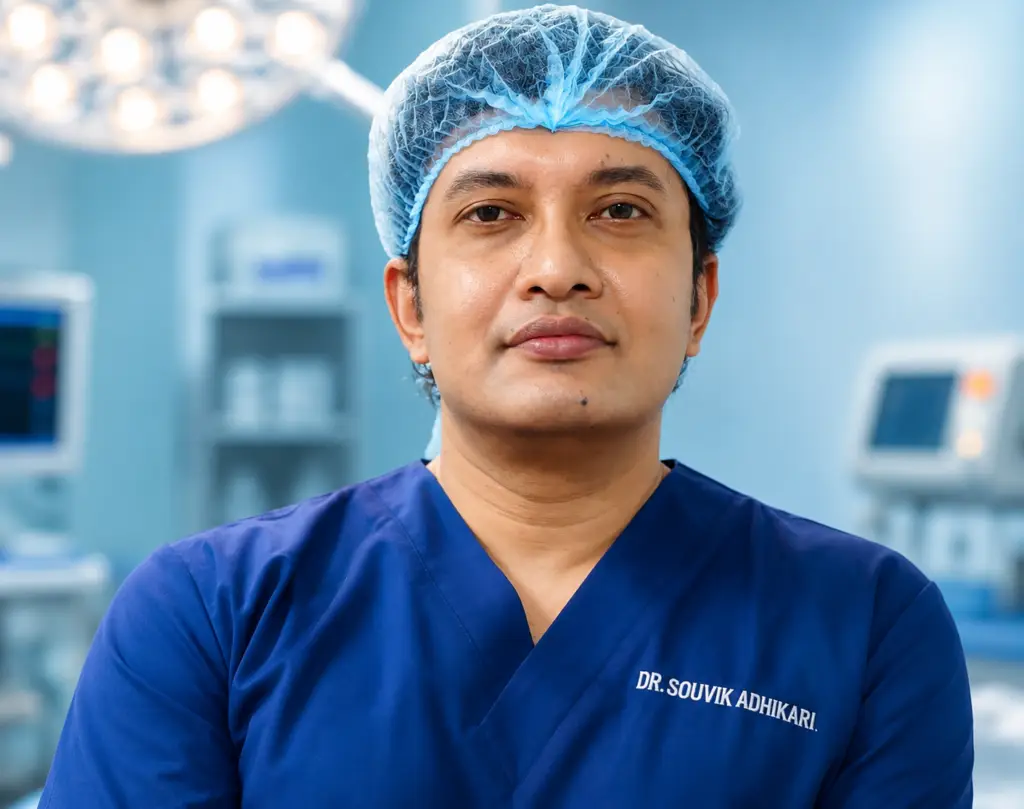
Prof. (Dr.) Souvik Adhikari
MS, MCh (Plastic Surgery)
17+ years experience
Frequently Asked Questions on Skin Grafting in Kolkata
1. What is skin grafting?
Skin grafting is a reconstructive plastic surgery procedure in which healthy skin is taken from a donor area of the body and transferred to cover a wound or area of lost skin. It may be used following burns, traumatic injuries, skin or soft-tissue surgery, infection, or other conditions where direct wound closure is not possible.
2. When is a skin graft needed?
A skin graft may be considered when a wound has insufficient skin for direct closure. Common indications include burn injuries, traumatic wounds, degloving injuries, chronic or complex wounds, defects following removal of skin lesions or cancer, and certain scar contractures. The reconstructive option depends on the size, depth, location and condition of the wound.
3. What are the different types of skin grafts?
The two major types are split-thickness skin grafts and full-thickness skin grafts. A split-thickness graft contains a thinner layer of skin and is often useful for larger wounds, while a full-thickness graft contains the full thickness of the skin and may be suitable for selected smaller defects where better thickness, colour or contour matching is important.
4. What is a split-thickness skin graft?
A split-thickness skin graft uses a thin layer of skin harvested from a donor site, commonly the thigh or another suitable area. Because the deeper portion of the skin remains at the donor site, it can heal naturally. Split-thickness grafts are particularly useful when a relatively large wound needs coverage.
5. What is a full-thickness skin graft?
A full-thickness skin graft includes the complete thickness of the skin. The donor wound is usually closed directly with stitches, making this technique particularly useful for selected smaller defects where skin quality, thickness and appearance are important considerations.
6. Can skin grafting be performed after a burn injury?
Yes. Skin grafting is an important reconstructive option for selected burn wounds, particularly when sufficient skin has been lost to prevent satisfactory healing or closure. The timing and type of graft depend on the depth and extent of the burn, the wound bed and the patient’s overall condition.
7. Can skin grafting treat wounds after an accident or trauma?
Yes. Trauma reconstruction with skin grafting may be appropriate for selected wounds following road traffic accidents, industrial injuries, degloving injuries and other forms of soft-tissue trauma. The wound must first be assessed and adequately prepared before grafting.
8. Can a skin graft be used for chronic or difficult-to-heal wounds?
In selected cases, yes. Skin grafting may provide coverage for a wound that has an appropriate healthy wound bed but cannot close adequately on its own. However, underlying problems such as infection, poor blood supply, pressure or other causes of delayed healing must also be addressed.
9. Where is the skin taken from during skin graft surgery?
The donor site is selected according to the size and location of the wound, skin characteristics and the type of graft required. Common donor areas include the thigh, buttock, upper arm, groin or areas behind the ear, depending on the reconstruction.
10. Will there be a scar where the skin graft is taken?
Yes. Skin grafting involves both a recipient site and a donor site, so both areas may leave scars. The appearance of these scars depends on the graft type, donor-site location, wound healing, skin characteristics and individual tendency to scar.
11. How long does a skin graft take to heal?
Healing varies according to the size and location of the graft, the type of graft used and the patient’s general health. Many grafts begin establishing a blood supply and healing within the first several days, but complete maturation of the graft and scars takes considerably longer. Recovery should therefore be assessed individually rather than according to a fixed timeline.
12. What happens if a skin graft does not take?
Occasionally, part or all of a skin graft may fail to establish adequate attachment and blood supply. Infection, bleeding or excessive movement can contribute to graft failure. Depending on the extent of the problem, dressings and wound care may be sufficient, while some patients may require further treatment or re-grafting.
13. Is skin grafting painful?
Some discomfort can occur after surgery, particularly at the donor site. The amount of pain varies according to the location and extent of the graft and the individual patient’s response. Appropriate wound care and prescribed pain medication can help manage postoperative discomfort.
14. What is the recovery after skin graft surgery?
Recovery depends on the location and size of the graft. The graft must be protected during the early healing period, and excessive movement, stretching, pressure or friction may need to be avoided. The dressing and activity restrictions will be determined according to the specific reconstruction.
15. Can skin grafting improve the appearance of a scar or contracture?
Skin grafting can be used as part of reconstruction for selected scar contractures, particularly when tight scar tissue restricts movement or causes a significant defect after release. However, not every scar is best treated with a skin graft; alternatives such as local flaps, Z-plasty or other reconstructive techniques may sometimes provide a better solution.
16. What is the difference between a skin graft and a skin flap?
A skin graft is completely separated from its original blood supply and relies on the recipient wound to develop a new blood supply. A skin flap, in contrast, retains its own blood supply when transferred. The choice between grafting and flap reconstruction depends on the wound, depth, location, exposed structures and reconstructive requirements.
17. Is skin grafting suitable for every wound?
No. A skin graft requires an appropriate wound bed capable of supporting graft survival. Wounds with exposed critical structures, inadequate blood supply, significant infection or other unsuitable characteristics may require a different reconstructive approach, such as a local or regional flap.
18. Can skin grafting restore function as well as cover a wound?
Skin grafting primarily provides soft-tissue coverage, but it can form an important part of functional reconstruction. In areas such as the hand, limbs or around joints, the reconstructive plan must consider movement, contracture prevention and the underlying structures—not simply wound closure.
19. What are the risks of skin graft surgery?
Possible complications include bleeding, infection, fluid or blood collection, delayed healing, graft loss, scarring, changes in skin colour or texture, altered sensation and problems at the donor site. Graft failure may occasionally require additional wound care or another procedure.
20. How do I choose a plastic surgeon for skin grafting in Kolkata?
Skin grafting should be planned by a surgeon experienced in reconstructive plastic surgery and wound coverage, particularly when the defect follows trauma, burns, cancer surgery or a complex soft-tissue injury. The assessment should consider not only wound closure but also function, mobility, durability, scar quality and the possibility of requiring a flap or another reconstructive technique.
21. Can skin grafting be performed for trauma reconstruction in Kolkata?
Yes. Skin grafting is one of the reconstructive techniques that may be used for selected traumatic wounds. The appropriate approach depends on the injury and may range from simple wound coverage with a skin graft to more complex reconstruction using local, regional or free flaps.
22. How much does skin grafting cost in Kolkata?
The cost of skin graft surgery varies considerably depending on the size and location of the wound, type of graft, complexity of reconstruction, anaesthesia, hospital requirements and whether additional procedures are necessary. An individual assessment is required before providing a meaningful estimate.
23. Can patients from outside Kolkata undergo skin graft reconstruction?
Patients travelling from other parts of West Bengal, other Indian states or abroad may be considered for reconstructive consultation. The feasibility of travelling depends on the wound, urgency of treatment, postoperative care requirements and whether follow-up can be appropriately arranged.
24. When should I consult a plastic surgeon for skin grafting?
A reconstructive plastic surgery consultation may be appropriate when a wound has significant skin loss, is difficult to close, follows a major burn or traumatic injury, has developed a restrictive scar, or requires coverage after removal of a lesion. Early specialist assessment can help determine whether a skin graft, flap or another reconstructive option is most appropriate.
Honest assessment, written estimate, no pressure to book.