Cleft lip surgery in Kolkata, also known as cleft lip cheiloplasty is a specialised reconstructive procedure performed to repair a congenital opening or separation in the upper lip that develops before birth. A cleft lip can vary from a small notch to a complete separation extending toward the nose. Cleft lip repair aims to restore continuity of the lip, improve facial symmetry and support normal functions such as feeding, speech development and lip movement.
Cleft Lip Repair in Kolkata
Cleft lip repair surgery in Kolkata requires careful assessment of the child’s cleft pattern, lip anatomy, nasal shape and overall development. The surgical technique is selected according to the individual deformity, and the repair is planned to recreate important anatomical structures of the upper lip, including the lip contour and muscular continuity. Appropriate reconstruction can help establish a more natural lip shape while supporting normal facial growth and function.
Cleft Lip and Nose Correction
A cleft lip can be associated with changes in the shape and position of the nose on the affected side. Cleft lip and nasal deformity correction may therefore form part of the overall reconstructive treatment. Depending on the child’s anatomy and stage of treatment, nasal correction may be performed at the time of primary cleft repair or considered later as the child grows. The timing is individualised according to functional and developmental requirements.
Cleft Lip Surgery for Children
Cleft lip surgery for children in Kolkata requires careful consideration of age, nutrition, general health and facial development. The timing of primary cleft lip repair is determined by the treating surgical team after assessing the child’s individual circumstances. Parents are provided with guidance regarding feeding, preparation for surgery, postoperative care and follow-up. Long-term monitoring may be recommended because cleft care can extend throughout childhood and adolescence.
Cleft Lip Scar and Revision Surgery
Although cleft lip surgery aims to create the most favourable possible lip contour, a visible scar will remain after healing. As the child grows, differences in lip shape, scar appearance or nasal symmetry may become more apparent. Cleft lip revision surgery in Kolkata may be considered in selected patients to improve residual asymmetry, scar quality or functional concerns. Revision is planned according to the child’s stage of development and individual needs.
Comprehensive Cleft Care
Successful cleft treatment often extends beyond the initial lip repair. Depending on whether the child has an isolated cleft lip or an associated cleft palate, long-term care may involve a multidisciplinary team including plastic surgeons, paediatricians, orthodontists, speech and language specialists, dentists and other professionals. Coordinated care helps address the child’s changing functional and developmental needs over time.
Cleft Lip Surgery by Prof. (Dr.) Souvik Adhikari
Prof. (Dr.) Souvik Adhikari brings 17+ years of surgical experience in cosmetic, plastic and reconstructive surgery, with additional AOCMF Fellowship training at Johns Hopkins University, USA. His approach to cleft lip surgery in Kolkata focuses on detailed anatomical assessment, age-appropriate surgical planning, precise reconstruction and long-term attention to facial symmetry and function.
Recovery After Cleft Lip Surgery
Recovery after cleft lip repair in Kolkata varies according to the child’s age and the complexity of the cleft. Parents receive detailed instructions regarding wound care, feeding, medication and activity following surgery. Swelling and temporary changes in the appearance of the lip are expected during early healing, while the scar and lip contour continue to mature over time. Regular follow-up is important to monitor healing and facial development.
If you are looking for cleft lip surgery in Kolkata, a specialist consultation can help you understand the child’s condition, appropriate timing of surgery and the reconstructive options available. The goal of cleft lip repair is to restore lip continuity, improve facial symmetry and support normal function and development while achieving the most natural-looking result possible.
Individualised Planning for Cleft Lip Repair
Cleft lip repair is planned according to the child’s age, general health, nutritional status, type and extent of the cleft, lip anatomy and associated nasal or palatal abnormalities.
The objective is not simply to close the opening in the lip. Reconstruction is planned to restore continuity of the lip tissues and muscles, recreate important anatomical landmarks such as the Cupid’s bow and vermilion border, and achieve the best possible balance between function, facial symmetry and appearance.
Unilateral Cleft Lip Repair
A unilateral cleft lip affects one side of the upper lip. The degree of separation and the involvement of the lip, gum and nose can vary considerably between children.
Surgical planning focuses on accurate alignment of the lip tissues and muscles, restoration of the normal lip contour and appropriate correction of associated nasal asymmetry when indicated.
Bilateral Cleft Lip Repair
A bilateral cleft lip affects both sides of the upper lip and may present with more complex changes in the central lip and nasal structures.
Bilateral cleft lip repair therefore requires careful assessment of the central portion of the upper lip, the position of the nasal structures and the available soft tissues. The surgical approach is individualised according to the child’s anatomy.
Cleft Lip and Cleft Palate
Cleft lip and cleft palate may occur separately or together. When both are present, treatment usually involves more than one stage of reconstruction because lip and palate repair have different anatomical and developmental considerations.
Children with cleft lip and palate may also require coordinated feeding support, speech assessment, dental and orthodontic treatment, hearing evaluation and other specialist care during growth.
Cleft Lip and Nasal Deformity
Cleft lip can affect the shape and position of the nostril and other nasal structures on the affected side. Nasal asymmetry may therefore form part of the initial reconstructive assessment.
Depending on the child’s anatomy and stage of treatment, selected nasal corrections may be incorporated into the cleft repair, while other nasal procedures may be considered later as the face develops.
Timing of Cleft Lip Surgery
The timing of cleft lip repair is individualised according to the child’s health, nutritional status, weight, cleft anatomy and the overall treatment plan.
Cleft lip repair is commonly performed during the first few months of life when the child is medically ready for surgery. The exact timing should be determined by the treating cleft team rather than by a fixed age alone.
Feeding Before Cleft Lip Surgery
Feeding should be assessed from the time the cleft is diagnosed. Some babies with an isolated cleft lip may be able to breastfeed or feed normally, while others may require modified feeding techniques.
When the palate is also involved, creating an effective seal and suction can be more difficult, and specialised feeding support may be required.
How Is Cleft Lip Repair Performed?
During cleft lip repair, carefully planned incisions are made around the cleft and the tissues are repositioned to reconstruct the lip. The lip muscles are aligned to restore continuity and function, while the external tissues are brought together to recreate the natural contours of the upper lip.
The exact technique varies according to whether the cleft is unilateral or bilateral and according to the individual anatomy.
Anaesthesia for Cleft Lip Surgery
Cleft lip repair in infants is performed under general anaesthesia. Preoperative assessment is important to determine whether the child is medically ready for surgery and to plan safe anaesthetic management.
Recovery After Cleft Lip Repair
After surgery, the child may have swelling, bruising and tenderness around the repaired lip. Parents receive instructions regarding feeding, wound care, medication and protection of the surgical site.
Follow-up appointments are important to monitor healing, scar development, lip movement and the developing facial contour.
Scar After Cleft Lip Surgery
A scar is an unavoidable part of cleft lip repair because the tissues must be surgically separated and reconstructed.
The incision is designed to place the scar within or close to the natural contours of the upper lip and nose. The scar generally becomes less prominent as it matures, although it will not disappear completely.
Cleft Lip Revision Surgery
Some children may benefit from secondary cleft lip surgery as they grow. Revision may be considered for residual asymmetry, scar irregularity, contour problems, nasal asymmetry or selected functional concerns.
The need for revision cannot always be determined during infancy because the lip, nose and surrounding facial structures continue to develop.
Long-Term Cleft Care
Cleft treatment does not necessarily end after the initial lip repair. Depending on the type of cleft, children may require further assessment or treatment involving the palate, nose, teeth, jaw, speech, hearing or facial growth.
A coordinated multidisciplinary approach can help address these changing needs throughout childhood and adolescence.
Risks and Possible Complications
Cleft lip repair is a reconstructive surgical procedure and, like any operation, carries potential risks. These may include bleeding, infection, wound-healing problems, scar irregularity, residual asymmetry, altered lip contour and anaesthetic complications.
As the child grows, differences in lip or nasal symmetry may become more apparent. Some children may therefore require secondary procedures as part of their continuing cleft care.
Expected Results After Cleft Lip Surgery
The goal of cleft lip repair is to achieve the best possible combination of lip function, symmetry, contour and facial appearance while supporting normal growth and development.
The early appearance of the repaired lip is affected by swelling and healing. Scar maturation and changes in facial proportions continue over time, so the long-term appearance cannot be judged immediately after surgery.
Consultation for Cleft Lip Surgery in Kolkata
An early consultation allows the child’s cleft pattern, feeding, general health, nutritional status and associated facial or palatal abnormalities to be assessed.
The surgical plan can then be developed according to the child’s individual anatomy and developmental needs, with appropriate coordination of further cleft-related care when required.
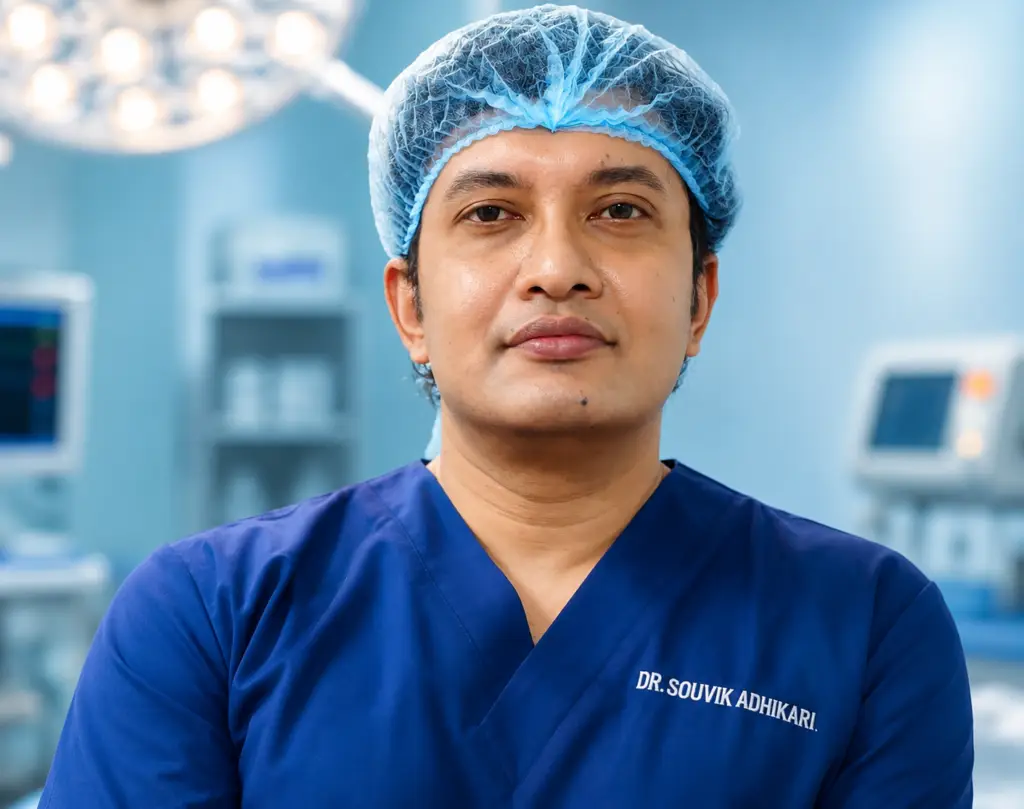
Prof. (Dr.) Souvik Adhikari
MS, MCh (Plastic Surgery)
17+ years experience
Cleft Lip Repair: Functional and Aesthetic Goals
Cleft lip repair is a reconstructive procedure designed to restore both the function and appearance of the upper lip. The surgery involves more than simply closing the gap in the lip. Careful reconstruction of the underlying muscle, soft tissues and anatomical landmarks is important for achieving a functional and natural-looking result.
Restoring Lip Continuity and Muscle Function
One of the important objectives of cleft lip repair is to restore continuity of the muscles of the upper lip. Proper alignment of the lip musculature helps re-establish more normal movement and function of the lip and contributes to an improved lip contour as the child grows.
Recreating the Natural Shape of the Upper Lip
The Cupid’s bow, vermilion border and central upper-lip contour are carefully reconstructed during cleft lip surgery. Accurate alignment of these landmarks helps create a more balanced appearance and reduces irregularities along the lip margin.
Improving Lip Symmetry
Cleft lip can produce differences in the height, width and position of the two sides of the upper lip. Surgical planning aims to improve symmetry while recognising that some degree of natural facial asymmetry is common.
Addressing the Lip–Nose Relationship
A cleft lip may also affect the shape and position of the nose, particularly the nostril on the affected side. Where appropriate, the initial reconstruction may include correction of associated nasal asymmetry. Further nasal refinement may sometimes be considered later as the child’s facial structures develop.
Supporting Feeding and Oral Function
Restoration of the upper lip can contribute to improved lip function and oral competence. Feeding difficulties, however, depend on whether the child has an isolated cleft lip or an associated cleft palate and should be assessed individually.
Creating a Natural-Looking Result as the Child Grows
Cleft lip repair is planned with the child’s future facial growth in mind. The objective is to achieve a balanced and natural appearance while preserving lip movement and function. Because the lip, nose and surrounding facial structures continue to develop throughout childhood, the appearance of the repair can change with growth and some children may require further reconstructive or refinement procedures.
Balancing Functional and Aesthetic Reconstruction
The functional and aesthetic goals of cleft lip surgery are closely connected. Accurate reconstruction of the lip muscles, anatomical landmarks and surrounding tissues can contribute to both improved function and a more harmonious facial appearance. The surgical approach is therefore individualised according to the type and extent of the cleft and the child’s overall facial anatomy.
Gallery
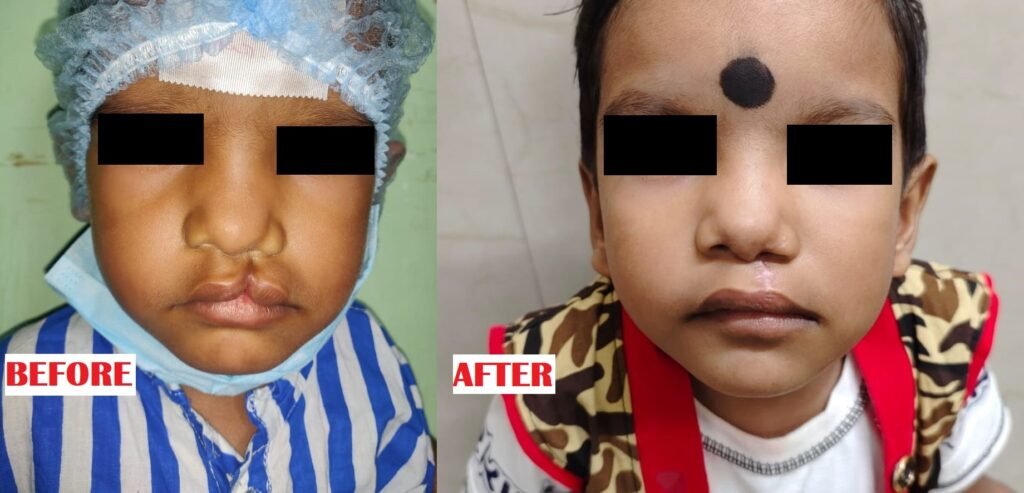
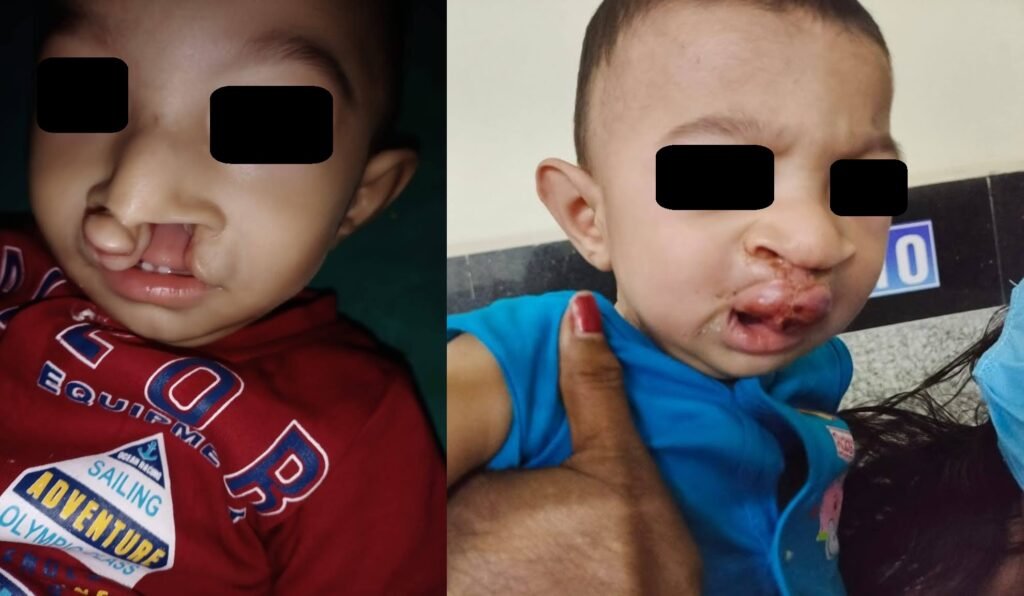
Consented before-and-after photographs for unilateral cleft lip and bilateral cleft lip correction are reviewed privately during consultation, in line with medical advertising guidelines.
Frequently Asked Questions About Cleft Lip Surgery in Kolkata
1. What is cleft lip surgery?
Cleft lip surgery, also called cleft lip repair, is a reconstructive procedure performed to close the opening in the upper lip and restore more normal continuity, shape and function of the lip. The surgical plan is individualised according to the type, side and extent of the cleft and whether the palate, nose or other facial structures are also involved.
2. What causes a cleft lip?
A cleft lip occurs when the tissues forming the upper lip do not join completely during early facial development before birth. The exact cause in an individual child is often not known and may involve a combination of genetic and environmental factors.
3. What is the appropriate age for cleft lip surgery?
Cleft lip repair is commonly performed during the first few months of life when the baby is medically ready for surgery. The exact timing depends on the child’s health, nutritional status, cleft anatomy and the treatment protocol of the cleft team. It should therefore be individualised rather than based on age alone.
4. Can cleft lip surgery be performed on a newborn?
Cleft lip surgery is not routinely performed immediately after birth. The baby is first assessed for overall health, feeding, weight gain and any associated medical conditions. Surgery is then planned when the child is considered medically ready and the timing is appropriate for the particular cleft.
5. What is the difference between unilateral and bilateral cleft lip?
A unilateral cleft lip affects one side of the upper lip, while a bilateral cleft lip affects both sides. Bilateral clefts can have more complex effects on the shape and position of the central portion of the upper lip and nose, so the surgical plan is different.
6. Does a cleft lip always mean that the baby has a cleft palate?
No. Cleft lip can occur on its own or together with cleft palate. When a baby has a cleft lip, the palate should also be carefully assessed because the presence and extent of a palatal cleft affect feeding, speech development and the overall treatment plan.
7. Can babies with cleft lip breastfeed?
Feeding depends on whether the baby has an isolated cleft lip or a cleft involving the palate. Some infants with cleft lip can breastfeed, while others may have difficulty creating an effective seal and may require modified feeding techniques or additional support. Babies with cleft palate are more likely to have difficulty generating the suction required for effective breastfeeding.
8. Will cleft lip surgery improve feeding?
Repairing the lip can improve the continuity and function of the upper lip, but feeding difficulties may also be related to a cleft palate or other factors. Feeding should therefore be assessed as part of the child’s overall cleft care rather than assuming that lip surgery alone will resolve every feeding problem.
9. Will cleft lip surgery leave a scar?
Yes. Cleft lip repair necessarily involves a surgical incision and therefore produces a scar. The incision is carefully designed to restore the natural contours of the upper lip and align important landmarks such as the Cupid’s bow and the vermilion border. The scar usually becomes less noticeable as it matures, although it does not disappear completely.
10. Can cleft lip surgery correct the shape of the nose as well?
Cleft lip can be associated with differences in the shape and position of the nostril and nasal structures, particularly in more extensive clefts. The surgical plan may include appropriate nasal correction when indicated, while some patients may require further nasal or facial procedures later as growth progresses.
11. Can cleft lip surgery be performed together with cleft palate surgery?
Cleft lip and cleft palate are related but distinct conditions, and they are generally treated according to an age- and anatomy-specific treatment plan. The timing of palate repair is different from that of lip repair, so the procedures are not necessarily performed at the same operation.
12. Will my child need more than one cleft lip surgery?
Some children achieve a very good result after their initial repair, while others may require additional procedures as they grow. Revision surgery may be considered for residual lip asymmetry, scar problems, nasal deformity, tissue deficiency or other functional or aesthetic concerns.
13. What happens if a cleft lip was not repaired during infancy?
Children or adults who did not undergo cleft lip repair during infancy can still be assessed for reconstructive treatment. The surgical approach depends on the existing anatomy, scar tissue, lip function, dental and skeletal development and whether the nose or palate is also affected.
14. Can cleft lip surgery improve speech?
Cleft lip surgery restores the continuity and structure of the lip, but speech development is particularly influenced by the palate and the function of the speech mechanism. Children with cleft lip and/or palate may require speech assessment and therapy as part of their continuing care.
15. What type of anaesthesia is used for cleft lip repair?
Cleft lip repair in infants is performed under general anaesthesia. Preoperative assessment is important to ensure that the child is medically suitable for anaesthesia and surgery.
16. What is recovery like after cleft lip surgery?
After surgery, the child may have swelling, bruising and tenderness around the lip. The surgical team provides instructions regarding feeding, wound care, medication and protection of the repaired lip. Follow-up is important to monitor healing and the developing lip contour.
17. What are the risks of cleft lip surgery?
As with any operation, cleft lip repair carries potential risks such as bleeding, infection, wound-healing problems, scarring and anaesthetic complications. There may also be residual asymmetry, contour irregularity or differences in lip or nasal growth that become apparent as the child develops. Further surgery may sometimes be required.
18. Will cleft lip surgery give my child a completely normal-looking lip?
The aim is to achieve the best possible function and a balanced, natural-looking appearance while preserving normal lip movement and important anatomical landmarks. Because cleft anatomy varies and facial structures continue to grow throughout childhood, some residual differences may remain and additional treatment may occasionally be appropriate.
19. Does cleft lip treatment require a multidisciplinary team?
Cleft care often involves coordinated assessment by several specialists depending on the child’s individual needs. Treatment may include plastic or reconstructive surgery, paediatric care, dentistry and orthodontics, speech and language assessment, hearing or ENT care, feeding support and other services when required.
20. How much does cleft lip surgery cost in Kolkata?
The cost of cleft lip surgery depends on the type and extent of the cleft, the child’s medical requirements, the complexity of reconstruction, anaesthesia, hospital or surgical facility charges and whether associated procedures are required. An individualised estimate can be provided after assessment.
21. Can children from outside Kolkata undergo cleft lip surgery in Kolkata?
Yes. Families travelling from other cities, states or countries can seek assessment and cleft lip surgery in Kolkata. Preoperative evaluation, surgery and postoperative follow-up can be planned according to the child’s needs and the family’s circumstances.
22. When should parents consult a cleft lip surgeon?
Parents should arrange an early assessment after a cleft lip is diagnosed, including when the diagnosis is made during pregnancy. Early consultation allows the child’s feeding, general health, cleft anatomy and associated conditions to be assessed and helps establish an appropriate treatment plan. Coordinated cleft care is particularly important because treatment may extend beyond the initial lip operation.
Honest assessment, written estimate, no pressure to book.