Facial reconstruction in Kolkata is a specialised area of plastic and reconstructive surgery focused on restoring the form, function and appearance of the face after trauma, accidents, burns, tumour or cancer surgery, congenital abnormalities and other conditions. Facial injuries can affect the skin, soft tissues, muscles, nerves and underlying bones. Reconstruction is therefore carefully planned to restore facial symmetry and function while achieving the most natural appearance possible.
Facial Reconstruction Surgery in Kolkata
Facial reconstruction surgery in Kolkata may involve a range of techniques depending on the nature and extent of the defect. Treatment can include scar revision, skin grafting, local or regional tissue flaps, facial soft-tissue reconstruction and selected facial bone reconstruction. The reconstructive plan is tailored to the patient’s anatomy, functional requirements and aesthetic goals. Complex defects may require staged reconstruction to achieve the best possible outcome.
Facial Reconstruction After Trauma and Accidents
Severe facial injuries following road traffic accidents, falls, burns or other trauma can result in tissue loss, facial scars, deformity or disruption of normal facial structures. Timely and appropriate reconstructive treatment can help restore important functions such as facial movement, eyelid closure, oral competence and nasal breathing while also improving facial appearance. The treatment approach depends on the injury and the structures involved.
Facial Reconstruction After Cancer Surgery
Facial reconstruction after cancer surgery may be required when removal of a tumour results in loss of skin, soft tissue or other facial structures. Reconstruction can be performed immediately in selected cases or at a later stage depending on the patient’s cancer treatment and overall circumstances. The aim is to restore facial contour and function while allowing appropriate oncological treatment to remain the priority.
Scar Revision and Facial Soft-Tissue Reconstruction
Facial scars can sometimes cause significant cosmetic or functional concerns. Facial scar revision in Kolkata may be considered when a scar is prominent, contracted, irregular or associated with distortion of nearby structures. Depending on the scar, treatment may involve surgical revision, tissue rearrangement, skin grafting or other reconstructive techniques. The goal is not to erase a scar completely, but to make it less conspicuous and improve the affected area’s appearance or function.
Personalised Facial Reconstruction
Every facial defect is different, which is why facial reconstruction surgery requires individualised planning. Skin colour and texture, facial contours, underlying structures, scar characteristics and the location of the defect all influence the reconstructive approach. In complex cases, more than one procedure may be required. Patients are counselled regarding realistic expectations, potential scars, recovery and the possibility of staged treatment.
Facial Reconstruction by Prof. (Dr.) Souvik Adhikari
Prof. (Dr.) Souvik Adhikari brings 17+ years of surgical experience in cosmetic, plastic and reconstructive surgery, with additional AOCMF Fellowship training at Johns Hopkins University, USA. His reconstructive practice involves individualised assessment of traumatic, post-surgical, congenital and acquired facial defects, with emphasis on restoration of facial form and function
Facial Reconstruction Recovery
Recovery after facial reconstruction in Kolkata varies considerably depending on the type and complexity of reconstruction performed. Swelling, bruising, temporary discomfort and changes in sensation may occur during healing. Patients receive personalised postoperative guidance regarding wound care, activity, scar management and follow-up. More complex reconstructions may require several stages to achieve the desired functional and aesthetic outcome.
If you are searching for facial reconstruction in Kolkata following an accident, burn, tumour surgery, congenital condition or other facial injury, a specialist consultation can help determine the most appropriate reconstructive approach. The objective is to restore facial function, improve symmetry and reconstruct natural-looking facial contours while addressing each patient’s individual needs.
Functional and Aesthetic Goals of Facial Reconstruction
Facial reconstruction is not limited to repairing a visible defect. The objective is to restore the function, structure and appearance of the face as comprehensively as possible, while taking into account the underlying injury, tissue loss, scarring, previous surgery and the individual patient’s anatomy. Depending on the condition, reconstruction may involve the skin, soft tissues, muscles, nerves, cartilage or facial bones.
Restoring Facial Function
Functional restoration is often the first priority in facial reconstruction. Depending on the area involved, treatment may aim to restore or improve:
Eyelid closure and protection of the eye
Nasal breathing and nasal airway function
Speech and movement of the lips
Eating, chewing and swallowing
Facial expression and movement
Jaw alignment and facial skeletal support
Sensation or movement following selected nerve injuries
Normal movement of tissues affected by scar contracture
The functional goals vary considerably from one patient to another. A facial injury involving the eyelid requires a different reconstructive strategy from a defect involving the nose, lips, cheek or jaw. Complex injuries may require staged reconstruction to restore structural support before addressing finer functional and aesthetic details.
Restoring Facial Form and Appearance
Aesthetic restoration is an important component of facial reconstruction because even when function has been restored, differences in contour, symmetry, scarring or tissue volume may remain noticeable.
Reconstructive planning may therefore consider:
Facial symmetry and proportion
Restoration of normal facial contours
Appropriate tissue thickness and volume
Alignment of the nose, lips, eyelids, cheeks and chin
Skin colour, texture and tissue characteristics
Reduction or camouflage of conspicuous scars
Restoration of three-dimensional facial structure
Natural transitions between reconstructed and unaffected areas
The aim is not simply to make a reconstructed area appear different from the original defect, but to create a result that integrates naturally with the surrounding face.
Balancing Function and Aesthetics
Function and appearance are closely interconnected in facial reconstruction. For example, reconstruction of the nose may need to provide both structural support and an adequate airway, while reconstruction of the eyelid must protect the eye while maintaining appropriate eyelid position and facial symmetry. Similarly, reconstruction of the lips involves both appearance and the ability to speak, eat and maintain oral competence.
For this reason, reconstructive surgery is planned according to the specific structures involved, the extent of tissue loss and the functional requirements of the patient, rather than using a single standard technique for every defect.
A Natural and Individualised Reconstructive Result
Every face has its own proportions, contours and characteristics. Facial reconstruction therefore requires attention to the patient’s pre-existing anatomy as well as the changes caused by trauma, burns, tumour removal, congenital abnormalities or previous surgery.
Where appropriate, reconstruction may be performed in stages. The initial procedure may focus on restoring essential structure and function, followed by later procedures to refine contour, symmetry, scars or other aesthetic aspects. In complex facial injuries, a stepwise approach may be necessary rather than attempting to achieve every objective in a single operation.
Ultimately, the goals of facial reconstruction are to restore useful function, rebuild facial structure, improve symmetry and contour, and achieve the most natural appearance reasonably possible for the individual’s circumstances.
Individualised Planning for Facial Reconstruction
Facial reconstruction requires a highly individualised approach because every facial defect has different anatomical, functional and aesthetic requirements. The size and depth of the defect, the tissues involved, previous surgery or injury, scar tissue, skin quality and the availability of nearby healthy tissue all influence the reconstructive plan.
The primary objective is to restore facial structure and function, while also achieving the best possible symmetry, contour and appearance. Depending on the defect, reconstruction may be performed in a single operation or may require staged treatment.
Facial Reconstruction Techniques
The reconstructive technique is selected according to the specific defect and the tissues that need to be replaced or restored. Depending on the situation, treatment may include:
Direct wound closure
Local tissue flaps
Regional or distant flaps
Skin grafting
Scar release and scar revision
Cartilage grafting
Bone grafting or bone reconstruction
Soft-tissue reconstruction
Microsurgical or free-flap reconstruction
Selected facial implants or structural reconstruction
A local flap may be particularly useful when tissue adjacent to the defect can be repositioned while maintaining an appropriate match of skin colour, thickness and contour. More extensive defects may require tissue from another part of the body or microsurgical reconstruction.
Facial Reconstruction After Trauma
Facial trauma may result in loss of skin and soft tissue, scarring, facial fractures, contour deformity or damage to structures responsible for important functions.
Depending on the injury, reconstruction may address the nose, eyelids, lips, cheeks, forehead, jaw, facial soft tissues or other structures. Treatment may be performed during the initial management of the injury or later to address residual deformity, scarring or functional problems.
Complex facial trauma may require more than one operation, particularly when there is extensive tissue loss or significant distortion of the normal anatomy.
Reconstruction After Cancer or Tumour Surgery
Removal of a facial or head-and-neck tumour may leave a defect involving skin, soft tissue, cartilage or bone. Reconstruction is planned around the size and location of the defect while keeping appropriate cancer treatment as the primary consideration.
Depending on the defect, reconstruction may involve a local flap, skin graft, regional flap, bone reconstruction or microsurgical tissue transfer. In selected situations, reconstruction may be performed at the same time as tumour removal; in other cases, delayed reconstruction may be more appropriate.
Facial Burn Reconstruction
Facial burns can produce scars, contractures, tissue loss and distortion of normal facial structures. These changes may affect appearance as well as functions such as eyelid closure, mouth opening or facial movement.
Reconstructive treatment may involve scar release, local tissue rearrangement, skin grafting or other flap techniques depending on the location and severity of the burn-related deformity.
Facial Scar Reconstruction and Revision
Some facial scars are primarily cosmetic, while others can restrict movement or distort nearby structures. A contracted scar around the mouth or eyelid, for example, may have functional consequences in addition to its appearance.
Scar revision may involve surgical excision, local tissue rearrangement, Z-plasty or other reconstructive techniques depending on the scar pattern and surrounding tissue. The aim is generally to improve the scar and the function or contour of the affected area rather than to promise complete removal of the scar.
Reconstruction of the Nose, Eyelids and Lips
Different facial structures have different functional requirements.
Nasal reconstruction may need to restore both external shape and structural support while maintaining or improving nasal function.
Eyelid reconstruction must take into account the protective role of the eyelids, including adequate closure and protection of the eye.
Lip reconstruction needs to consider both appearance and function, including lip continuity, oral competence and facial movement.
For these reasons, facial reconstruction is planned according to the anatomy and function of the individual structure rather than using one standard technique for every facial defect.
Facial Bone and Jaw Reconstruction
Some injuries, tumours and other conditions can result in loss or deformity of facial bone. Depending on the location and extent of the defect, reconstruction may involve bone grafting, fixation, implants or more complex tissue transfer.
In extensive defects, vascularised bone and soft tissue may be transferred from another part of the body using microsurgical techniques. Such reconstruction can help restore both facial contour and important functions.
Primary and Secondary Facial Reconstruction
Facial reconstruction may be performed as primary reconstruction, during the initial treatment of a defect, or as secondary/revision reconstruction after healing has occurred.
Secondary reconstruction may be considered when a patient has persistent scarring, contour deformity, asymmetry, tissue loss or functional problems following an earlier injury, cancer operation or reconstructive procedure.
Previous surgery and scar tissue can alter the normal anatomy, so revision reconstruction often requires particularly careful planning.
Functional and Aesthetic Goals of Facial Reconstruction
Facial reconstruction is not limited to improving appearance. Depending on the affected area, functional objectives may include:
Restoring eyelid closure and eye protection
Improving nasal breathing
Restoring oral competence
Re-establishing facial movement
Correcting contractures that restrict movement
Restoring structural support
Improving facial symmetry and contour
The reconstructive plan therefore considers both what the face needs to do and how it should look. Complex facial reconstruction may involve collaboration with other specialists when additional functional, oncological, dental or rehabilitation needs are present.
Imaging and Reconstructive Planning
The need for imaging depends on the nature of the facial defect. Photographs, previous operative records and pathology reports may be reviewed, while CT or other imaging may be required when the underlying facial bones or deeper structures need detailed assessment.
Three-dimensional CT-based planning can be useful in selected complex facial reconstructions, particularly when significant skeletal defects need to be accurately assessed or reconstructed.
Anaesthesia and Duration
The type of anaesthesia and duration of surgery depend entirely on the reconstructive procedure being performed. A small scar revision or skin graft is very different from a complex flap, bone reconstruction or microsurgical procedure.
Rather than applying a fixed operating time or recovery schedule, the expected anaesthesia, hospital stay, surgical duration and postoperative course should be discussed according to the individual reconstructive plan.
Recovery After Facial Reconstruction
Recovery varies substantially depending on the type and extent of reconstruction.
Patients may experience swelling, bruising, discomfort, temporary changes in sensation and postoperative wound or scar changes. Recovery following a simple reconstruction may be relatively short, whereas complex flap or bone reconstruction can require a longer period of healing and rehabilitation.
Some patients may require staged procedures or additional scar refinement as healing progresses. Detailed postoperative instructions regarding wound care, activity, nutrition, scar management and follow-up are provided according to the procedure performed.
Risks and Possible Complications
The risks of facial reconstruction depend on the tissues involved and the reconstructive technique used. Potential complications may include bleeding, infection, wound-healing problems, unfavourable scarring, altered sensation, asymmetry, contour irregularity, graft or flap problems and the possibility of further surgery.
More complex reconstructions have additional procedure-specific risks. These are discussed during consultation and informed consent according to the proposed reconstructive procedure.
Expected Results
The aim of facial reconstruction is to restore the affected facial structures as closely as reasonably possible while improving function, symmetry and appearance.
The final result depends on the original defect, the available tissues, the reconstructive technique, scar formation and individual healing. In complex cases, the best result may require staged reconstruction rather than a single operation.
Consultation for Facial Reconstruction in Kolkata
A consultation begins with a detailed assessment of the facial defect, its cause and any associated functional problems. Previous operative reports, pathology reports, imaging and photographs can be useful when available.
The reconstructive options, expected benefits, limitations, potential scars, recovery and possibility of staged treatment are discussed before a treatment plan is formulated.
For patients seeking facial reconstruction in Kolkata after trauma, burns, cancer or tumour surgery, congenital deformity, previous surgery or significant facial scarring, the treatment plan should be tailored to the specific anatomical and functional requirements of the defect.
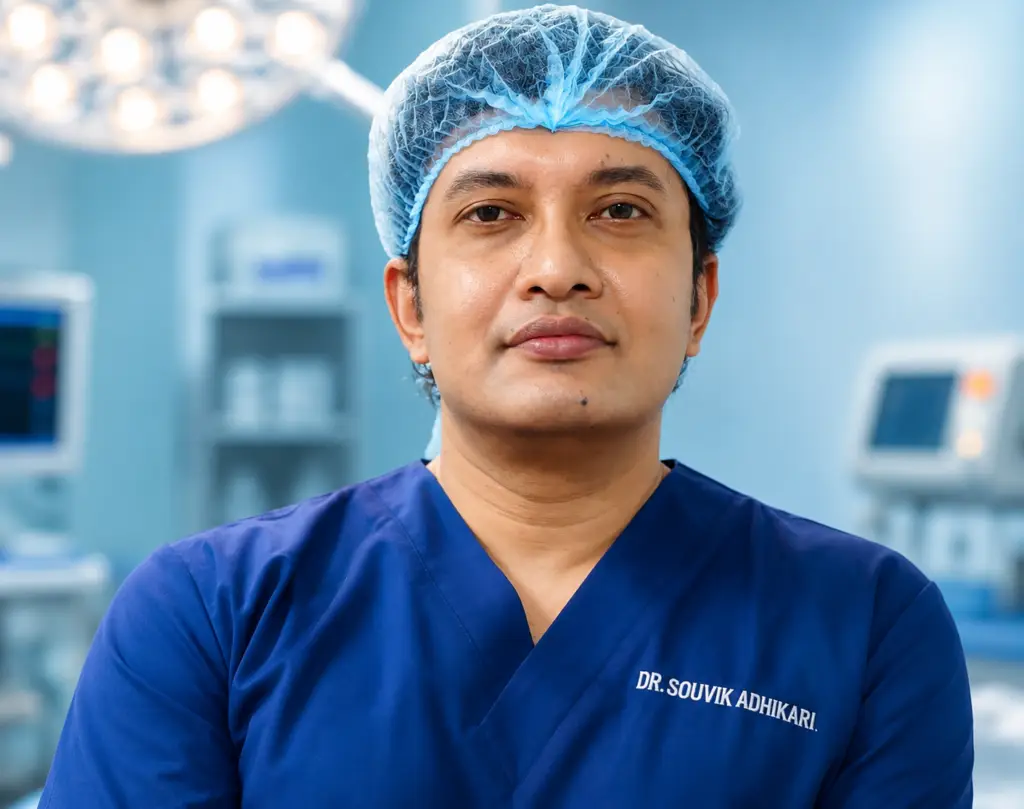
Prof. (Dr.) Souvik Adhikari
MS, MCh (Plastic Surgery)
17+ years experience
Gallery
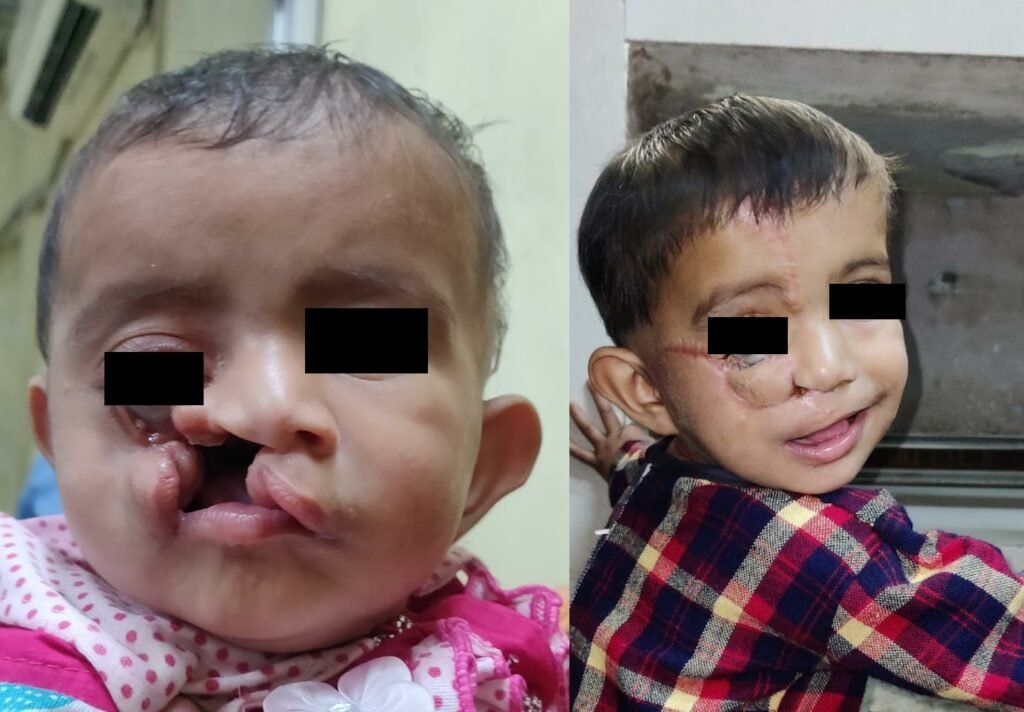
Consented before-and-after photographs for facial reconstruction are reviewed privately during consultation, in line with medical advertising guidelines.

Frequently Asked Questions About Facial Reconstruction in Kolkata
1. What is facial reconstruction surgery?
Facial reconstruction surgery is performed to restore the structure, function and appearance of facial tissues that have been affected by trauma, burns, cancer surgery, congenital differences, infection or other conditions. Depending on the defect, reconstruction may involve skin, soft tissue, cartilage, bone or a combination of these structures.
2. Who may need facial reconstruction surgery?
Facial reconstruction may be considered for patients with facial defects caused by accidents or other trauma, burns, skin or head-and-neck cancer surgery, congenital deformities, previous operations, severe scars or loss of facial tissue. The appropriate reconstructive technique depends on the location, size, depth and cause of the defect.
3. Can facial reconstruction restore both appearance and function?
Yes. Facial reconstruction often has both functional and aesthetic objectives. Depending on the affected area, reconstruction may aim to restore functions such as eyelid protection, nasal breathing, oral competence, facial movement or other facial functions while also improving contour and appearance.
4. Can facial reconstruction be performed after an accident or facial trauma?
Yes. Facial trauma can cause injuries involving the skin, soft tissues, nose, eyelids, lips, cheek, jaw or other facial structures. Reconstruction may be performed during the initial treatment or later when a patient has a persistent deformity, scar or functional problem following the original injury. Complex trauma may require a staged approach.
5. Can facial reconstruction correct deformities after previous facial surgery?
Yes. Previous surgery can sometimes leave contour irregularities, scarring, tissue loss or functional problems. Revision facial reconstruction is planned according to the existing anatomy, scar tissue and the nature of the residual defect. Some patients may require more than one procedure to achieve the desired reconstruction.
6. Can facial reconstruction be performed after skin cancer removal?
Yes. Removal of skin cancer from the face can leave defects involving the skin and, in larger lesions, deeper tissues. Facial reconstruction can restore the resulting defect while taking into account facial contours, nearby anatomical structures and functional requirements. In some cases, cancer removal and reconstruction can be coordinated as part of the same treatment plan.
7. Can facial reconstruction be performed after head and neck cancer surgery?
Yes. Cancer surgery involving the face, mouth, jaw or other head-and-neck structures can create complex defects requiring reconstruction. Depending on the defect, reconstruction may involve local tissue, skin grafts, tissue flaps, bone reconstruction or microsurgical tissue transfer. Functional restoration may be particularly important when speech, swallowing or other functions are affected.
8. Can facial reconstruction treat facial scars?
Facial scar revision can improve the appearance and, in some cases, the function of problematic scars. Treatment depends on whether the scar is widened, depressed, raised, contracted, irregular or associated with restricted movement. Surgical scar revision may sometimes be combined with other reconstructive techniques.
9. Can facial reconstruction correct burn-related deformities?
Yes. Burns can produce contractures, abnormal scars and tissue loss that affect both appearance and movement. Facial burn reconstruction may involve scar release, local tissue rearrangement, skin grafting or other reconstructive procedures depending on the location and severity of the deformity.
10. Can facial reconstruction correct congenital facial deformities?
Yes. Some facial differences are present from birth and may affect the nose, ears, lips, eyelids, jaw or other structures. Reconstructive surgery can be planned according to the specific congenital deformity and may focus on improving both function and facial symmetry.
11. Can cleft lip deformities be treated as part of facial reconstruction?
Yes. Cleft lip repair is a form of reconstructive surgery. Depending on the patient’s age and previous treatment, reconstruction may address the lip, nose, scar, facial symmetry and other associated structures. Revision surgery may sometimes be required as facial growth progresses.
12. What areas of the face can be reconstructed?
Facial reconstruction can involve many anatomical areas, including the:
Nose
Eyelids
Lips
Cheeks
Forehead
Ear
Chin
Jaw
Facial skin and soft tissues
Facial scars
Areas around the eye socket and mouth
The reconstructive method depends on the specific tissue and function that need to be restored.
13. What techniques are used in facial reconstruction?
Depending on the defect, facial reconstruction may involve direct closure, local flaps, regional flaps, skin grafting, cartilage grafts, bone grafting, tissue expansion or free-flap reconstruction. The choice depends on the size, depth, location and characteristics of the defect as well as the tissues available for reconstruction.
14. What is a local flap in facial reconstruction?
A local flap uses tissue from immediately adjacent to a facial defect. Because the transferred tissue is similar in colour, thickness and texture to the surrounding skin, local flaps can be useful for reconstructing selected facial defects while maintaining facial contour and appearance.
15. When is a skin graft used for facial reconstruction?
A skin graft may be considered when a defect requires skin coverage and a suitable wound bed is available. Skin grafting may be useful for selected superficial or moderately deep defects, although it is not appropriate for every facial wound. The location and depth of the defect influence whether a graft or flap would provide a better reconstruction.
16. When is a flap required instead of a skin graft?
A flap may be necessary when the defect requires additional tissue volume, improved blood supply, structural support or coverage of exposed deeper structures. Facial flaps can also provide tissue that more closely matches the surrounding area in selected situations.
17. What is microsurgical or free-flap reconstruction?
Free-flap reconstruction involves transferring tissue from another part of the body along with its blood vessels and reconnecting those vessels to recipient vessels at the reconstruction site using microsurgical techniques. Free flaps can provide skin, soft tissue, muscle or bone when a larger or more complex defect requires substantial tissue replacement.
18. Can facial bone defects be reconstructed?
Yes. Selected defects involving the cheekbone, jaw or other facial bones may require bone grafting, fixation, implants or other reconstructive techniques. The appropriate method depends on the location and extent of the skeletal defect.
19. Can jaw reconstruction be performed after tumour removal?
Yes. Removal of a tumour involving the mandible can result in partial loss of the jawbone. In selected cases, the missing segment can be reconstructed using bone and soft tissue transferred from another part of the body, sometimes using microsurgical free-tissue transfer. Dental rehabilitation may form part of the longer-term treatment plan.
20. Can facial reconstruction restore a damaged nose?
Yes. Nasal reconstruction can be used for defects caused by trauma, skin cancer removal, previous surgery or congenital deformity. Depending on the defect, reconstruction may require skin, cartilage and structural support to restore both the external appearance and nasal function.
21. Can facial reconstruction correct eyelid defects?
Yes. Eyelid reconstruction may be required after trauma, tumour removal, burns or other causes of tissue loss. Because the eyelids protect the eye and contribute to normal blinking and lubrication, reconstruction needs to consider both functional protection and appearance.
22. Can facial reconstruction restore facial movement after nerve injury?
Some facial injuries and operations can damage the facial nerve and result in weakness or paralysis. Management depends on the cause, timing and extent of nerve injury and may involve nerve repair, nerve grafting, muscle or tendon procedures, or other reconstructive approaches. Rehabilitation may also be an important part of recovery.
23. Will facial reconstruction leave a scar?
Any operation involving an incision can result in a scar. Reconstructive surgery aims to place incisions strategically and design the reconstruction to achieve an appropriate balance between tissue replacement, function and scar appearance. The final scar depends on the procedure, location, tissue characteristics and individual healing response.
24. Can facial reconstruction be performed in a single operation?
Some defects can be reconstructed in one operation, while complex injuries or extensive tissue loss may require staged reconstruction. The need for multiple procedures depends on the severity of the defect, the condition of the surrounding tissues and the reconstructive objectives. Severe facial trauma may sometimes require a stepwise approach to restoring structure, function and appearance.
25. How is facial reconstruction planned?
Planning begins with a detailed assessment of the defect and the surrounding facial anatomy. Depending on the case, photographs, previous operative records, pathology reports and imaging such as CT scans may be reviewed. Complex facial trauma may require detailed imaging to evaluate bones, soft tissues and other structures before reconstruction.
26. Can facial reconstruction be combined with scar revision or cosmetic procedures?
In selected patients, reconstructive surgery may be combined with scar revision or other procedures when this is appropriate. However, the priority in reconstructive surgery is to restore the required structure and function, with aesthetic refinement incorporated into the treatment plan where possible.
27. How long does recovery take after facial reconstruction?
Recovery varies considerably according to the type and extent of reconstruction. A relatively small scar revision or skin graft has a very different recovery pattern from complex flap or bone reconstruction. Swelling and scar maturation may continue for several months, and some patients require additional rehabilitation or staged procedures.
28. What are the risks of facial reconstruction surgery?
Potential risks depend on the specific procedure and may include bleeding, infection, wound-healing problems, scarring, asymmetry, altered sensation, tissue loss or flap/graft failure and the possibility of additional surgery. More complex procedures have additional procedure-specific risks that should be discussed during consultation.
29. Is facial reconstruction only for cosmetic reasons?
No. Facial reconstruction is frequently performed to restore function as well as appearance. Depending on the defect, reconstructive surgery may help restore movement, protect the eye, improve nasal function, restore oral competence or reconstruct tissue lost through trauma, cancer surgery or congenital conditions.
30. How do I know whether I need facial reconstruction surgery in Kolkata?
A consultation is the best way to determine whether reconstructive surgery is appropriate. The assessment should consider the cause of the defect, the tissues involved, functional problems, previous treatment and the patient’s reconstructive goals. Depending on the condition, treatment may involve a single procedure, staged reconstruction or collaboration with other specialists.
31. Can facial reconstruction be performed after an old injury?
Yes. Patients may seek reconstruction months or years after an injury because of persistent scarring, contour deformity, tissue loss, facial asymmetry or functional problems. Older injuries can sometimes be more complex because scar tissue and altered anatomy may affect the reconstructive options, but delayed or revision reconstruction may still be possible.
32. What should I bring to a facial reconstruction consultation?
If available, patients should bring previous operative reports, pathology reports, CT or other imaging, photographs and details of earlier treatments. These records can help the surgeon understand the original injury or disease, previous reconstruction and the current anatomical problem. Complex reconstructive centres commonly review previous imaging and operative documentation when planning revision or secondary reconstruction.
Honest assessment, written estimate, no pressure to book.