Congenital Deformity Correction in Kolkata
Congenital deformity correction in Kolkata is a specialised area of plastic and reconstructive surgery for structural abnormalities that are present from birth. These congenital differences may involve the face, ears, nose, lips, hands, limbs, breasts, genital region or other parts of the body and may affect function, development, symmetry or appearance. Treatment is individually planned according to the specific condition, the patient’s age, anatomy, previous treatment and functional requirements, with the aim of achieving meaningful reconstruction while taking long-term growth and development into consideration.
Congenital Deformity Reconstruction in Kolkata
Congenital deformity reconstruction surgery in Kolkata aims to improve both appearance and function while preserving the patient’s individual characteristics. Depending on the condition, treatment may involve soft-tissue reconstruction, scar revision, tissue rearrangement, skin grafting, flap surgery or corrective procedures for specific anatomical abnormalities. Some congenital conditions can be corrected with a single procedure, while others may require staged reconstruction as the patient develops.
Facial Congenital Deformity Correction
Facial deformity correction in Kolkata can address selected congenital abnormalities involving the ears, nose, lips, eyelids and other facial structures. Conditions such as prominent or malformed ears, congenital facial asymmetry and certain tissue defects may affect both appearance and confidence. Reconstruction is carefully planned around the patient’s facial proportions and, where relevant, the functional requirements of the affected structure.
Cleft Lip and Cleft Palate Reconstruction
Cleft lip and cleft palate are congenital conditions that can affect feeding, speech, facial development and appearance. Reconstructive treatment is planned according to the type and extent of the cleft, the child’s age and overall health, and may involve staged procedures as the child grows. Cleft lip repair, also known as cheiloplasty, aims not simply to close the cleft but to restore continuity and function of the lip while creating a balanced, natural appearance. Cleft care may also involve coordinated treatment with paediatricians, dentists, orthodontists, speech therapists, ENT specialists and other members of a multidisciplinary team.
Congenital Ear and Facial Reconstruction
Congenital abnormalities of the ear and face can vary considerably in severity. Congenital ear reconstruction may be considered for selected patients with deformities affecting ear shape or development. Similarly, reconstructive surgery for congenital facial differences may aim to improve symmetry, contour and function. The appropriate treatment depends on the specific diagnosis and the tissues available for reconstruction.
Congenital Hand and Limb Deformity Correction
Some congenital conditions affect the hands, fingers, feet or limbs, potentially restricting movement or affecting everyday activities. Plastic and reconstructive surgery may help improve selected structural abnormalities and functional limitations. Treatment is individualised, and in many cases successful reconstruction may involve collaboration with other specialists and postoperative rehabilitation.
Congenital Breast and Chest Wall Deformities
Congenital breast and chest wall deformities are structural differences that develop before birth and may affect breast development, chest contour, muscle formation or overall symmetry. They can range from congenital breast asymmetry, breast hypoplasia or absence of breast tissue (amastia), tuberous breast deformity and ectopic breast tissue to chest wall conditions such as Poland syndrome. Poland syndrome may involve underdevelopment or absence of the pectoralis major muscle on one side of the chest and can be associated with differences in breast and nipple development.
Congenital Breast Asymmetry
Marked differences in breast size, shape or position may become particularly noticeable during puberty. Reconstruction is planned according to the underlying developmental difference and may involve augmentation, reduction, mastopexy, fat grafting or a combination of procedures to improve overall symmetry. In some patients, correction of the opposite breast may also be considered as part of achieving balanced chest contours.
Tuberous Breast Deformity
Tuberous, or tubular, breast deformity is a developmental condition in which the breast may have a constricted base, limited lower-pole development, breast asymmetry and changes in the size or shape of the areola. Correction requires more than simply increasing breast volume; the constricted breast tissue and overall breast shape need to be addressed according to the individual deformity. Depending on the anatomy, treatment may involve implant-based reconstruction, tissue expansion, glandular reshaping, mastopexy or fat grafting.
Poland Syndrome and Chest Wall Reconstruction
Poland syndrome is a congenital chest wall condition that commonly involves underdevelopment or absence of the pectoralis major muscle on one side and may also affect the breast, nipple, soft tissues and, in some patients, the underlying ribs. Reconstruction therefore requires assessment of the different layers of the chest rather than treating breast asymmetry alone. Depending on the individual anatomy, reconstructive options may include fat grafting, implants, tissue-based reconstruction or combinations of techniques.
Individualised Planning for Congenital Breast Reconstruction
The appropriate reconstructive technique depends on the patient’s age, stage of development, degree of asymmetry, chest wall anatomy, available soft tissue and functional and aesthetic goals. Some congenital breast and chest wall deformities are best treated in stages, particularly when reconstruction needs to accommodate growth and future changes in breast development. The aim is to create a balanced and proportionate chest while respecting the underlying anatomy rather than applying the same procedure to every patient.
Congenital Genital Abnormality Correction
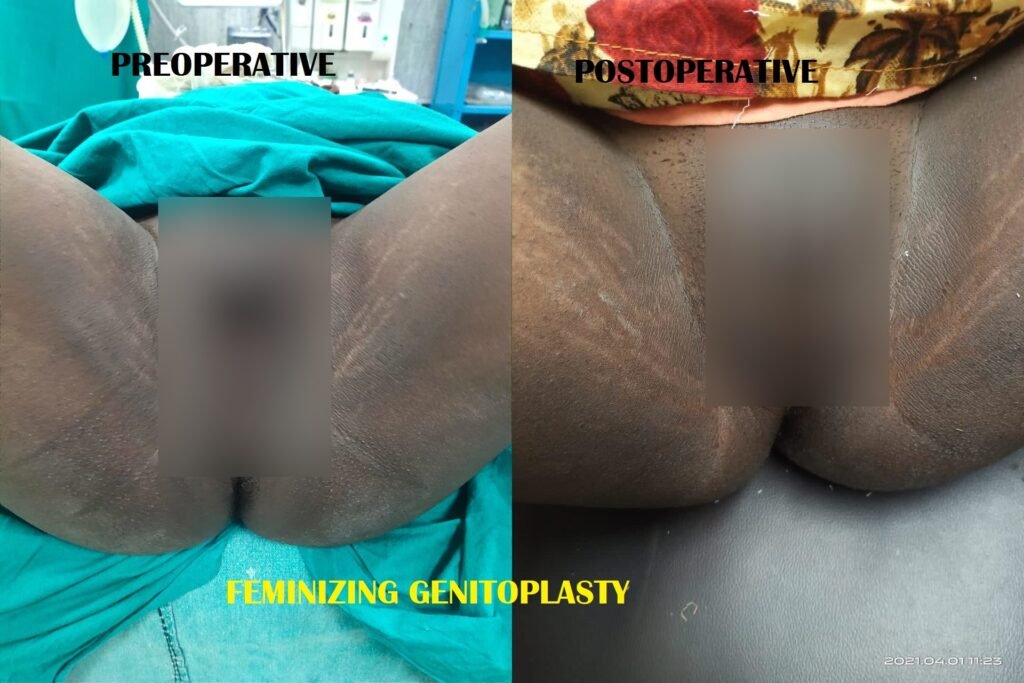
Congenital genital abnormalities are structural differences of the genital region that are present from birth and may affect appearance, urinary or sexual function, or normal development. Depending on the specific condition, reconstructive surgery may involve correction of penile or urethral abnormalities, reconstruction of deficient or abnormal genital tissues, or staged procedures designed to improve both function and anatomical form. Conditions such as hypospadias and selected congenital penile deformities may require carefully planned reconstruction, sometimes in collaboration with paediatric urologists or other specialists. Treatment is highly individualised, with the timing and surgical approach determined by the patient’s age, anatomy, functional requirements and previous treatment. In more complex congenital conditions, reconstruction may require more than one procedure and long-term follow-up as the patient grows.
Personalised Congenital Deformity Reconstruction
There is no single procedure suitable for all congenital deformities. The treatment plan depends on the type and severity of the deformity, age, tissue quality, functional impairment and individual goals. Detailed assessment is particularly important in children and young patients because growth and future development must be considered when deciding the timing and extent of surgery.
Congenital Deformity Correction by Prof. (Dr.) Souvik Adhikari
Prof. (Dr.) Souvik Adhikari brings 17+ years of surgical experience in cosmetic, plastic and reconstructive surgery, with additional AOCMF Fellowship training at Johns Hopkins University, USA. His approach to congenital deformity correction in Kolkata focuses on detailed anatomical assessment, individualised reconstructive planning, appropriate surgical technique and restoration of function and appearance.
Recovery After Congenital Deformity Surgery
Recovery following congenital deformity correction surgery in Kolkata varies considerably depending on the condition and procedure performed. Patients may require wound care, activity modification, physiotherapy or staged follow-up. When surgery is performed in children, postoperative care is planned with particular attention to healing, growth and long-term development.
If you are looking for congenital deformity correction in Kolkata, a specialist consultation can help determine the nature of the condition and the most appropriate reconstructive options. The goal is to improve function, restore structural balance and achieve the most natural-looking result possible while considering the patient’s long-term needs.
Individualised Planning for Congenital Deformity Correction
There is no single operation suitable for every congenital deformity. Treatment is planned according to the type and severity of the abnormality, the structures involved, the patient’s age, tissue characteristics, functional requirements, previous treatment and expected growth. In children, the timing of reconstruction is particularly important because treatment must take both present function and future development into consideration.
Who May Benefit from Congenital Deformity Correction?
Congenital deformity correction may be considered when a birth-related structural abnormality affects function, development, symmetry or appearance and reconstructive treatment is likely to provide meaningful benefit. Some conditions can be treated during infancy or early childhood, while others are more appropriately addressed later. In selected cases, observation, rehabilitation or other non-surgical measures may be appropriate instead of immediate surgery.
Congenital Deformity Correction in Children
Paediatric congenital reconstruction requires careful consideration of growth, development, anaesthesia, healing and the child’s overall health. Depending on the condition, treatment may involve a single operation or staged reconstruction over several years. Parents are counselled regarding the expected treatment pathway, recovery and the possibility of further procedures as the child develops.
Congenital Deformity Correction in Adults
Some congenital deformities remain untreated until adolescence or adulthood. Reconstructive surgery may still be possible depending on the underlying anatomy, tissue quality, previous operations and functional or aesthetic concerns. Secondary or revision reconstruction may be required when a patient has undergone previous unsuccessful treatment.
Functional Reconstruction and Aesthetic Improvement
Congenital deformity surgery is not simply about changing appearance. Reconstruction may aim to restore movement, function, structural continuity or symmetry while also improving the appearance of the affected area. The functional and aesthetic objectives are considered together when planning the procedure.
Staged Congenital Reconstruction
Some congenital conditions are best treated through more than one operation. Staged reconstruction may allow tissues to heal between procedures and permit treatment to be adapted as the child grows. The number and timing of procedures depend on the specific congenital condition and the individual’s development.
Congenital Deformity Reconstruction Using Skin Grafts and Flaps
Depending on the defect, reconstruction may involve local tissue rearrangement, skin grafting, local or regional flaps, microsurgical reconstruction or other specialised techniques. The choice depends on the location, size and depth of the defect and the tissues available for reconstruction.
Congenital Hand and Limb Reconstruction
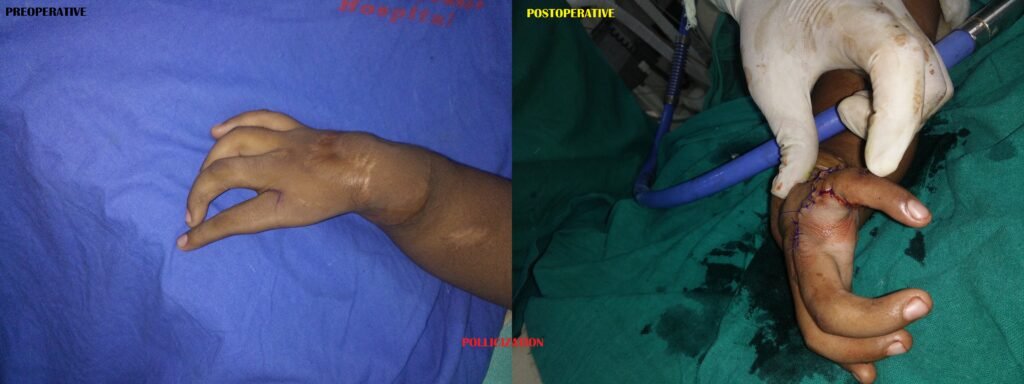
Congenital hand and limb differences may affect movement, grip, walking or everyday activities. Selected conditions such as syndactyly, polydactyly and other structural abnormalities may be considered for reconstructive surgery. Treatment may involve correction of soft tissues, tendons, bones or other structures, followed where appropriate by physiotherapy or occupational therapy.
Congenital Facial and Ear Reconstruction
Congenital differences involving the face or ears may affect symmetry, contour or function. Reconstruction is planned according to the specific anatomical abnormality and the patient’s stage of growth. Depending on the condition, treatment may involve soft-tissue reconstruction, cartilage reconstruction, scar revision or staged procedures.
Congenital Genital Abnormality Reconstruction
Selected congenital genital abnormalities may require reconstructive surgery to improve anatomical form, urinary function or other functional concerns. Conditions involving the penis, urethra or other genital structures require careful assessment and may require staged reconstruction or collaboration with other specialists, particularly in children.
Recovery and Rehabilitation
Recovery depends entirely on the congenital condition and the reconstructive procedure performed. Some patients may require dressings, splinting, activity modification, physiotherapy, occupational therapy or other rehabilitation. Children may require longer-term follow-up to monitor healing, growth, function and the development of the reconstructed area.
Risks and Possible Complications
As with any surgery, congenital deformity correction carries potential risks. These vary according to the specific procedure and may include bleeding, infection, wound-healing problems, scarring, altered sensation, asymmetry, recurrence or residual deformity, and the possibility of further surgery. Procedure-specific risks are discussed during consultation and informed consent.
Expected Results
The aim of congenital deformity reconstruction is to achieve meaningful improvement in function, structure and appearance while respecting the patient’s individual anatomy and future development. The result depends on the underlying condition, the reconstructive technique, tissue healing and, in children, subsequent growth. Some patients may benefit from additional refinement or staged reconstruction later.
Consultation for Congenital Deformity Correction in Kolkata
A detailed consultation is the first step in determining whether reconstructive surgery is appropriate. The assessment includes the congenital condition, previous treatment, age, anatomy, functional concerns and expected development. Where necessary, relevant investigations or opinions from other specialists may be recommended before a definitive treatment plan is made.
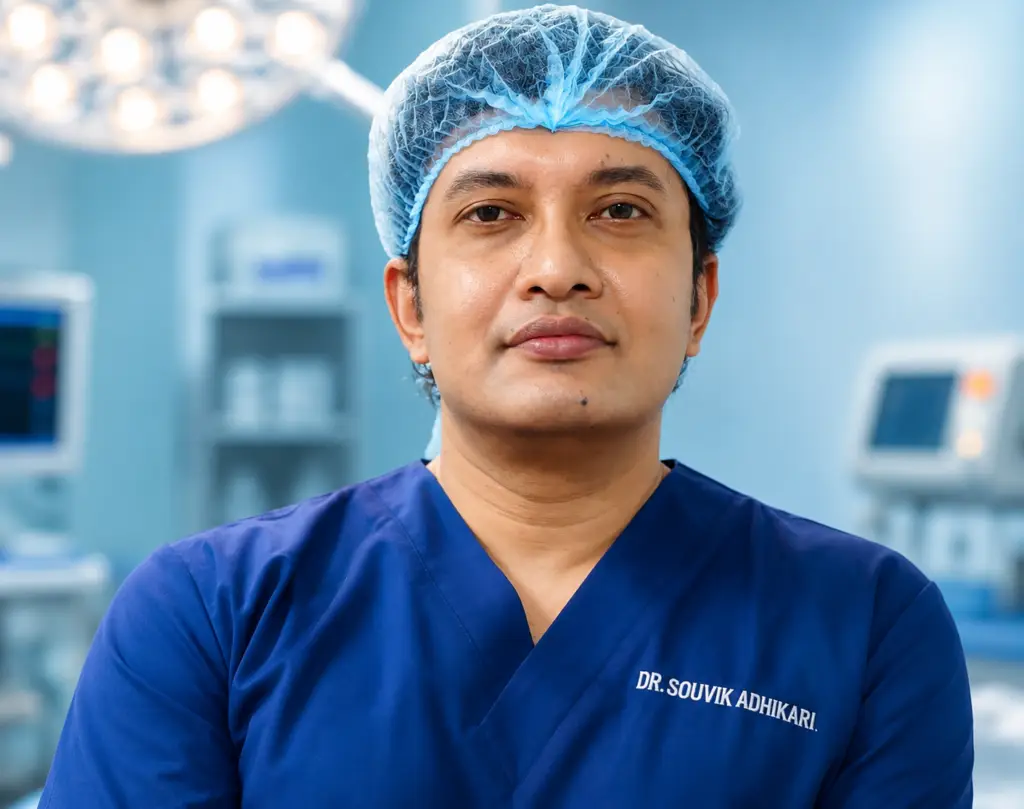
Prof. (Dr.) Souvik Adhikari
MS, MCh (Plastic Surgery)
17+ years experience
Gallery
Consented before-and-after photographs for congenital deformity correction are reviewed privately during consultation, in line with medical advertising guidelines.
Academic and Reconstructive Experience
Congenital deformity correction is part of the broader field of plastic and reconstructive surgery, where anatomical restoration and functional rehabilitation are central to treatment planning. Prof. (Dr.) Souvik Adhikari’s academic and surgical experience includes reconstructive surgery involving the hand, limb defects, genital reconstruction and other complex reconstructive problems. His published work in plastic and reconstructive surgery reflects an academic interest in anatomical restoration, tissue reconstruction and functional outcomes.
For further details, see the Research & Publications page.
Frequently Asked Questions About Congenital Deformity Correction in Kolkata
1. What is congenital deformity correction?
Congenital deformity correction refers to reconstructive treatment for physical differences or abnormalities that are present at birth. Depending on the condition, treatment may aim to improve function, symmetry, movement, appearance, or a combination of these goals. The appropriate approach depends on the type and severity of the congenital deformity.
2. What types of congenital deformities can be treated with reconstructive surgery?
Congenital deformities may affect the face, ears, hands, limbs, breast, genital region or other parts of the body. Examples include cleft lip, congenital ear deformities, syndactyly, polydactyly, congenital hand differences, congenital genital abnormalities and selected other structural abnormalities. Treatment is highly individualised according to the anatomy and functional requirements.
3. Does every congenital deformity require surgery?
No. Some congenital differences cause little functional difficulty and may not require surgical treatment. Depending on the condition, observation, therapy, orthoses, prosthetic or adaptive devices may be appropriate. Surgery is considered when it is likely to provide meaningful functional or reconstructive benefit, or when correction of the deformity is an important part of the overall treatment plan.
4. At what age should congenital deformity correction be performed?
There is no single age that applies to all congenital deformities. Some conditions benefit from correction during infancy or early childhood, while others can be treated later. Timing depends on the child’s growth, the anatomy involved, functional requirements, anaesthetic considerations and the specific procedure being considered.
5. Can congenital deformities be corrected in older children or adults?
Yes. Some congenital deformities remain untreated until later childhood or adulthood and can still be evaluated for reconstructive treatment. The possibilities depend on the underlying anatomy, previous treatment, tissue quality and functional or aesthetic goals. In some cases, correction may require staged or more complex reconstruction.
6. Can congenital deformity correction improve function as well as appearance?
Yes. Reconstructive surgery is often designed to address both functional and structural concerns. For example, correction of a congenital hand difference may improve grasp, movement or independence, while correction of a facial or ear deformity may address both structure and appearance. The goals are determined individually.
7. What congenital hand deformities can be corrected surgically?
Congenital hand differences include conditions such as webbed or fused fingers (syndactyly), extra fingers or thumbs (polydactyly), missing or underdeveloped digits, thumb hypoplasia, cleft hand and certain finger deformities. Depending on the condition, treatment may involve separation, reconstruction, tendon or bone procedures, or other specialised techniques.
8. Can syndactyly or webbed fingers be separated?
In selected cases, yes. Syndactyly is a congenital condition in which two or more fingers are joined by skin and sometimes deeper tissues. Surgical separation may be considered when appropriate to improve hand function, finger movement, growth or appearance. The timing and technique depend on which fingers are involved and the extent of the joining.
9. Can an extra finger or thumb be removed in a child?
Polydactyly can often be treated surgically, but the appropriate procedure depends on the anatomy of the extra digit. Some duplicated digits are predominantly soft tissue, while others contain bones, joints, tendons or other structures. Careful assessment is therefore important before deciding on the appropriate reconstructive procedure.
10. Can congenital ear deformities be corrected?
Selected congenital ear deformities can be corrected or reconstructed surgically. The appropriate procedure depends on whether the ear is misshapen, underdeveloped or missing important structures. Treatment may aim to improve ear shape, position and symmetry while taking the child’s age and growth into consideration.
11. Can congenital facial deformities be corrected with plastic surgery?
Selected congenital facial deformities can be treated using reconstructive plastic surgery. Depending on the condition, treatment may involve soft-tissue reconstruction, scar revision, structural correction or staged procedures. Facial growth and the relationship between different facial structures are important considerations when planning treatment.
12. Is cleft lip considered a congenital deformity?
Yes. Cleft lip is a congenital structural difference that develops before birth. Cleft lip repair aims to restore continuity and function of the upper lip while also addressing the shape and symmetry of the lip and, where appropriate, associated nasal deformity. Cleft lip and palate often require coordinated long-term care.
13. Can congenital deformity correction require more than one operation?
Yes. Some congenital conditions require staged reconstruction rather than a single operation. Additional procedures may become appropriate as a child grows or when further functional or structural refinement is needed. The expected treatment pathway should be discussed individually during consultation.
14. Will congenital deformity correction leave scars?
Surgery generally produces some degree of scarring. The location and appearance of scars depend on the deformity, surgical technique, tissue characteristics and healing. Reconstructive surgery aims to position and manage incisions as carefully as possible, but scars cannot always be completely eliminated.
15. Is congenital deformity correction safe in children?
Paediatric reconstructive surgery requires careful assessment of the child’s overall health, the specific congenital condition and the proposed procedure. Anaesthesia, surgical timing, postoperative monitoring and recovery are planned according to the child’s individual needs. A detailed preoperative evaluation is important before surgery.
16. How long does recovery take after congenital deformity correction?
Recovery varies considerably depending on the condition and procedure. Some operations involve relatively short recovery periods, while complex reconstruction may require longer healing, splinting, dressing changes, physiotherapy or hand therapy. The expected recovery pathway will be explained before surgery.
17. Will my child need physiotherapy or occupational therapy after surgery?
Some children benefit from therapy after reconstructive surgery, particularly following procedures involving the hands or limbs. Therapy may help maintain movement, strength and function and may be an important part of rehabilitation. The need for therapy depends on the specific procedure and the child’s individual recovery.
18. Can congenital deformity correction be performed after previous unsuccessful surgery?
In selected cases, revision or secondary reconstruction may be possible. Assessment of the existing scars, tissue quality, underlying anatomy and previous procedures is essential before planning further surgery. Complex cases may require staged reconstruction rather than a single corrective procedure.
19. How is the right congenital deformity correction procedure selected?
Treatment is selected after assessing the type and severity of the deformity, the child’s or adult patient’s functional needs, growth and development, tissue characteristics, previous treatment and overall health. Where appropriate, imaging, specialist evaluation or assessment for associated conditions may also be required.
20. How much does congenital deformity correction cost in Kolkata?
The cost varies substantially depending on the type of congenital deformity, complexity of reconstruction, age of the patient, anaesthesia, hospital or surgical-facility requirements and whether staged procedures are necessary. An individualised estimate can be provided after clinical assessment and discussion of the proposed treatment plan.
21. Can congenital genital abnormalities be corrected with reconstructive surgery?
Selected congenital genital abnormalities can be treated with reconstructive surgery when correction is appropriate for functional, anatomical or developmental reasons. Depending on the condition, treatment may involve reconstruction of penile or urethral structures or other genital tissues. The timing and technique depend on the patient’s age, anatomy, functional requirements and previous treatment, and some complex conditions may require staged reconstruction or collaboration with other specialists.
22. Can patients from outside Kolkata undergo congenital deformity correction?
Yes. Patients from other cities and states can be evaluated for congenital deformity correction in Kolkata. For patients travelling from outside Kolkata, the consultation can help determine the required investigations, likely treatment plan, expected duration of stay and postoperative follow-up requirements.
23. How can I consult Prof. (Dr.) Souvik Adhikari for congenital deformity correction in Kolkata?
A consultation allows the congenital deformity to be assessed in detail and the available reconstructive options to be discussed. The treatment plan depends on the specific condition, age, anatomy, functional requirements and previous treatment. Parents or patients can bring previous medical records, photographs, imaging and operative reports when available.
Honest assessment, written estimate, no pressure to book.