Chin surgery in Kolkata, also known as mentoplasty or genioplasty, is a specialised facial aesthetic procedure designed to improve the size, shape, projection and overall proportion of the chin. The chin plays an important role in facial balance and can significantly influence the appearance of the jawline and side profile. A chin that is recessed, under-projected, overly prominent or asymmetrical may affect facial harmony. Chin enhancement surgery can help create a more balanced relationship between the chin, lips, nose and jawline.
Chin Surgery in Kolkata
Depending on the patient’s anatomy and aesthetic goals, chin surgery may involve chin augmentation, genioplasty, chin reduction or correction of chin asymmetry. Chin augmentation can be performed using an implant or, in selected cases, the patient’s own bone can be repositioned through sliding genioplasty. The appropriate technique depends on the underlying skeletal structure, facial proportions, soft-tissue characteristics and desired degree of correction. In select cases a rhinoplasy may be added with genioplasty to ensure proportionate facial features.
Chin Augmentation for a Recessed Chin
A recessed or weak chin can make the nose appear more prominent and reduce definition of the lower face. Chin augmentation in Kolkata can improve chin projection and create a more balanced facial profile. Treatment is carefully planned to avoid excessive projection and to maintain natural facial proportions. In suitable patients, chin enhancement may also improve the definition of the jawline and the transition between the chin and neck.
Genioplasty and Chin Reshaping
Genioplasty in Kolkata is a specialised surgical technique that allows the position or shape of the chin bone to be modified. Sliding genioplasty may be considered when greater skeletal correction is required or when an implant may not provide the desired result. Depending on the patient’s anatomy, genioplasty can address forward or backward chin position, vertical chin proportions and selected forms of asymmetry.
Chin Surgery and Jawline Contouring
The chin and jawline are closely connected aesthetically. For selected patients, chin surgery and jawline contouring may be combined to improve lower-face definition. Patients with excess submental fat or loose neck skin may require additional procedures such as submental liposuction, neck lift or facelift. A comprehensive facial assessment helps determine which combination, if any, is appropriate.
Natural-Looking Facial Proportions
The objective of chin surgery in Kolkata is not simply to make the chin larger or more prominent. Facial proportions, profile, bite, jaw position and the relationship between the chin and nose are considered during planning. A well-proportioned chin should complement the rest of the face rather than appear obviously altered. Computer-assisted assessment or imaging may sometimes be used to help discuss potential changes, although actual surgical results can vary.
Chin Surgery by Prof. (Dr.) Souvik Adhikari
Prof. (Dr.) Souvik Adhikari brings 17+ years of surgical experience in cosmetic, plastic and reconstructive surgery, with additional AOCMF Fellowship training at Johns Hopkins University, USA. His approach to chin surgery in Kolkata focuses on detailed facial assessment, individualised treatment planning, anatomical precision and natural-looking facial enhancement.
Recovery After Chin Surgery
Recovery following chin surgery in Kolkata depends on the specific procedure performed. Swelling, bruising, tenderness or temporary changes in sensation may occur during the initial healing period. Patients receive personalised instructions regarding wound care, diet where relevant, physical activity and follow-up. The final contour develops progressively as swelling decreases and the tissues settle.
If you are considering chin surgery in Kolkata, a personalised consultation can help determine whether chin augmentation, genioplasty, chin reduction or another approach is appropriate for your facial anatomy and goals. The aim is to achieve better facial balance, improved profile definition and a natural-looking relationship between the chin, jawline and other facial features.
Individualised Planning for Chin Surgery
Chin surgery is planned according to facial proportions, chin projection, skeletal structure, soft-tissue characteristics, jaw relationship and the patient’s aesthetic goals. The objective is to create a balanced lower face rather than simply making the chin larger or smaller.
Depending on the underlying anatomy, treatment may involve a chin implant, sliding genioplasty, chin reduction or reshaping, or correction of selected forms of chin asymmetry.
Who May Benefit from Chin Surgery?
Chin surgery may be considered for adults who are concerned about:
A recessed or weak chin
Insufficient chin projection
An overly prominent or large chin
Excessive vertical chin height or width
Certain forms of chin asymmetry
Imbalance between the chin, nose, lips and jawline
Loss of lower-face definition associated with changes in facial structure or soft tissues
Good general health, realistic expectations and completion of facial skeletal growth are important considerations before elective chin surgery.
Chin Augmentation for a Recessed Chin
A recessed or under-projected chin may make the nose appear relatively more prominent and reduce definition of the lower face.
Chin augmentation can increase projection and improve facial balance. Depending on the degree and direction of the deficiency, augmentation may be achieved with a chin implant or through sliding genioplasty using the patient’s own chin bone.
Chin Implant Surgery
A chin implant can increase chin projection and definition without repositioning the chin bone. Implants are available in different shapes and sizes, and selection should be based on facial proportions and the desired degree of correction.
The aim is a natural transition between the chin, lower lip and jawline rather than excessive projection.
Sliding Genioplasty
Sliding genioplasty involves repositioning a segment of the patient’s own chin bone. Depending on the anatomy, the chin may be moved forward, backward or in another direction to improve projection, position or selected aspects of facial asymmetry.
Because the underlying bone is repositioned rather than an implant being inserted, sliding genioplasty can be useful when a more substantial skeletal correction is required.
Chin Reduction and Reshaping
Chin reduction surgery may be considered when the chin is excessively prominent, broad or vertically long relative to the rest of the face.
The surgical plan may involve carefully reducing or reshaping the chin bone to improve facial proportions. The extent of reduction depends on the underlying skeletal anatomy and the desired correction.
Chin Surgery for Facial Asymmetry
Some patients have a chin that is displaced or asymmetrical in relation to the midline of the face. Depending on the cause, asymmetry may sometimes be improved through implant positioning, bone repositioning or bone reshaping.
Complete facial symmetry is not always achievable because mild asymmetry is naturally present in most faces.
Chin Surgery and Jawline Contouring
The chin contributes significantly to the appearance of the lower face and jawline. In selected patients, chin surgery may be combined with procedures such as submental liposuction, neck lift or facelift when excess fat or skin also affects lower-face definition.
The appropriate combination depends on whether the main issue is skeletal projection, soft-tissue fullness, skin laxity or a combination of these factors.
Chin Surgery and Rhinoplasty
The relative proportions of the nose and chin can influence the appearance of the side profile. In selected patients, chin surgery may be combined with rhinoplasty to improve overall facial balance.
The decision should be based on the individual’s facial proportions rather than on an attempt to apply a standard facial profile.
Chin Surgery for Men and Women
Chin surgery can be performed in both men and women. The ideal degree of chin projection, width and contour varies between individuals and should be planned according to facial anatomy and the patient’s goals rather than a single standard shape.
Anaesthesia for Chin Surgery
The type of anaesthesia depends on the specific procedure, surgical approach and whether other facial procedures are being performed at the same time.
The anaesthetic plan is determined after appropriate preoperative assessment and discussion with the surgical and anaesthetic team.
Duration of Chin Surgery
The duration of surgery varies according to whether the procedure involves a chin implant, sliding genioplasty, chin reduction or additional facial procedures.
A specific operating time is therefore discussed during individual surgical planning rather than applying a fixed duration to every patient.
Recovery After Chin Surgery
Swelling, bruising, tenderness, tightness and temporary changes in sensation may occur during the early healing period. Recovery varies according to the procedure performed and whether surgery involves an implant, bone repositioning or bone reduction.
Patients may receive instructions regarding wound care, diet, oral hygiene where appropriate, physical activity and follow-up. Swelling progressively decreases as healing takes place, while the final contour becomes clearer over time.
Scars After Chin Surgery
The location of the incision depends on the surgical technique. Some approaches use an incision inside the mouth, while selected procedures may use an incision beneath the chin.
The appropriate approach is chosen according to the procedure and the patient’s anatomy. Any external scar is permanent but can often be positioned discreetly.
Risks and Possible Complications
As with any surgical procedure, chin surgery carries potential risks. These may include bleeding, infection, swelling, pain, altered sensation or numbness, asymmetry, poor wound healing, unfavourable scarring and an unsatisfactory aesthetic result.
Implant-based surgery has additional potential risks such as implant displacement or other implant-related problems. Procedures involving bone repositioning have their own surgical and healing considerations. Revision surgery may occasionally be required.
Individual risks are discussed during consultation and informed consent.
Expected Results After Chin Surgery
The aim of chin surgery is to create a more balanced relationship between the chin, lips, nose, jawline and other facial features.
The initial appearance is affected by postoperative swelling. As swelling decreases and tissues heal, the contour becomes progressively clearer. The time required for final refinement varies according to the procedure and individual healing.
Consultation for Chin Surgery in Kolkata
A personalised consultation is important to determine whether chin augmentation, chin implant surgery, sliding genioplasty, chin reduction or another approach is most appropriate.
Assessment may include facial proportions, chin projection, jaw relationship, asymmetry, soft-tissue characteristics and the patient’s expectations. When necessary, photographs or imaging may assist in surgical planning and discussion of potential changes.
The objective is to select the least invasive appropriate approach that can achieve a balanced and natural-looking result.
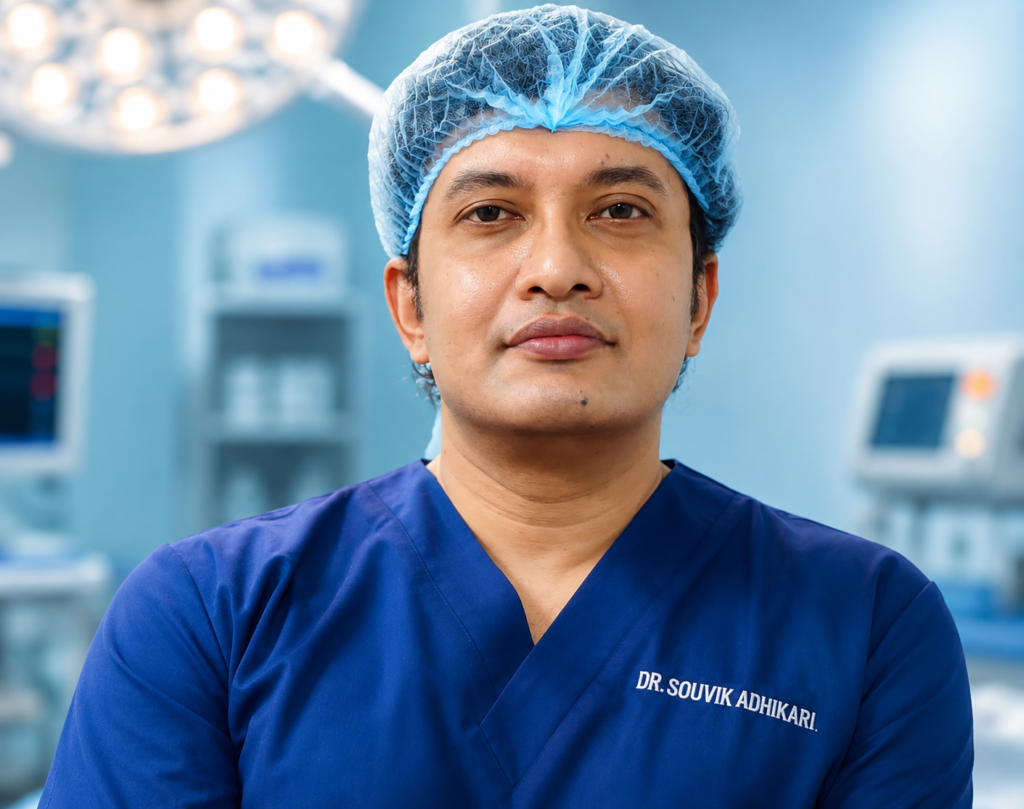
Prof. (Dr.) Souvik Adhikari
MS, MCh (Plastic Surgery)
17+ years experience
Frequently Asked Questions About Chin Surgery in Kolkata
1. What is chin surgery?
Chin surgery, also called mentoplasty or genioplasty, is a procedure used to change the size, projection, shape or position of the chin. Depending on the patient’s anatomy and goals, treatment may involve a chin implant, sliding genioplasty or reduction/reshaping of the chin bone.
2. Who is a good candidate for chin surgery?
Chin surgery may be considered for adults who are physically healthy, have realistic expectations and are concerned about a chin that is under-projected, overly prominent, asymmetrical or disproportionate to the rest of the face. The appropriate procedure is determined after assessing facial proportions and the underlying bone structure.
3. What is chin augmentation?
Chin augmentation is performed to increase the projection or definition of a relatively small or recessed chin. It may be achieved using a chin implant or by moving the patient’s own chin bone forward through a sliding genioplasty.
4. What is a sliding genioplasty?
Sliding genioplasty is a form of chin surgery in which the chin bone is surgically divided and repositioned, usually forward, backward or in another direction according to the patient’s facial anatomy. The repositioned bone is stabilised during healing.
5. What is chin reduction surgery?
Chin reduction surgery is performed when the chin is excessively prominent, large or disproportionate to the rest of the face. It may involve reshaping or reducing the chin bone to create a more balanced facial profile.
6. Is a chin implant better than genioplasty?
Neither option is universally better. A chin implant may be appropriate when additional projection is required, whereas sliding genioplasty allows the patient’s own chin bone to be repositioned and can address certain dimensional or positional abnormalities. The choice depends on facial anatomy, bite, chin projection and the desired change.
7. Can chin surgery correct a recessed or weak chin?
Yes. A recessed or weak chin can sometimes be improved with a chin implant or sliding genioplasty. The appropriate option depends on the degree and direction of chin deficiency and the relationship between the chin, jaw and other facial features.
8. Can chin surgery improve my facial profile?
Chin surgery can improve facial balance by changing chin projection and contour. A more proportionate chin may also alter the perceived relationship between the nose, lips, jawline and lower face.
9. Can chin surgery be combined with rhinoplasty?
Yes. Chin surgery is sometimes combined with rhinoplasty when the relative proportions of the nose and chin contribute to an imbalanced side profile. Treating both areas may provide a more harmonious overall facial profile when clinically appropriate.
10. Is chin surgery suitable for men as well as women?
Yes. Chin surgery can be performed in both men and women. The surgical plan is individualised according to facial structure, existing proportions and the patient’s desired appearance rather than using a single standard chin shape.
11. Will a chin implant make my jawline more defined?
A chin implant can increase chin projection and may improve the appearance of the lower facial profile. However, a chin implant does not directly correct every cause of an indistinct jawline. Excess submental fat, loose skin or the underlying jaw structure may require separate assessment.
12. Can chin surgery correct an asymmetrical chin?
Chin surgery may improve certain forms of chin asymmetry or deviation. Depending on the cause, correction may involve an implant, bone repositioning or bone reshaping. Perfect symmetry cannot always be achieved because some degree of natural facial asymmetry is common.
13. Where is the incision made during chin surgery?
The incision depends on the technique. Some chin procedures can be performed through an incision inside the mouth, while others may use an incision beneath the chin. The approach is selected according to the procedure and the patient’s anatomy.
14. What type of anaesthesia is used for chin surgery?
Chin surgery may be performed under local anaesthesia, intravenous sedation or general anaesthesia depending on the procedure, surgical approach and individual circumstances. The anaesthetic plan is discussed during preoperative assessment.
15. What is recovery like after chin surgery?
Swelling, bruising, tightness and temporary changes in sensation can occur during the early recovery period. Recovery varies according to whether the procedure involves an implant, bone reshaping or sliding genioplasty, as well as whether other facial procedures are performed at the same time. Swelling generally decreases progressively over the following weeks.
16. How long does it take to see the final result after chin surgery?
The initial appearance can be affected by postoperative swelling. As swelling gradually subsides and the tissues heal, the chin contour becomes clearer. The time required for final refinement varies between patients and depends on the procedure performed.
17. What are the risks of chin surgery?
Potential complications include bleeding, infection, asymmetry, poor wound healing, changes in sensation or numbness, persistent swelling or pain, scarring and an unsatisfactory aesthetic result. With an implant, additional concerns can include displacement or problems involving the implant. Revision surgery may occasionally be required.
18. Will a chin implant look natural?
A properly selected and positioned chin implant can provide a natural-looking improvement in chin projection. Implant size and shape should be selected according to facial proportions rather than simply choosing the largest possible augmentation.
19. Are the results of chin surgery permanent?
The structural changes produced by chin surgery are generally long-lasting, although normal ageing and changes in facial tissues can alter appearance over time. Solid chin implants are intended to provide permanent augmentation, while sliding genioplasty permanently repositions the chin bone. Nevertheless, normal ageing, weight changes and other changes in facial tissues can alter facial appearance over time.
20. How much does chin surgery cost in Kolkata?
The cost of chin surgery varies according to the procedure required, such as chin implant surgery, sliding genioplasty or chin reduction, as well as the complexity of the operation, anaesthesia, hospital or surgical facility and whether other procedures are performed at the same time. An individualised estimate can be provided after consultation.
21. Can patients from outside Kolkata undergo chin surgery?
Yes. Patients travelling from other cities, states or countries can be evaluated for chin surgery in Kolkata. Consultation, preoperative assessment, surgery and postoperative follow-up can be planned according to the patient’s circumstances and the extent of the procedure.
22. How do I know whether I need a chin implant, genioplasty or chin reduction?
The appropriate procedure cannot be selected from photographs alone. A consultation involves assessment of facial proportions, chin projection, jaw relationship, symmetry, skin and soft-tissue characteristics and the patient’s goals. Based on this assessment, the most appropriate surgical option can be discussed.
Honest assessment, written estimate, no pressure to book.