Hand surgery in Kolkata is a specialised field of reconstructive and plastic surgery focused on treating conditions and injuries affecting the hand, fingers, wrist and surrounding soft tissues. Because the hand performs highly precise and complex movements, even a relatively small injury can significantly affect everyday activities. Hand surgery may be required following trauma, burns, tendon or nerve injuries, congenital abnormalities, infections, scars or other conditions affecting hand function.
Hand Surgery in Kolkata
Hand surgery in Kolkata is individually planned according to the type and severity of the condition and the patient’s functional requirements. Depending on the problem, treatment may involve wound reconstruction, tendon repair, nerve repair, skin grafting, flap surgery, scar release or correction of selected congenital deformities. The aim is not only to restore the appearance of the hand but, importantly, to preserve or improve useful movement and function.
Hand Trauma and Reconstructive Surgery
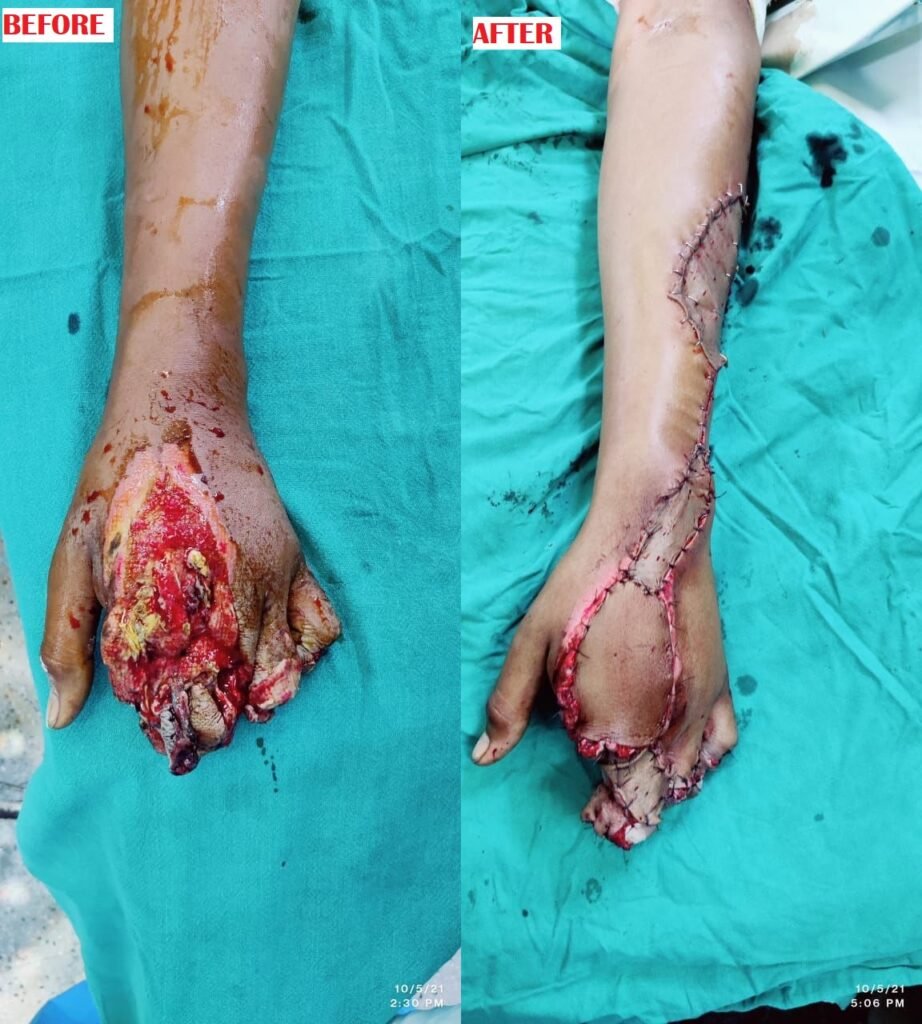
Serious injuries from road accidents, workplace accidents, machinery injuries, cuts and burns can cause damage to skin, tendons, nerves, blood vessels or deeper structures of the hand. Reconstructive hand surgery may be necessary when there is significant tissue loss or when important structures are exposed. Depending on the injury, treatment may include wound debridement, tissue coverage, skin grafting or flap reconstruction.
Tendon and Nerve Injury Reconstruction
Injuries to the flexor or extensor tendons can interfere with the ability to bend or straighten the fingers. Similarly, nerve injuries may cause altered sensation, weakness or loss of movement. Appropriate surgical assessment is important because the timing and type of repair can influence functional recovery. Selected injuries may require tendon repair, nerve repair or reconstructive procedures followed by structured rehabilitation.
Hand Scar and Contracture Surgery
Burns, trauma and previous surgery can result in tight scars and contractures that restrict finger or hand movement. Hand scar revision and contracture release may help restore mobility in appropriately selected patients. Depending on the defect, reconstruction may involve scar release followed by skin grafting, flap coverage or other tissue-rearrangement techniques. Physiotherapy and rehabilitation are often important components of recovery.
Congenital Hand Deformity Correction
Some patients are born with abnormalities involving the fingers, thumb or hand structure. Congenital hand surgery may be considered when a deformity affects function, development or appearance. The treatment approach depends on the specific condition and the patient’s age, with timing carefully considered in growing children to support long-term hand function.
Personalised Hand Surgery in Kolkata
Every hand condition is different, and treatment requires detailed assessment of movement, sensation, skin and soft-tissue coverage, tendon function and underlying structures. Depending on the complexity of the problem, treatment may involve a single procedure or staged reconstruction followed by rehabilitation. Realistic expectations and a clear understanding of the recovery process are important before surgery.
Hand Surgery by Prof. (Dr.) Souvik Adhikari
Prof. (Dr.) Souvik Adhikari brings 17+ years of surgical experience in cosmetic, plastic and reconstructive surgery, with additional AOCMF Fellowship training at Johns Hopkins University, USA. His approach to hand surgery in Kolkata focuses on detailed functional assessment, personalised reconstructive planning, meticulous surgical technique and preservation or restoration of useful hand function.
Recovery After Hand Surgery
Recovery following hand surgery in Kolkata varies according to the condition and procedure performed. Patients may require wound care, splinting, controlled mobilisation and physiotherapy to regain strength and movement. Rehabilitation is particularly important following tendon, nerve and contracture surgery. Regular follow-up allows healing and functional progress to be monitored and treatment to be adjusted when necessary.
If you are searching for hand surgery in Kolkata following an injury, burn, congenital deformity or other hand condition, a specialist consultation can help determine the appropriate treatment pathway. The goal is to restore or preserve hand function, provide durable tissue coverage where required and improve the appearance and usability of the affected hand.
Individualised Planning for Hand Surgery
Hand surgery requires careful assessment of movement, sensation, tendon function, skin and soft-tissue coverage, joint stability and the underlying structures involved. The appropriate treatment depends on the cause of the problem, its severity, how long it has been present and the functional requirements of the hand.
Some conditions can be treated without surgery, while others require repair or reconstruction. Complex injuries may require staged procedures followed by structured hand therapy and rehabilitation.
When May Hand Surgery Be Required?
Hand surgery may be considered for selected patients with:
Tendon injuries
Nerve injuries
Complex hand trauma
Loss of skin or soft tissue
Burn scars and contractures
Finger or hand stiffness
Selected congenital hand deformities
Post-traumatic deformity
Scarring affecting hand movement
Other conditions causing significant functional impairment
The decision to operate depends on the specific diagnosis and the potential for meaningful functional improvement.
Hand Trauma and Soft-Tissue Reconstruction
Severe injuries caused by road accidents, workplace accidents, machinery, cuts or burns may damage the skin, tendons, nerves, blood vessels or deeper structures of the hand.
When important structures are exposed or there is significant tissue loss, reconstruction may involve wound debridement, skin grafting, local or regional flap coverage or more complex reconstructive techniques.
The priority is to provide durable tissue coverage while preserving or restoring useful hand function.
Tendon Repair and Reconstruction
Flexor and extensor tendon injuries can interfere with the ability to bend or straighten the fingers.
Depending on the injury and the time since it occurred, treatment may involve primary tendon repair, tendon reconstruction or procedures to address adhesions or impaired tendon movement.
Careful postoperative rehabilitation is particularly important after tendon surgery because excessive movement can compromise healing while prolonged immobilisation may contribute to stiffness.
Nerve Injury and Reconstruction
Injury to a nerve of the hand or upper limb can result in numbness, altered sensation, weakness or loss of useful movement.
Selected nerve injuries may be treated with direct nerve repair, nerve grafting, nerve transfer or other reconstructive techniques depending on the location and extent of the injury.
Nerve recovery is generally gradual, and the expected outcome depends on factors such as the type of injury, timing of treatment and distance between the injury and the muscles or sensory areas supplied by the nerve.
Burn Contracture and Hand Scar Surgery
Burns and other injuries can produce tight scars that restrict movement of the fingers, hand or wrist.
When a contracture interferes with function, reconstruction may involve scar release, Z-plasty or other tissue rearrangement, skin grafting or flap reconstruction.
Physiotherapy, splinting and scar management may be important parts of treatment after contracture release.
Skin Grafting in Hand Reconstruction
Skin grafting may be required when there is loss of skin or soft-tissue coverage.
The choice of graft depends on the size, location and depth of the defect and the functional requirements of the hand. In areas where greater tissue thickness, durability or protection of deeper structures is required, flap reconstruction may be more appropriate.
Flap Reconstruction of the Hand
Flap reconstruction can provide durable, vascularised tissue for defects involving the hand and fingers.
The appropriate flap depends on the location and size of the defect, the structures exposed and the amount of tissue required. Reconstructive planning aims to provide reliable coverage while preserving as much useful hand function as possible.
Surgery for Finger Stiffness and Contracture
Finger stiffness can develop after fractures, tendon injuries, burns, prolonged immobilisation, scarring or joint problems.
Treatment depends on the underlying cause and may include hand therapy, splinting, scar management or surgery to release the structures restricting movement.
Surgery is not always required, and the potential benefit of an operation should be weighed against the possibility of further stiffness or scarring.
Congenital Hand Deformities
Some patients are born with differences in the development or structure of the fingers, thumb or hand.
Selected congenital hand deformities may be treated surgically when they affect function, hand development or, in appropriate circumstances, appearance. Treatment is individualised according to the specific anatomical condition and the patient’s age.
Can Old Hand Injuries Be Reconstructed?
Patients may seek treatment years after an original injury because of persistent stiffness, tendon dysfunction, nerve problems, contracture, scarring or deformity.
Selected longstanding problems can still be treated with reconstructive surgery. However, the potential for improvement depends on the condition of the joints, tendons, nerves, muscles and surrounding soft tissues.
Microsurgery in Hand Reconstruction
Some complex hand injuries require microsurgical techniques to repair or reconstruct very small blood vessels and nerves or to transfer tissue with its blood supply.
Microsurgical reconstruction may be considered when conventional wound closure, skin grafting or simpler flap techniques cannot provide adequate coverage or functional reconstruction.
Anaesthesia
The type of anaesthesia depends on the procedure, its extent, the structures being treated and the patient’s medical condition.
Depending on the operation, hand surgery may be performed using local, regional or general anaesthesia. A brachial plexus block may be considered for selected procedures.
Recovery and Hand Rehabilitation
Recovery varies considerably according to the operation performed.
Depending on the procedure, patients may require wound care, elevation, splinting, protected movement, physiotherapy or structured hand therapy. Tendon and nerve reconstruction often requires particularly careful rehabilitation.
The timing and progression of exercises are determined according to the tissues repaired and their stage of healing.
Risks and Possible Complications
Potential complications depend on the type and complexity of hand surgery and may include:
Bleeding or infection
Delayed wound healing
Scarring
Stiffness or restricted movement
Altered sensation or persistent numbness
Tendon adhesions or impaired tendon movement
Incomplete nerve recovery
Graft or flap complications
Recurrent contracture
Persistent pain or functional limitation
Need for further reconstructive surgery
Procedure-specific risks are discussed during consultation and informed consent.
Expected Results
The principal goal of reconstructive hand surgery is preservation or improvement of useful hand function.
Depending on the condition, successful treatment may improve movement, sensation, tissue coverage, stability or the ability to perform everyday activities. The degree of recovery varies between patients and depends on the original injury or condition, the tissues involved, timing of treatment and rehabilitation.
Consultation for Hand Surgery in Kolkata
A detailed examination is important before deciding whether surgery is appropriate. Assessment may include movement, sensation, tendon function, vascular status, skin and soft-tissue coverage and, when necessary, imaging or other investigations.
The recommended treatment is therefore based on the individual condition rather than a standard procedure.
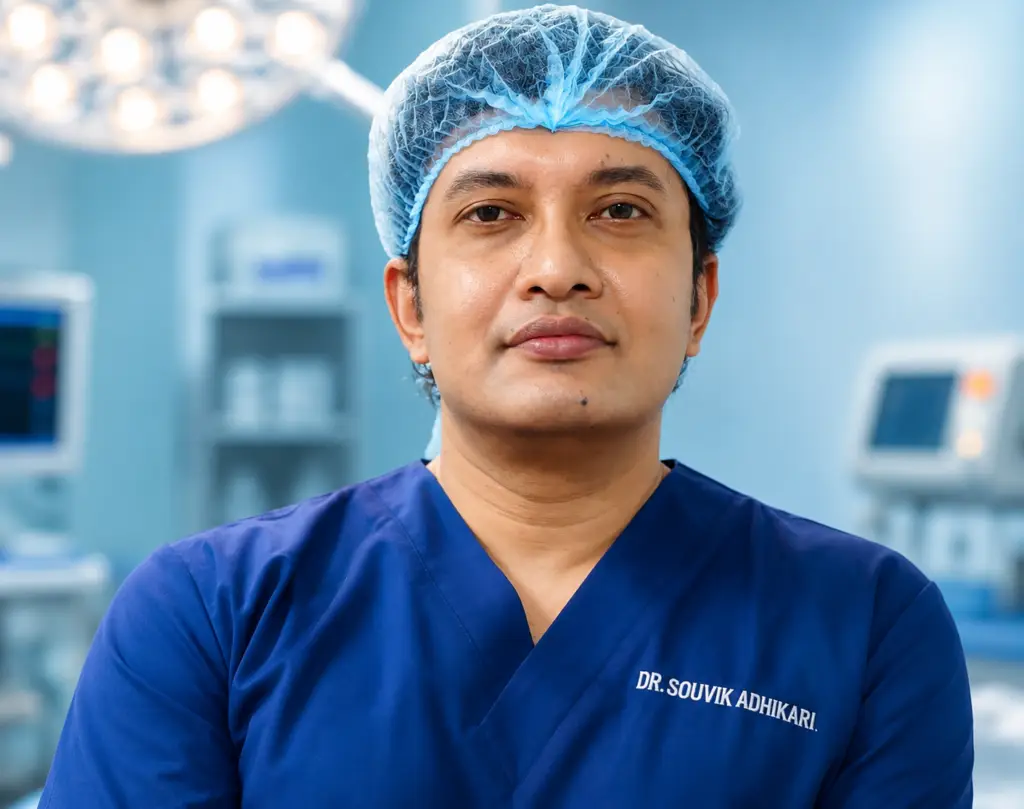
Prof. (Dr.) Souvik Adhikari
MS, MCh (Plastic Surgery)
17+ years experience
Academic Experience in Hand Trauma and Reconstruction
Prof. (Dr.) Souvik Adhikari has academic and clinical experience in reconstructive surgery involving complex hand injuries. His published work includes research on blast injuries of the hand, including their injury patterns, pathomechanics and treatment.
This academic experience complements the broader reconstructive management of hand trauma, including soft-tissue defects, tendon and nerve injuries, contractures and tissue reconstruction.
Gallery
Consented before-and-after photographs for hand surgery are reviewed privately during consultation, in line with medical advertising guidelines.

Frequently Asked Questions About Hand Surgery in Kolkata
1. What conditions can be treated with hand surgery?
Hand surgery may be used to treat a wide range of conditions affecting the fingers, hand, wrist and related nerves, tendons and soft tissues. These may include fractures and dislocations, tendon injuries, nerve injuries, contractures, hand deformities, burns, soft-tissue defects, infections, congenital abnormalities and selected conditions such as carpal tunnel syndrome or Dupuytren disease.
2. When should I see a hand surgeon?
A hand-surgery consultation may be appropriate when an injury or condition causes persistent pain, restricted movement, weakness, numbness, deformity or loss of hand function. Significant tendon or nerve injuries, complex fractures, amputations, vascular problems and extensive soft-tissue injuries may require prompt specialist assessment.
3. Can hand surgery treat tendon injuries?
Yes. Tendon injuries of the hand may require repair or reconstruction depending on the location, extent of injury and time since the injury occurred. Flexor and extensor tendon injuries are assessed carefully because tendon healing and postoperative rehabilitation are important for restoring movement.
4. Can nerve injuries of the hand be repaired?
Selected hand and upper-limb nerve injuries can be treated with nerve repair, nerve grafting, nerve transfer or other reconstructive techniques depending on the type and extent of nerve damage. The timing and type of reconstruction depend on the individual injury and clinical findings.
5. Can hand surgery restore movement after an old injury?
In selected patients, surgery may improve movement after an old injury, particularly when stiffness, tendon adhesions, contracture, scar tissue or structural deformity is limiting function. The appropriate treatment depends on the underlying cause and the condition of the joints, tendons, nerves and surrounding tissues.
6. Can burn contractures of the hand be treated surgically?
Yes. Burn scars can sometimes restrict movement of the fingers, hand or wrist. Reconstruction may involve scar release, Z-plasty or other tissue rearrangement, skin grafting or flap reconstruction, followed by appropriate hand therapy and rehabilitation.
7. What is reconstructive hand surgery?
Reconstructive hand surgery aims to restore or improve hand function and, where possible, appearance after trauma, burns, tumour removal, infection, congenital abnormalities or other tissue loss. Procedures may include tendon and nerve reconstruction, skin grafts, local or regional flaps, microsurgery and other reconstructive techniques.
8. Can hand surgery treat injuries after an accident?
Yes. Complex injuries following road-traffic accidents, industrial injuries, falls or other trauma may require reconstruction of bones, tendons, nerves, blood vessels and soft tissues. Treatment is planned according to the structures involved and the functional requirements of the hand.
9. Can a severed finger or hand be replanted?
In selected cases, replantation or revascularisation may be possible after an amputation. The suitability of replantation depends on factors such as the level and mechanism of injury, the condition of the amputated part and the patient’s overall circumstances. Such injuries require urgent specialist assessment.
10. Can skin grafting be used in hand reconstruction?
Yes. Skin grafting may be used when there is loss of skin or soft-tissue coverage. The choice of graft or flap depends on the size, depth and location of the defect and the functional requirements of the hand.
11. What is the difference between a skin graft and a flap?
A skin graft consists of skin transferred to a prepared recipient area without its own original blood supply, whereas a flap transfers tissue with its blood supply preserved or re-established. Flaps may be particularly useful when deeper structures such as tendons, nerves, joints or bone require durable soft-tissue coverage.
12. Can hand surgery treat finger stiffness or contracture?
Yes. Finger and hand stiffness may result from trauma, burns, fractures, tendon adhesions, joint problems or prolonged immobilisation. Depending on the cause, treatment may involve hand therapy, splinting, scar management or surgery to release the structures restricting movement.
13. Is physiotherapy or hand therapy necessary after hand surgery?
Rehabilitation is often an important part of hand surgery. The timing and type of therapy depend on the procedure performed. After tendon repair or reconstruction, for example, carefully planned rehabilitation helps balance protection of the repair with restoration of movement.
14. Can hand surgery improve both function and appearance?
In many reconstructive procedures, both functional and aesthetic considerations are taken into account. However, the priority is usually restoration of useful function and durable tissue coverage, with improvement in appearance pursued where it can be achieved safely and realistically.
15. Can hand surgery be performed for congenital hand deformities?
Selected congenital differences of the hand can be evaluated for reconstructive treatment. The appropriate approach depends on the specific anatomical difference, its effect on function and the patient’s age and individual circumstances.
16. What types of anaesthesia are used for hand surgery?
The type of anaesthesia depends on the procedure, its extent, the structures being treated and the patient’s medical circumstances. Some procedures can be performed with local or regional anaesthesia, while others may require sedation or general anaesthesia.
17. How long does recovery take after hand surgery?
Recovery varies considerably according to the type of operation. Bone, tendon, nerve and soft-tissue reconstruction each have different healing requirements. Some procedures require splinting or protected movement followed by progressive hand therapy. Your surgeon and hand therapist will provide a rehabilitation plan appropriate for the specific procedure.
18. What are the risks of hand surgery?
Potential risks vary according to the procedure and may include bleeding, infection, wound-healing problems, scarring, stiffness, altered sensation, nerve or tendon problems, incomplete recovery of function and the possibility of requiring further treatment. Complex reconstructive procedures may have additional procedure-specific risks.
19. Can hand surgery be performed years after an injury?
Yes, selected patients with longstanding consequences of hand injuries may still benefit from reconstructive surgery. Treatment may address post-traumatic contracture, tendon dysfunction, nerve problems, scarring, deformity or soft-tissue loss. However, the potential for functional improvement depends on the condition of the hand and the structures involved.
20. How much does hand surgery cost in Kolkata?
The cost of hand surgery varies substantially depending on the diagnosis, complexity of the procedure, anaesthesia, hospital or operating-room requirements, and whether tendon, nerve, bone or soft-tissue reconstruction is required. An accurate estimate can be provided after clinical assessment and formulation of an appropriate treatment plan.
21. Can patients from outside Kolkata undergo hand reconstruction?
Yes. Patients travelling from other parts of West Bengal, other Indian states or overseas can be evaluated for hand surgery. For complex reconstructive procedures, previous medical records, imaging and operative reports can be reviewed before an in-person consultation whenever appropriate.
22. How do I know whether I need hand surgery?
Not every hand problem requires surgery. The decision depends on the diagnosis, severity of the condition, functional impairment, duration of symptoms and response to non-surgical treatment where appropriate. A specialist assessment helps determine whether observation, therapy, medication, splinting or surgery is the most appropriate option.
Honest assessment, written estimate, no pressure to book.